

Under existing law, the State Department of Public Health is responsible for the statewide administration of various programs and policies relating to personal health, including maternal, child, and adolescent health. Existing law requires the department to develop a coordinated state strategy for addressing the health-related needs of women, including implementation of goals and objectives for women's health, as specified. This bill would require the department to develop an awareness campaign to publicize the internet website "abortion.ca.gov" to the general public, health care providers, health care professional associations and societies, health care employers, local public health officers, and local health departments. The bill would require the department to implement the awareness campaign upon an appropriation by the Legislature for that purpose.
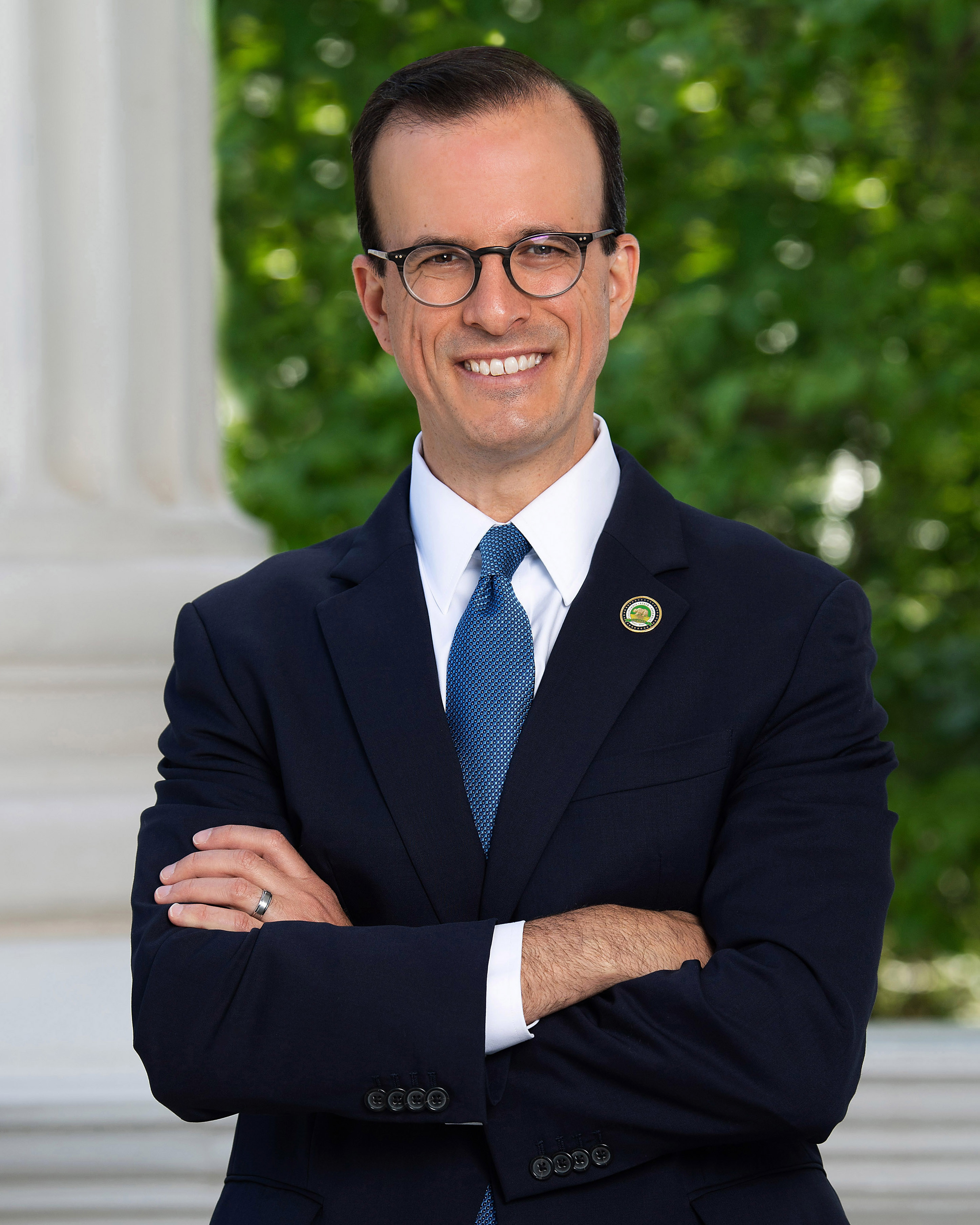
Asm. Marc Berman
Sponsored bills
The California Environmental Quality Act (CEQA) requires a lead agency, as defined, to prepare, or cause to be prepared, and certify the completion of an environmental impact report on a project that it proposes to carry out or approve that may have a significant effect on the environment or to adopt a negative declaration if it finds that the project will not have that effect. Existing law, until January 1, 2025, exempts from CEQA residential or mixed-use housing projects, as defined, located in unincorporated areas of a county meeting certain requirements, except for residential or mixed-use housing projects if certain conditions exist, as specified. Existing law requires a lead agency, if the lead agency determines that a residential or mixed-use housing project qualifies for this exemption from CEQA and determines to approve or carry out the project, to file a notice of exemption with the Office of Planning and Research and the county clerk in the county in which the project is located. This bill would extend the operation of that exemption until January 1, 2032. By extending the requirement on a lead agency to determine the applicability of the exemption and to file a notice of exemption with the office and the county clerk, this bill would impose a state-mandated local program. The bill would also make this exemption inapplicable to a residential or mixed-use housing project that may cause substantial adverse impact to tribal cultural resources, as defined. The California Constitution requires the state to reimburse local agencies and school districts for certain costs mandated by the state. Statutory provisions establish procedures for making that reimbursement. This bill would provide that no reimbursement is required by this act for a specified reason.
Existing law establishes requirements for the conduct of election campaigns, including requirements regarding the endorsement of candidates, political corporations, campaign funds, fair campaign practices, and libel and slander. Existing law, until January 1, 2027, prohibits any person, committee, or other entity from distributing, with actual malice, materially deceptive audio or visual media of a candidate for elective office with the intent to injure the candidate's reputation or to deceive a voter into voting for or against the candidate, within 60 days of the election. Existing law requires specified actions pertaining to elections to be given precedence when they are filed in court, including actions involving the registration of voters, the certification of candidates and measures, and election contests, and, until January 1, 2027, actions involving the foregoing prohibition against materially deceptive media. This bill, to be known as the Defending Democracy from Deepfake Deception Act of 2024, would require a large online platform, as defined, to block the posting of materially deceptive content related to elections in California, during specified periods before and after an election. The bill would require a large online platform to label certain additional content inauthentic, fake, or false during specified periods before and after an election in California. The bill would require a large online platform to develop procedures for California residents to report content that has not been blocked or labeled in compliance with the act. The bill would also authorize candidates for elected office, elected officials, elections officials, the Attorney General, and a district attorney or city attorney to seek injunctive relief against a large online platform for noncompliance with the act, as specified, and would assign precedence to such actions when they are filed in court. The bill would exempt from its provisions a broadcasting station and a regularly published online newspaper, magazine, or other periodical of general circulation that satisfy specified requirements. The bill would also exempt content that is satire or parody. The bill would incorporate additional changes to Section 35 of the Code of Civil Procedure proposed by AB 2839 to be operative only if this bill and AB 2839 are enacted and this bill is enacted last.
Existing law prohibits certain distribution of materially deceptive audio or visual media of a candidate within 60 days of an election at which the candidate will appear on the ballot, unless the media includes a disclosure stating that the media has been manipulated, subject to specified exemptions. Existing law authorizes a candidate whose voice or likeness appears in audio or visual media distributed in violation of these provisions to file specified actions, and it requires a court to place such proceedings on the calendar in the order of their date of filing and give the proceedings precedence. This bill would prohibit a person, committee, or other entity from knowingly distributing an advertisement or other election communication, as defined, that contains certain materially deceptive content, as defined, with malice, as defined, subject to specified exemptions. The bill would apply this prohibition within 120 days of an election in California and, in specified cases, 60 days after an election. The bill would authorize a recipient of materially deceptive content distributed in violation of this section, candidate or committee participating in the election, or elections official, as defined, to file a civil action to enjoin the distribution of the media and to seek damages against the person, committee, or other entity that distributed it, except as specified. The bill would require a court to place such proceedings on the calendar in the order of their date of filing and give the proceedings precedence. This bill would incorporate additional changes to Section 35 of the Code of Civil Procedure proposed by AB 2655 to be operative only if this bill and AB 2655 are enacted and this bill is enacted last. This bill would declare that it is to take effect immediately as an urgency statute.
This measure would designate a specified portion of Interstate 80 in the City and County of San Francisco as the Willie Mays Highway. The measure would request the Department of Transportation to determine the cost of appropriate signs showing this special designation and, upon receiving donations from nonstate sources covering that cost, to erect those signs.
This measure would, among other things, urge the United States Congress and President Joseph R. Biden to fully fund the United States Environmental Protection Agency's Comprehensive Infrastructure Solution for the Tijuana River due to the ongoing impacts to public health, the environment, and the local economy caused by cross-border pollution and would urge President Joseph R. Biden to declare a national emergency due to those ongoing impacts.
This measure would urge the Congress of the United States to repeal the state and local tax deduction limitation so that residents of California and married taxpayers are no longer penalized by the federal tax code.
Maddy summaryAssembly Concurrent Resolution 120 designates January 2024 as Positive Parenting Awareness Month in California. This measure does not change laws or allocate funding but instead encourages state agencies, communities, and organizations to focus on the importance of positive parenting strategies. The resolution highlights how supportive family environments can improve children's health and well-being while acknowledging the diverse forms families take in the state. It serves as a formal acknowledgment of existing programs and resources rather than creating new mandates or policies.
This measure would proclaim September 20, 2024, and September 20 of each year thereafter, as California Youth Climate Action Day to honor and support the efforts of young people in their pursuit of environmental sustainability, climate justice, and the preservation of biodiversity.
Existing law, the Control, Regulate and Tax Adult Use of Marijuana Act of 2016 (AUMA) , an initiative measure approved as Proposition 64 at the November 8, 2016, statewide general election, prohibits the director of the Department of Cannabis Control (department) and any member of the Cannabis Control Appeals Panel from engaging in certain activities, including from receiving any commission or profit whatsoever, directly or indirectly, from any person applying for or receiving any license or permit, as described. Existing law, the Medicinal and Adult-Use Cannabis Regulation and Safety Act (MAUCRSA) , among other things, consolidates the licensure and regulation of commercial medicinal and adult-use cannabis activities. This bill would also prohibit individuals appointed by the Governor to specified positions in the department from engaging in those activities.