

The California Private Postsecondary Education Act of 2009 provides, among other things, for student protections and regulatory oversight of private postsecondary educational institutions in the state. The act is enforced by the Bureau for Private Postsecondary Education within the Department of Consumer Affairs. The act requires the Director of Consumer Affairs to provide biannual written updates to the Legislature that describe the bureau's progress in protecting consumers and enforcing the act, as specified. The act requires institutions to report to the bureau specified investigations and actions by oversight entities within 30 days. The act is repealed on January 1, 2027. This bill would revise and recast the act's provisions. The bill would instead require the director to provide those written updates to the Legislature annually. The bill would additionally require institutions to report bankruptcy filings, felony charges against the institution or specified persons, and certain civil actions or arbitrations to the bureau, as provided. The bill would specify that an institution's failure to provide the bureau with a required report is a material violation and subjects the institution to citation, probation, suspension, or revocation of its approval to operate. The bill would authorize the bureau to deny an application for approval to operate if the institution would be owned, controlled, or managed by a person who previously owned, controlled, or managed an institution that closed without providing required student refunds or appropriately preserving and making available records. The act requires an out-of-state private postsecondary educational institution to register with the bureau, pay a fee, and comply with additional delineated requirements, including reporting to the bureau certain enforcement or adverse occurrences. The act requires the bureau, after receipt of such a report, to determine if the institution will be permitted to continue to enroll new students, as provided. The act requires the bureau to receive complaints about these institutions. This bill would instead authorize the bureau, after receipt of a report or a complaint, to request from the institution information necessary to determine whether the institution's registration should be revoked or have conditions placed on it. The act applies to private entities with a physical presence in the state that offer postsecondary education to the public for a charge, but exempts certain institutions from its application, including certain institutions that only offer educational programs to members of a bona fide trade or fraternal organization, as specified, certain religious organizations if instruction is limited to the principles of that religious organization, certain flight instruction providers or programs if they meet specified student loan and prepayment conditions, and institutions that do not award degrees and that solely provide educational programs for total charges of $2,500 or less, as provided. This bill would clarify that institutions can qualify for the trade or fraternal organization exemption only if they offer nondegree educational programs to those members, and that adding religious perspectives or verbiage to the titles or descriptions of otherwise secular programs does not limit instruction to the principles of that religious organization for purposes of the religious organization exemption. The bill would remove those student loan and prepayment conditions from the flight instruction exemption and would specify that the $2,500 or less program exemption does not apply to institutions that provide any training or curriculum for Class A, B, or C commercial driving licenses, except as specified. The bill would specify processes for and limits on granting a verification of exemption. The act requires an institution seeking to offer one or more degree programs to satisfy certain requirements to obtain a provisional approval to operate. The act requires, within the first 2 years of the issuance of provisional approval to operate degree programs, a visiting committee to make a recommendation to the bureau regarding an institution's progress to achieving full accreditation. The act requires the bureau to automatically suspend a provisional approval to operate if an institution fails to comply with certain requirements. The act requires the bureau to grant an institution that is accredited an approval to operate by means of its accreditation. The act exempts an accredited institution from certain recordkeeping requirements. This bill would require accreditation for degree-granting institutions to cover all degree programs offered by the institution. The bill would require, for institutions seeking a provisional approval to operate, that enrollment of students on student visas not exceed more than 25% of total enrollment in any provisionally approved degree program. The bill would authorize, within the first 4 years of the issuance of a provisional approval to operate degree programs, the bureau to empanel a visiting committee to make a recommendation to the bureau regarding an institution's progress to achieving full accreditation. The bill would require the bureau to automatically terminate a provisional approval to operate if an institution fails to comply with certain requirements. The bill would specify, for an approval to operate by means of its accreditation, that a nondegree program not within the scope of accreditation is not included as an approved program by the bureau without the written consent of the institution's accrediting agency. The bill would remove the recordkeeping exemption for accredited institutions. The bill would remove a requirement that the bureau indicate in an annual report and make available on its internet website the number of enforcement actions taken by the bureau against institutions. The act requires an institution to obtain bureau approval before making certain substantive changes to its operations, including an addition of a separate branch more than 5 miles from the main or branch campus. The act requires that a student enrollment agreement, school catalog, and other disclosures meet certain requirements. This bill instead would require an institution to obtain bureau approval before adding a separate branch, regardless of the distance from the main or branch campus. The bill would revise the requirements for a student enrollment agreement, school catalog, and other disclosures. The act establishes the Private Postsecondary Education Administration Fund, requires that fees collected from institutions be deposited in the fund, and, upon appropriation by the Legislature, authorizes moneys in the fund to be used by the bureau for the administration of the act. This bill would increase certain fees collected from institutions. The act requires private postsecondary educational institutions to provide refunds to students under specified circumstances, including upon a notice of cancellation, and establishes methods for calculating those refunds based on the institution's total charges and periods of attendance. This bill would require an institution that originated or accepted payment from an income share agreement to calculate the required refund based on the institution's total charges for a student who does not receive a notice of cancellation refund, as specified. The act establishes the Student Tuition Recovery Fund, requires the bureau to adopt regulations governing the administration and maintenance of the fund, including requirements relating to assessments on students and student claims against the fund, and continuously appropriates the moneys in the fund to the bureau for specified purposes. This bill would expand the claims under which a student is eligible for payment from the fund and the evidence available to the bureau in making determinations about student eligibility under the fund. The bill would make other conforming, technical, and nonsubstantive changes and would extend the operation of the act by 4 years to January 1, 2031. By expanding the scope and extending the operation of the Student Tuition Recovery Fund, a continuously appropriated fund, this bill would make an appropriation. Under existing law, the act specifies conduct by regulated institutions that, if undertaken, is a crime. Because this bill would extend the application of those criminal provisions, it would impose a state-mandated local program. Existing constitutional provisions require that a statute that limits the right of access to the meetings of public bodies or the writings of public officials and agencies be adopted with findings demonstrating the interest protected by the limitation and the need for protecting that interest. This bill would make legislative findings to that effect. The California Constitution requires the state to reimburse local agencies and school districts for certain costs mandated by the state. Statutory provisions establish procedures for making that reimbursement. This bill would provide that no reimbursement is required by this act for a specified reason.
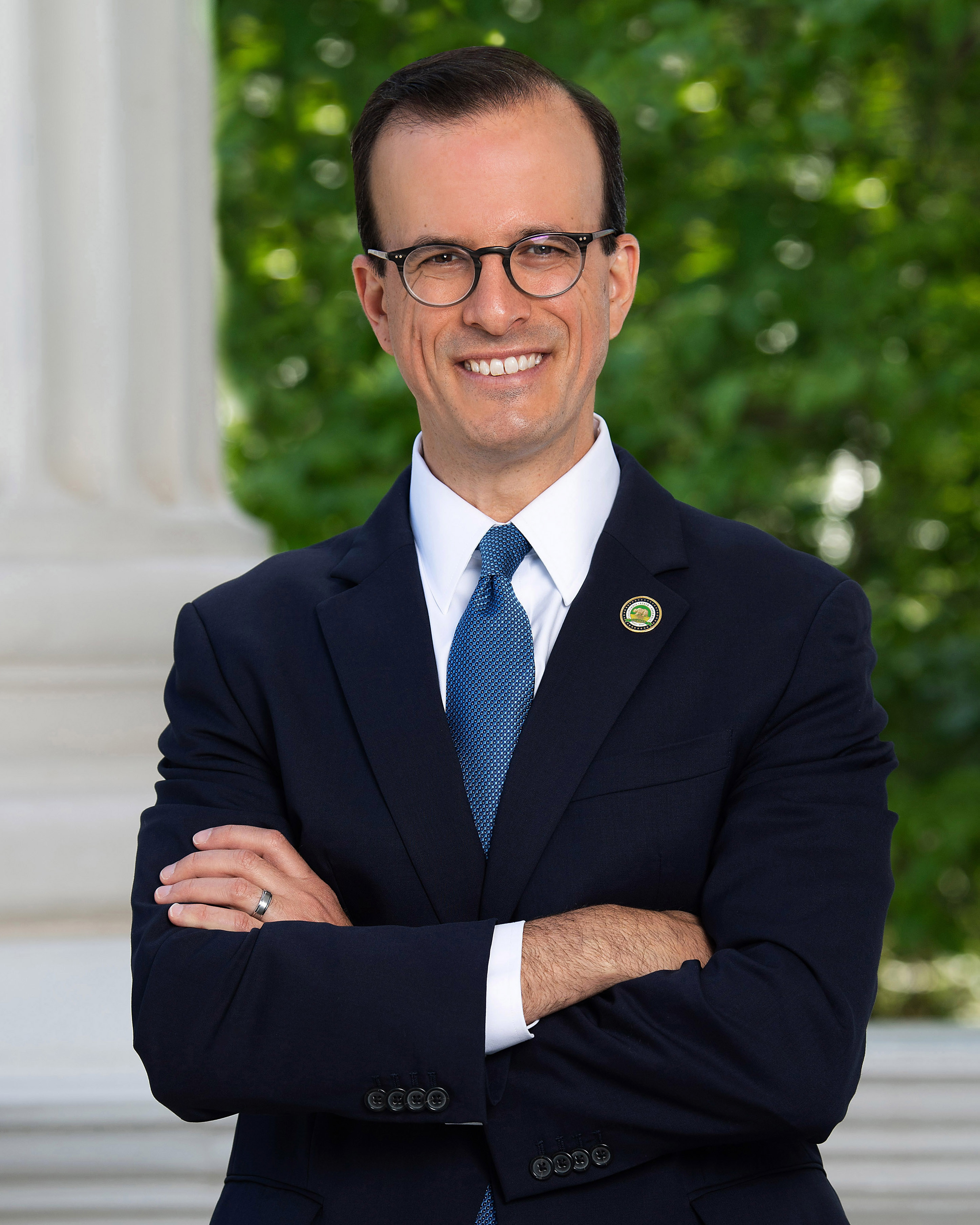
Rep. Marc Berman
Sponsored bills
Existing law includes various provisions limiting how state and local entities may use their resources for immigration enforcement purposes. This bill would prohibit the use of state-owned property for purposes of immigration enforcement, as specified. In this regard, the bill would prohibit, among other uses, staging, assembling, mobilizing, or deploying vehicles, equipment, or personnel for immigration enforcement purposes. The bill would require the Department of General Services and state agencies to work together to identify state-owned property previously or likely to be used for immigration enforcement purposes. The bill would require state agencies to post signage at those properties regarding the prohibition and to use physical barriers limiting access, as provided. The bill would require state agencies to develop procedures to ensure that an attempted or actual use of state-owned property for immigration enforcement purposes is documented in writing, that the documentation includes any photographic or video evidence, and that the Attorney General's office or the Attorney General's designee is notified. The bill would direct state agencies to make educational materials available regarding the rights of employees, tenants, and security staff if federal agents enter state-owned property. The bill would further require the Attorney General's office to design standardized signage and to make the signage available to download free of charge on the Attorney General's internet website.
Existing law, the Chiropractic Act, enacted by an initiative measure, provides for the licensure and regulation of chiropractors in this state by the State Board of Chiropractic Examiners. Existing law subjects the powers and duties of the board to review by the appropriate policy committees of the Legislature as if the act was scheduled to be repealed as of January 1, 2027. This bill would instead subject the powers and duties of the board to that review as if that act were scheduled to be repealed on January 1, 2031. Existing law requires the board to annually compile a complete directory of all licensees within the state. Existing law requires that the board distribute one copy of the directory without charge to each licensee. This bill would require the board to distribute a copy of the directory electronically to each licensee and remove the requirement that the distribution be without charge. The bill would require the board to distribute a copy of the directory to a licensee by mail, if the licensee requests distribution by mail, but would prohibit the board from charging the licensee the costs of publication and distribution. Existing law requires a board within the Department of Consumer Affairs to issue a temporary license to practice a profession or vocation to an applicant who, among other things, holds a license to practice the profession or vocation in another state and is married to, or in a domestic partnership or other legal union with, an active duty member of the Armed Forces of the United States, as specified. This bill would authorize the State Board of Chiropractic Examiners, by regulation, to create a system for the issuance of a temporary license to practice chiropractic to an applicant who does not qualify for a temporary license pursuant to the above-described provision that would authorize an unlicensed person to practice chiropractic. The bill would authorize the board to charge application, issuance, and replacement license fees, not to exceed the limits for a license to practice chiropractic. Existing law establishes a schedule of 22 different fees necessary to carry out the responsibilities required by the Chiropractic Initiative Act and the Chiropractic Act and authorizes the board to adopt lower fees by regulation. Existing law directs the deposit of these funds into the State Board of Chiropractic Examiners' Fund, a continuously appropriated fund. This bill, for most of those fees, would revise the amount of the fee and would authorize the board to increase the amount of the fee to a specified maximum amount. The bill would specify that, if the board adopts lower fees by regulation, it shall be in an amount sufficient to support the functions of the board in the administration of its duties, as specified. The bill would require the board to set penalty fees for the delinquent renewal of a satellite office certificate, certificate of registration of a chiropractic corporation, or continuing education provider status. The bill would authorize the board to establish by regulation a system for the issuance and renewal of a chiropractic facility permit, including application, renewal, and replacement permit fees, in an amount sufficient to cover the reasonable regulatory costs to the board to administer the permit system. By authorizing new fees for deposit into a continuously appropriated fund, the bill would make an appropriation. Existing provisions of the Chiropractic Initiative Act authorize the board to refuse to grant, suspend, or revoke a license to practice chiropractic, place the licensee upon probation, or issue a reprimand, for violation of the rules and regulations adopted by the board in accordance with the act or for any cause specified in the act, in accordance with specified statutory proceedings. This bill would authorize the board to automatically revoke a license to practice chiropractic under specified circumstances, including if the licensee has been convicted in any court in or outside the state for specified offenses. The bill would also authorize the board to automatically suspend a license to practice chiropractic following a conviction of a serious felony, as defined. Existing law authorizes a board within the Department of Consumer Affairs to deny a license based on formal discipline by a licensing board in or outside of California and that is substantially related to the qualifications, functions, or duties of the business or profession for which the application is made. Existing law generally limits this authorization to formal discipline that occurred within 7 years preceding the date of application. Existing law creates an exception to that 7-year limitation if the formal discipline was based on conduct that would have constituted an act of sexual abuse, misconduct, or relations with a patient, or sexual exploitation, as specified, if committed in this state by a licensed physician and surgeon. This bill would create a similar exception to that 7-year limitation for conduct that would have constituted an act of sexual abuse, misconduct, or relations with a patient, as specified, if committed in this state by a licensed chiropractor. This bill would state the intent of the Legislature to work with stakeholders to examine licensed chiropractors holding specialized certification who provide chiropractic care to animal patients and evaluate opportunities to expand access to qualified animal chiropractic care while ensuring appropriate consumer and animal protections are in place. This bill would make other technical and nonsubstantive changes.
Existing law, the Cal Grant Program, establishes the Cal Grant A Entitlement Awards, the Cal Grant B Entitlement Awards, the California Community College Expanded Entitlement Awards, the California Community College Transfer Entitlement Awards, the Competitive Cal Grant A and B Awards, the Cal Grant C Awards, and the Cal Grant T Awards under the administration of the Student Aid Commission. Existing law establishes eligibility requirements for awards under the Cal Grant Program for participating students attending qualifying postsecondary educational institutions, and prescribes requirements that postsecondary educational institutions must comply with in order to be a qualifying postsecondary educational institution for purposes of the Cal Grant Program, including, among others, certain disclosure requirements. This bill would require, as part of the criteria to be a qualifying institution under the Cal Grant Program, an institution, no later than the start of the 2027–28 academic year, to develop and implement a cost of attendance policy and adjustment process to estimate and adjust cost of attendance information in a manner that is consistent with federal standards, as specified.
The Secretary of State is the chief elections officer of the state, and the Attorney General is the chief law officer of the state. Existing law requires a state or local agency that files or is served with an elections-related claim arising under federal law to provide written notice to the Secretary of State and the Attorney General within 3 court days. Existing law requires a state or local agency that intends to enter into a settlement, consent decree, or other court-approved agreement related to the claim to provide a draft copy of the settlement, consent decree, or agreement to the Secretary of State and the Attorney General at least 14 court days before entering into it. This bill would require a local agency, political subdivision, or elections official to provide notice to the Secretary of State and the Attorney General immediately, but no later than one calendar day, after becoming aware of any warrant, subpoena, or active law enforcement investigation pertaining to any election records or certified voting technology under their custody or control. The bill would authorize the Secretary of State or the Attorney General to intervene in, or initiate, any court proceedings to challenge a warrant or subpoena on any valid grounds or seek any other appropriate relief. The bill would repeal these provisions on January 1, 2030. By increasing the duties of local elections officials, this bill would create a state-mandated local program. The California Constitution requires the state to reimburse local agencies and school districts for certain costs mandated by the state. Statutory provisions establish procedures for making that reimbursement. This bill would provide that, if the Commission on State Mandates determines that the bill contains costs mandated by the state, reimbursement for those costs shall be made pursuant to the statutory provisions noted above. This bill would declare that it is to take effect immediately as an urgency statute.
Existing law authorizes an unmarried person who is under 18 years of age to marry upon obtaining a court order granting permission and the written consent of at least one of the parents or the guardian of each underage party to the marriage, as specified. Existing law requires the court, if it considers it necessary, as part of the court order granting permission to marry, to require the parties to the prospective marriage of a minor to participate in premarital counseling, as specified. Existing law provides that 2 unmarried, unrelated adults who have chosen to share one another's lives in an intimate and committed relationship of mutual caring may establish a domestic partnership by filing a declaration with the Secretary of State, if certain requirements are met. Existing law provides that a person under 18 years of age who, together with the person with whom the person proposes to establish a domestic partnership, meets the requirements for a domestic partnership other than the requirement of being at least 18 years of age, is capable of consenting to and establishing a domestic partnership upon obtaining a court order granting permission to the underage person or persons to establish a domestic partnership. Under existing law, registered domestic partners have the same rights, protections, and benefits as spouses. This bill would repeal the authorization for a person under 18 years of age to be issued a marriage license or to establish a domestic partnership, thereby prohibiting a person under 18 years of age from being issued a marriage license or from establishing a domestic partnership. The bill would make conforming changes. Existing law requires the State Registrar to create a document, no later than March 1, 2020, concerning marriage certificates in which one or both of the parties were minors at the time of solemnization of the marriage. Existing law requires the State Registrar to update that document annually, as specified. Existing law requires the local registrar to submit specified information for the purposes of that report. This bill would repeal those provisions.
Existing law, the Physical Therapy Practice Act, establishes the Physical Therapy Board of California within the Department of Consumer Affairs for the licensure, approval, and regulation of physical therapists and physical therapist assistants. Existing law prescribes specified fees for licenses issued by the board. Existing law authorizes the board to decrease or increase the fee amounts, and establishes specified maximum amounts of license fees. Existing law repeals the board and its authority to employ an executive officer on January 1, 2027. This bill would extend the board's authority to enforce and administer the act and to appoint an executive officer until January 1, 2031. The bill would increase specified fees for licenses issued by the board and would increase the maximum amount to which the board may increase the fees, as specified. The bill would also make nonsubstantive changes to those fee provisions. Existing law authorizes a person whose license has been revoked or suspended, or who has been placed on probation, to petition the board for reinstatement or modification of a penalty after a specified period of time has elapsed. Existing law prohibits the board from considering a petition while the petitioner is under sentence for any criminal offense, including any period of court-imposed probation or parole, or while there is an accusation or petition to revoke probation pending against the petitioner. This bill would further prohibit the board from considering a petition if the applicant is required to register as a sex offender, as specified. The bill would except from this prohibition an applicant whose requirement to register as a sex offender is based solely on a misdemeanor conviction. The bill would also prohibit the board from considering a petition if the conduct underlying the petitioner's conviction involved certain sexual misconduct.
Existing law, the Transportation Network Company Drivers Labor Relations Act (act) , establishes that transportation network company (TNC) drivers have the right to form, join, and participate in the activities of TNC driver organizations, to bargain through representatives of their own choosing, to engage in concerted activities for the purpose of bargaining or other mutual aid or protection, and to refrain from such activities. The act designates certain actions and inactions of TNCs, such as failure or refusal to negotiate in good faith with a certified bargaining organization, and of TNC driver organizations as unfair practices, which are subject to the Public Employment Relations Board's unfair practice procedure regulations. This bill would authorize any charging party, respondent, or intervenor aggrieved by a final decision or order of the board in an unfair practice case to petition for a writ of extraordinary relief from such a decision or order, except as provided. The bill would set forth procedures for filing and reviewing the petition and for enforcing final decisions or orders subsequent to the expiration of the petition timeline.
(1) Existing law defines an electric bicycle as a bicycle equipped with fully operable pedals and an electric motor of less than 750 watts, and classifies electric bicycles into 3 classes with different restrictions for various purposes. This bill would require all class 2 electric bicycles manufactured, sold, or offered for sale on or after January 1, 2029, to be equipped with a speedometer. The bill would also require all electric bicycles manufactured, sold, or offered for sale on or after January 1, 2029, to be equipped with an integrated or detachable front lamp and a rear lamp, as specified. The bill would also require sellers and distributors of electric bicycles to disclose specified information at or before the point of sale, including, among other things, the classification and maximum speed of the electric bicycle and a recommendation that persons under 16 years of age should not ride an electric bicycle at a speed greater than 15 miles per hour. The bill would make a violation of these provisions punishable as an infraction, as specified. (2) Existing law regulates the operation of bicycles on highways and authorizes local authorities to, among other things, prohibit, by ordinance, the operation of an electric bicycle or any class of electric bicycle on equestrian trails or hiking or recreational trails. This bill would authorize a local authority to set a speed limit on a bicycle path of 10, 15, or 20 miles an hour or on a multiuse trail to 10, 15, or 20 miles per hour, as specified, subject to specified signage requirements. However, the bill would specify that speed limits on a bicycle path or multiuse trail established prior to January 1, 2027, shall remain in effect. The bill would also make technical, nonsubstantive changes to these provisions. (3) Existing law establishes various prima facie speed limits. Existing law establishes that specified convictions and violations under the Vehicle Code and traffic-related incidents count as points against a driver's record for purposes of the suspension or revocation of the privilege to drive, except as specified. This bill would additionally set a prima facie speed limit of 10 miles per hour on a sidewalk and specify that a conviction of a violation of that speed limit shall not result in a violation point count. (4) Under existing law, a violation of the Vehicle Code is a crime. By creating new requirements within the Vehicle Code, the violation of which would be a crime, this bill would impose a state-mandated local program. The California Constitution requires the state to reimburse local agencies and school districts for certain costs mandated by the state. Statutory provisions establish procedures for making that reimbursement. This bill would provide that no reimbursement is required by this act for a specified reason.
This measure would urge the President of the United States and Congress of the United States to immediately restore full and consistent funding and staffing for the National Park Service.