

Existing law authorizes a person who is qualified to register to vote and who has a valid California driver's license or state identification card to submit an affidavit of voter registration electronically on the Secretary of State's internet website. Existing law requires this affidavit to contain a statement that the county elections official must compare the affiant's signature on the identification envelope for the return of a vote by mail ballot with the signatures appearing in the voter's registration record, including the signature appearing on the applicant's driver's license or state identification card. The Secretary of State must require a person who submits such an affidavit to submit, among other things, the number from their California driver's license or state identification card. This bill would additionally authorize a person who is qualified to register to vote to submit an affidavit of voter registration on the Secretary of State's internet website even if the person has not been issued a California driver's license or state identification card, as long as the person provides the last four digits of their social security number with their affidavit. The bill would require the Secretary of State to develop a method to collect an electronic image of the applicant's signature, and would require this collection method to be accessible to people with disabilities. The bill would additionally authorize a county elections official to compare the affiant's signature on the identification envelope for the return of a vote by mail ballot with this electronic image of the affiant's signature. The bill would authorize the Secretary of State to authenticate the identity of an applicant who electronically submits an affidavit of voter registration without providing a California driver's license or state identification card by verifying the last 4 digits of the applicant's social security number, the applicant's full name, and the applicant's date of birth. The bill would specify that its provisions become operative on January 1, 2029.
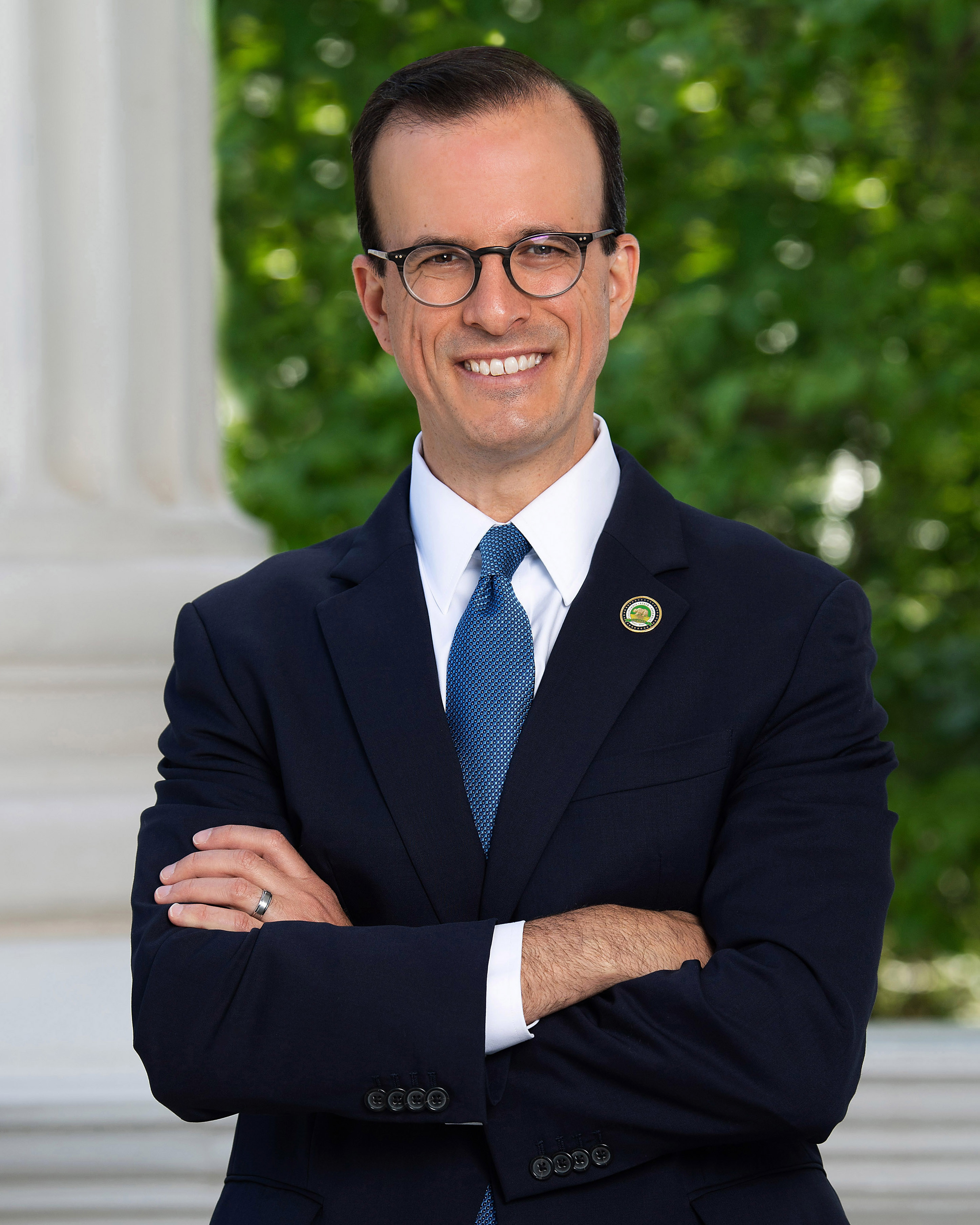
Rep. Marc Berman
Sponsored bills
Maddy summaryCalifornia Assembly Resolution 140 designates August 2026 as Children's Get Offline and Get Outdoors Month to promote awareness of the benefits of screen-free play for child development. The resolution cites research linking excessive social media use and reduced free play time to increased rates of anxiety, depression, and other behavioral issues among teenagers. It encourages families and communities to support unstructured outdoor activities and highlights ongoing federal efforts to protect children's mental health through technology guardrails.
This measure would urge President Donald J. Trump to avoid raising the cost of living for American consumers by rescinding the tariffs that he has imposed since taking office in January 2025 and refunding the American people for the costs passed on to them by his tariffs. The measure would also urge the United States Congress to enact a joint resolution to rescind President Trump's tariffs and to oppose all future unilateral and arbitrary tariff increases imposed by President Trump.
Maddy summaryCalifornia Assembly Resolution 137 formally recognizes the Diwali festival scheduled for November 8, 2026, and encourages state residents to participate in the celebration. The resolution highlights the cultural significance of the holiday for Indian Americans and South Asian communities, noting its themes of unity, joy, and the triumph of light over darkness. It also acknowledges that California previously designated Diwali as an official state holiday in 2025. This measure serves as a commemorative statement rather than a law with new regulatory or financial provisions.
The California FAIR Plan Association is a joint reinsurance association in which all insurers licensed to write basic property insurance participate to administer a program for the equitable apportionment of basic property insurance for persons who are unable to obtain that coverage through normal channels. Existing law requires the Insurance Commissioner to approve the association's plan of operation and authorizes the commissioner to examine the association's books, records, files, papers, and documents that relate to its operation. Existing law authorizes the commissioner to impose civil penalties for various violations of the Insurance Code. This bill would require the association to take corrective actions, as specified by the commissioner or their designee, to rectify violations of applicable statutes, regulations, accounting principles, the plan of operation, or other legally binding applicable rules identified in a report of examination or other operational report. The bill would subject the association to a penalty of not more than $20,000 for failing to take the specified corrective action within a timeframe agreed upon by the commissioner or their designee. The bill would set other civil penalty amounts for violations of provisions relative to the association as not to exceed $10,000 for each act in violation or not to exceed $20,000 if the act was willful, and would require the commissioner to impose those penalties, as specified. The bill would also authorize the commissioner to require the association to both adjust the policy limits available under programs underwritten by the association and make additional coverage offerings available for fair rental value coverage under the association's renters' property insurance program. This bill would incorporate additional changes to Section 10095 of the Insurance Code proposed by AB 69 to be operative only if this bill and AB 69 are enacted and this bill is enacted last.
This measure would declare the Legislature's opposition to any federal executive action that restricts, burdens, or interferes with California's vote by mail system and would call upon the United States Congress to reject any federal legislation that would restrict or eliminate vote by mail options and to protect the constitutional authority of states to administer their own elections.
Existing law requires county elections officials to update a voter's registration record if change-of-address information indicates the voter has moved to a new residence address in California. Existing law requires county elections officials to change a voter's registration status to inactive if mailings have been returned as undeliverable or if other sources of information indicate that the voter has moved out of state. This bill would repeal an obsolete version of these requirements.
This measure would recognize August 26, 2026, as Women's Equality Day and its historic importance to women's rights, including the battle to attain those rights in the past, present, and future.
Maddy summaryThis bill designates 2026 as the International Year of the Woman Farmer to acknowledge the vital contributions of women in agriculture. It functions as a formal proclamation rather than a law that changes regulations or allocates funding. The measure directly affects the state by officially recognizing the importance of female agricultural workers during that year.
This measure would affirm the fundamental importance of indigent defense to due process, equal justice, and democratic governance, recognize public defenders as essential protectors of constitutional rights and the rule of law, and encourage the development of statewide approaches to indigent defense.