

Existing law requires that a person arrested without a warrant be taken before a magistrate without unnecessary delay. Existing law also provides certain circumstances under which a person arrested without a warrant may be released from custody before being taken before a magistrate, including, among others, when the arresting officer believes that insufficient grounds exist to make a criminal complaint against the person arrested or when the person is arrested for intoxication only and no further proceedings are desirable. Existing law requires the record of arrest of a person released pursuant to specified circumstances to include a record of release and that the arrest be deemed a detention. This bill would authorize an arresting officer to release an arrested person from custody without bringing the person before a magistrate if the person is, subsequent to being arrested, delivered or referred to a public health or social service organization that provides services including, but not limited to, housing, medical care, treatment for alcohol or substance use disorders, psychological counseling, or employment training and education, the organization agrees to accept the delivery or referral, and no further proceedings are desirable. The bill would require that the arrest under this provision be deemed a detention.
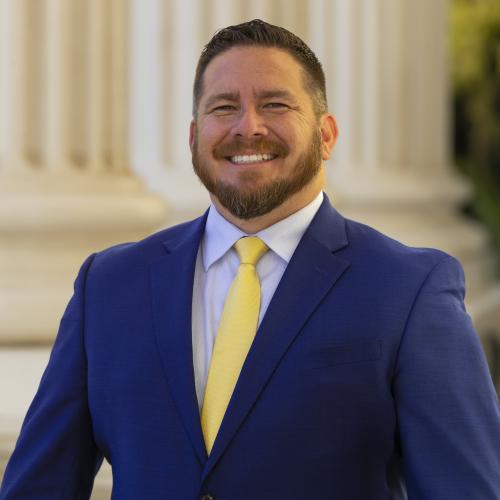
Asm. Juan Alanis
Sponsored bills
Existing law requires the adopted course of study for grades 7 to 12, inclusive, to offer courses in specified areas of study, including, among others, social sciences, drawing upon the disciplines of anthropology, economics, geography, history, political science, psychology, and sociology, designed to fit the maturity of the pupils. Existing law requires social science instruction to include, among other things, instruction that provides a foundation for understanding the development of the American economic system, including the role of the entrepreneur and labor. This bill, with respect to the adopted course of study for grades 7 to 12, inclusive, would require the social sciences area of study to also include instruction on personal financial literacy, as provided. By imposing additional duties on school officials, the bill would impose a state-mandated local program. This bill would incorporate additional changes to Section 51220 of the Education Code proposed by AB 1821 to be operative only if this bill and AB 1821 are enacted and this bill is enacted last. The California Constitution requires the state to reimburse local agencies and school districts for certain costs mandated by the state. Statutory provisions establish procedures for making that reimbursement. This bill would provide that, if the Commission on State Mandates determines that the bill contains costs mandated by the state, reimbursement for those costs shall be made pursuant to the statutory provisions noted above.
Existing law provides for the civil commitment of a person who is determined to be a sexually violent predator. Existing law establishes a procedure by which a person committed as a sexually violent predator may petition for conditional release. Existing law requires the counsel for the committed individual, the sheriff or the chief of police of the locality for placement, and the county counsel and the district attorney of the county of domicile, or the designees of each of those entities, to provide assistance and consultation in the State Department of State Hospitals' process of locating and securing housing within the county and requires those individuals to provide appropriate contact information for their respective office to the department. Existing law also requires the department to convene a committee of those individuals. Existing law generally requires the committed individual to be placed in their county of domicile before their incarceration, but authorizes consideration of, and placement in, an alternative placement county in extraordinary circumstances. When the department makes a recommendation for conditional release or community outpatient treatment, existing law requires the department to notify specified persons of its recommendation and include specified information. This bill would additionally require the sheriff or the chief of police of an alternative placement locality and the county counsel and the district attorney of an alternative placement county, as specified, to provide assistance and consultation in the department's process of locating and securing housing for a sexually violent predator and to provide appropriate contact information for their office to the department. The bill would include these individuals in the committee meeting the department is required to convene and would also authorize those committee meetings to be held by teleconference. The bill would require the above-described notice to be sent electronically and by certified mail. By imposing a higher level of service on local government, the bill would impose a state-mandated local program. The California Constitution requires the state to reimburse local agencies and school districts for certain costs mandated by the state. Statutory provisions establish procedures for making that reimbursement. This bill would provide that, if the Commission on State Mandates determines that the bill contains costs mandated by the state, reimbursement for those costs shall be made pursuant to the statutory provisions noted above.
Existing unemployment compensation disability law requires workers to pay contribution rates based on, among other things, wages received in employment and benefit disbursement, for payment into the Unemployment Compensation Disability Fund, for purposes of compensating in part for the wage loss sustained by any individual who is unable to work due to the employee's own sickness or injury, among other reasons. Existing law sets forth standards for eligibility to receive unemployment compensation disability benefits. Existing law establishes, within the above state disability insurance program, a family temporary disability insurance program, also known as the paid family leave program, for the provision of wage replacement benefits for up to 8 weeks to workers who take time off work for prescribed purposes, including to care for a seriously ill family member. Existing law requires, for purposes of unemployment compensation disability benefits, the Employment Development Department to issue the initial payment for unemployment compensation disability benefits to a monetarily eligible claimant who is otherwise determined eligible by the department within 14 days of receipt of the claimant's properly completed first disability claim. Existing law provides for purposes of the paid family leave program that eligible workers shall receive benefits generally in accordance with unemployment and disability compensation law. This bill would instead require, for purposes of unemployment compensation disability benefits, the issuance of the initial payment for those benefits within 14 days of receipt of the claimant's properly completed first disability claim or as soon as eligibility begins, whichever is later. The bill would apply the same initial payment issuance schedule applicable to unemployment compensation disability benefits to the paid family leave program and repeal the requirement that eligible workers receive benefits generally in accordance with unemployment and disability compensation law. The bill would make these changes operative when these changes are incorporated in the Employment Development Department's integrated claims management system as part of the EDDNext project. Under the state disability insurance and paid family leave programs, a first claim is required to be filed not later than the 41st consecutive day following the first compensable day with respect to which the claim is made for benefits, as specified. This bill would authorize an individual to initiate the claims process up to 30 days in advance of the anticipated first compensable day. The bill would make these changes operative when the changes are incorporated in the Employment Development Department's integrated claims management system as part of the EDDNext project.
Existing law requires the governing board of any school district to give diligent care to the health and physical development of pupils. Existing law authorizes a school district, county office of education, and charter school to provide emergency naloxone hydrochloride or another opioid antagonist to school nurses or trained personnel who have volunteered, and authorizes school nurses or trained personnel to use naloxone hydrochloride or another opioid antagonist to provide emergency medical aid to persons suffering, or reasonably believed to be suffering, from an opioid overdose, as provided. This bill would prohibit school districts, county offices of education, and charter schools from prohibiting pupils in middle schools, junior high schools, high schools, or adult schools, while on a schoolsite or participating in school activities, from carrying fentanyl test strips or a federally approved opioid antagonist, as provided, for the emergency treatment of persons suffering, or reasonably believed to be suffering, from an opioid overdose.
Existing law generally requires that the prosecution of a felony sex offense be commenced within 10 years after the commission of the offense. Existing law requires specified sex offenses that are committed when the victim is under 18 years of age and under certain circumstances, such as rape of a person with a mental disorder or disability or sodomy with force or fear, to be commenced by the victim's 40th birthday. This bill would clarify that if the conditions authorizing prosecution for these crimes are not met, the prosecuting agency may nevertheless provide victim assistance to the person, including support with pursuing restorative justice.
Existing law establishes the California Community Colleges, under the administration of the Board of Governors of the California Community Colleges, the California State University, under the administration of the Trustees of the California State University, and the University of California, under the administration of the Regents of the University of California, as the 3 segments of public postsecondary education in the state. Existing law requires the California State University, on or before December 1 of each year, to submit a report to the Legislature on the investigations and outcomes of sexual harassment reports and formal sexual harassment complaints, and to post the annual reports on its internet website, as provided. This bill would instead require the California State University, on or before December 1 of each year, to submit a report to the Legislature that provides a summation of the activities undertaken by each campus and by the systemwide Title IX office to ensure campus programs and activities are free from sex discrimination, and would revise the content of the report, as provided. The bill would additionally require the California Community Colleges, on or before December 1, 2026, and on or before December 1 every 3 years thereafter, and request the University of California, on or before December 1, 2026, and on or before each December 1 thereafter, to submit an analogous report to the Legislature that provides a summation of the activities undertaken by each district or campus, as applicable, and by each systemwide Title IX office, to ensure campus programs and activities are free from sex discrimination, as provided. The bill would require the office of the Chancellor of the California Community Colleges, and request the University of California, to post certain annual reports on their respective internet websites. The bill would require the California State University, and request the University of California, to present each report during a public meeting of the trustees or the regents, as applicable. This bill would require, on or before September 1, 2026, and on or before each September 1 thereafter, the governing board of each community college district to prepare and submit to the chancellor's office a report on the activities undertaken by each community college district to ensure campus programs and activities are free from sex discrimination, as provided. The bill would require each community college district to post the annual reports on its internet website and to present each report during a public meeting of the governing board of the community college district. By imposing new requirements on community college districts, the bill would impose a state-mandated local program. The California Constitution requires the state to reimburse local agencies and school districts for certain costs mandated by the state. Statutory provisions establish procedures for making that reimbursement. This bill would provide that, if the Commission on State Mandates determines that the bill contains costs mandated by the state, reimbursement for those costs shall be made pursuant to the statutory provisions noted above.
Existing law authorizes a county to establish a homeless adult and family multidisciplinary personnel team, as defined, with the goal of facilitating the expedited identification, assessment, and linkage of homeless individuals to housing and supportive services within that county and to allow provider agencies to share confidential information for the purpose of coordinating housing and supportive services to ensure continuity of care. This bill would authorize counties to also establish a mental health multidisciplinary personnel team, as defined, with the goal of facilitating the expedited identification, assessment, and linkage of justice-involved persons diagnosed with a mental illness to supportive services within that county while incarcerated and upon release from county jail and to allow provider agencies and members of the personnel team to share confidential information, as specified, for the purpose of coordinating supportive services to ensure continuity of care. The bill would require the sharing of information permitted under these provisions to be governed by protocols developed in each county, as specified, and would require each county to provide a copy of its protocols to the State Department of Health Care Services. This bill would authorize the mental health multidisciplinary personnel team to designate qualified persons to be a member of the team for a particular case and would require every member who receives information or records regarding justice-involved persons, as defined, in their capacity as a member of the team to be under the same privacy and confidentiality obligations and subject to the same confidentiality penalties as the person disclosing or providing the information or records. The bill would also require the information or records to be maintained in a manner that ensures the maximum protection of privacy and confidentiality rights.
Existing law classifies certain criminal offenses as a "violent felony" for the purposes of various provisions of the Penal Code, including sentencing enhancements for prior convictions, as well as numerous other provisions. Existing law includes among the list of violent felonies rape accomplished against a person's will by means of force, violence, duress, menace, or fear, or rape accomplished against the victim's will by threat of violent retaliation, but does not include rape of a person unable to give consent due to disability, intoxication, or unconsciousness, rape under false pretenses, or rape accomplished by threat of incarceration, arrest, or deportation. This bill would also include the rape of an intoxicated person wherein the defendant drugged the victim, as specified, in the list of violent felonies. By expanding the scope of an enhancement, this bill would impose a state-mandated local program. The California Constitution requires the state to reimburse local agencies and school districts for certain costs mandated by the state. Statutory provisions establish procedures for making that reimbursement. This bill would provide that no reimbursement is required by this act for a specified reason.
Existing law establishes various educational benefits for dependents of veterans who were killed during military service or are totally disabled, as specified. Existing law defines "dependent of a veteran" to include the spouse of a totally disabled veteran. Existing law prohibits a dependent of a veteran from receiving these educational benefits during the time the dependent is entitled to receive specified federal educational benefits or duplicate assistance from any other government source. This bill would repeal that prohibition.