

Existing law, the Lanterman Developmental Disabilities Services Act, requires the State Department of Developmental Services to contract with regional centers for the provision of community services and supports for persons with developmental disabilities and their families. Existing law requires the department, on or before March 1, 2019, to submit a rate study to specified committees of the Legislature regarding community-based services for individuals with developmental disabilities. Existing law requires the department to implement rate increases between April 1, 2022, and July 1, 2025, to raise service providers' rates based on a formula that takes into account the fully funded rate reflected in the rate models that were included in the rate study. This bill would require the department, commencing on July 1, 2025, and every other year thereafter, subject to appropriation and the approval of federal funds, to review and update the rate models, as defined, per the cost inputs available at the time of the review. The bill would also require the department to post the updated rate models to its internet website no later than January 1 of the following year.
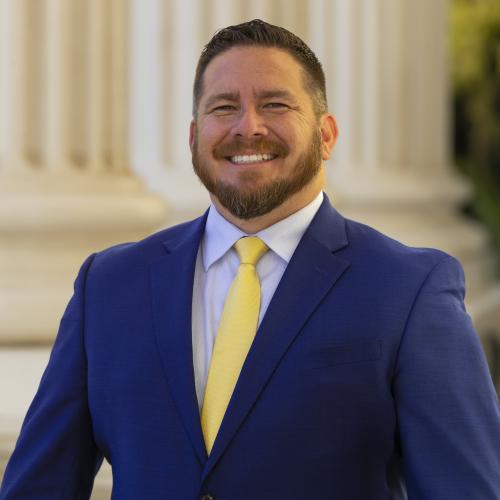
Asm. Juan Alanis
Sponsored bills
(1) Existing law provides that a child may be adjudged to be a dependent of the juvenile court because of abuse or neglect and generally provides for the placement of dependent children in various foster care placement settings. Existing law requires the court to review the status of every dependent child in foster care no less frequently than once every 6 months and requires the county social worker to file a supplemental report as part of that review. This bill would additionally require the court, in conducting the periodic status review for a child or nonminor dependent who is not residing with their relatives, nonrelative extended family members, or in the case of an Indian child, their extended family members, or an Indian custodian, to determine whether the social worker has continued efforts, and in the case of an Indian child, the active efforts, to locate any relatives, extended family members, or nonrelative extended family members who could provide family support or possible placement of the child and the names of those relatives, extended family members, or nonrelative extended family members. The bill would also require the supplemental report for a child or nonminor dependent who does not reside with their relatives, nonrelative extended family members, or in the case of an Indian child, their extended family members, or an Indian custodian to additionally include the efforts, and in the case of an Indian child, the active efforts, and findings that the social worker has made to locate any relative, extended family members, or nonrelative extended family members who could provide family support or possible placement of the child or nonminor dependent and the name of those relatives, extended family members, or nonrelative extended family members. By imposing additional duties on county officials, the bill would impose a state-mandated local program. (2) Existing law requires the court to place a foster child in the home of a relative, if possible, unless the placement would not be in the best interest of the child. Existing law requires the court to take into consideration other specified factors in making a determination of the placement of a foster child. This bill would make a nonsubstantive change to correct an erroneous cross reference in that provision. (3) The California Constitution requires the state to reimburse local agencies and school districts for certain costs mandated by the state. Statutory provisions establish procedures for making that reimbursement. This bill would provide that no reimbursement is required by this act for a specified reason.
Existing law, the Sherman Food, Drug, and Cosmetic Law, regulates the packaging, labeling, and advertising of drugs and devices, and is administered by the State Department of Public Health. Among other things, existing law prohibits a person from conducting a home medical device retail facility business in this state unless the person has obtained a license from the department and sets forth standards for operating that facility. Existing law authorizes the department to waive any licensing requirements for a home medical device retail facility when, in the opinion of the department, a high standard of patient safety, consistent with good patient care, can be provided by the licensure of a home medical device retail facility that does not meet all of the requirements for licensure. This bill would, except as specified, require an original equipment manufacturer of a powered wheelchair, as those terms are defined, to provide documentation, parts, embedded software, firmware, and tools used to inspect, diagnose, maintain, and repair the wheelchair to an owner or an independent repair provider for the purposes of providing service on the equipment or specified parts in the state, on fair and reasonable terms and costs, as defined. The bill would also require an original equipment manufacturer, for a powered wheelchair that contains an electronic security lock or other security-related function, to provide documentation, parts, embedded software, firmware, or tools needed to reset the lock or function when disabled in the course of providing services, as specified. The bill would require an independent repair provider to provide a written notice to a customer before providing repair services, as specified. This bill would, with certain exceptions, exempt trade secret information from these requirements. The bill would subject an original equipment manufacturer who knowingly violates, or who should have reasonably known that they violated, these provisions to specified civil penalties. The bill would, in the case of a first violation, give an original equipment manufacturer who did not knowingly violate these provisions a 3-day right to cure the violation before a civil penalty is imposed. The bill would authorize a person injured by a violation of these provisions and the Attorney General or a district attorney to bring a civil action for this purpose, as specified. If the action is brought by the Attorney General or district attorney, the bill would require the penalty to be paid to specified entities or individuals, as provided.
Existing law requires a county coroner to inquire into and determine the circumstances, manner, and cause of certain deaths. Existing law either requires or authorizes a county coroner, under certain circumstances, to perform, or cause to be performed, an autopsy on a decedent. Existing law imposes certain requirements on a coroner conducting a postmortem examination or autopsy on an unidentified body or human remains. Existing law requires a coroner to investigate deaths that occurred under specified conditions, including without medical attendance, to ascertain as many of the facts as possible. This bill would authorize a coroner to test the bodily fluid of a deceased person for the presence of xylazine if the coroner reasonably suspects the person died from an accidental or intentional opioid overdose or if the person was administered an overdose intervention drug prior to death and was unresponsive to the drug. If the testing is conducted, the bill would require the coroner to report a positive result to the Overdose Detection Mapping Application Program and provide the State Department of Public Health with a quarterly report on positive results, as specified. The bill would require the department to post specified information, including, among other things, the total number of xylazine-positive results reported to the department, on the California Overdose Surveillance Dashboard located on the department's internet website.
Existing law, the Early Education Act, among other things, requires the Superintendent of Public Instruction to administer all California state preschool programs. Existing law, the Child Care and Development Services Act, administered by the State Department of Social Services, establishes a system of childcare and development services for children up to 13 years of age. Existing law requires the Commission on Teacher Credentialing to, by rule or regulation, establish requirements for the issuance and the renewal of permits authorizing, among other things, service in the care, development, and instruction of children in childcare and development programs, as specified. Existing law additionally requires the commission to, by rule or regulation, establish requirements for the periods of duration of the above-mentioned permit. This bill would, on or before April 30, 2025, require the commission to, by rule or regulation, authorize a holder of a Child Development Associate Teacher Permit to renew their permit without a limitation on the number of renewals if the permitholder completes specified hours of professional growth activities, as provided.
(1) Existing federal law, the Victims of Crime Act of 1984, creates the Crime Victims Fund and authorizes federal financial assistance to states for the purpose of supporting eligible crime victim assistance programs. Existing law creates various programs under the Office of Emergency Services related to crime prevention and education, including, among other things, programs concerning family violence prevention and domestic violence prevention. This bill, the California Victims of Crime Act, would establish the California Crime Victims Fund in the State Treasury and would require that moneys deposited in the fund be continuously appropriated to the Office of Emergency Services to support crime victims services. The bill would require the Office of Emergency Services to seek advisement from the Victims of Crime Act Steering Committee on priorities for utilizing the funds and would require the Treasurer to provide an annual report to the Legislature on the amounts deposited into the fund. By continuously appropriating moneys to the Office of Emergency Services for the support of crime victim services, the bill would make an appropriation. (2) Existing law establishes the aggravated white-collar crime enhancement which imposes enhanced penalties against a person who commits 2 or more related felonies, a material element of which is fraud or embezzlement, that involve a pattern of related felony conduct, and the pattern of related felony conduct involves the taking or loss of more than $100,000, as specified. This bill would authorize a court to impose an additional fine, known as the corporate white collar criminal enhancement, against a corporation that is convicted of a misdemeanor or felony. The bill would authorize the court to determine the amount of the fine, but would set specified limits. The bill would require the court to consider certain factors when determining the amount of the fine, including, among other things, the nature and seriousness of the offense and the corporation's assets, liabilities, and net worth, as specified. The bill would require that any moneys collected under this provision be deposited into the California Crime Victims Fund. (3) The California Constitution entitles the victim of a crime to restitution. Existing law requires the court in each criminal case to order a convicted defendant to pay full restitution to the victim and a separate restitution fine, as specified. This bill would, if a corporation is convicted of a misdemeanor or felony offense, require the court to impose a separate and additional restitution fine, as specified. The bill would authorize the court to determine the amount of the restitution fine, but would impose specified maximums. The bill would require any moneys collected under this provision to be distributed to the California Crime Victims Fund and the prosecuting agency that brought the criminal prosecution, as specified.
Under existing law, any premises, plants, conveyances, or things that are infected or infested with a pest, or premises where any pest is found, are a public nuisance and may be abated pursuant to a specified procedure. Existing law makes it unlawful for any person to maintain that public nuisance. Under existing law, each county agricultural commissioner, acting under the supervision of the Secretary of Food and Agriculture, is an enforcing officer of all laws and regulations that relate to the prevention of the introduction into, or the spread within, the state of pests. For purposes of these provisions, existing law defines "pest" to mean specified things that are, or are liable to be, dangerous or detrimental to the agricultural industry of the state. Existing law authorizes the secretary or a county agricultural commissioner, in lieu of specified civil actions, and except as specified, to levy a civil penalty against a person violating specified provisions relating to plant quarantine and pest control, not to exceed $2,500 for each violation. This bill would authorize a county agricultural commissioner, in lieu of those civil and administrative actions, to levy a civil penalty against a person who maintains a public nuisance that is in violation of the above-described provision and that meets other specified criteria. The bill would require the civil penalty to be levied in accordance with specified procedures, including a requirement that the person charged with the violation receive notice of the nature of the violation and be given an opportunity to be heard. If the person takes a good faith action to rectify the violation within 15 days of receiving notice, the bill would provide that the person is not liable for that civil penalty. The bill would require that civil penalty to be in an amount of up to $500 for each acre of property found to be in violation and would authorize that amount to be increased to up to $1,000 per acre if the person does not take a good faith action to rectify the public nuisance within 30 days of issuance of the original civil penalty. The bill would authorize the person to appeal the levy of a civil penalty to the secretary within 10 days of the date of receiving notification of the penalty, as specified. The bill would repeal these provisions on January 1, 2035.
Existing law establishes the California Community Colleges, under the administration of the Board of Governors of the California Community Colleges. Existing law establishes community college districts throughout the state, under the administration of community college district governing boards, and authorizes these districts to provide instruction at the community college campuses they operate. Existing law establishes a statewide baccalaureate degree program that authorizes up to a total of 30 baccalaureate degree programs at community college districts to be approved per academic year, as provided. This bill would require the office of the Chancellor of the California Community Colleges to develop a Baccalaureate Degree in Nursing Pilot Program that authorizes select community college districts to offer a Bachelor of Science in Nursing degree. The bill would limit the pilot program to 10 community college districts statewide and would require the chancellor's office to identify and select eligible community college districts based on specified criteria. The bill would require the chancellor's office to develop a process designed to assist community college districts with nursing programs that are applying for national accreditation for the purpose of qualifying for the pilot program, as provided. The bill would require each participating community college district to give priority registration for enrollment in the pilot program to students with an associate degree in nursing from that community college district. The bill would require the Legislative Analyst's Office to conduct an evaluation of the pilot program to determine the effectiveness of the program and the need to continue or expand the program, as specified, to be submitted to the Legislature on or before July 1, 2032. The bill would repeal these provisions as of January 1, 2034.
Under existing law, the California Cradle-to-Career Data System is established to be a source for actionable data and research on education, economic, and health outcomes for individuals, families, and communities, and is established to provide for expanded access to tools and services that support the navigation of the education-to-employment pipeline. Existing law establishes a governing board to govern the data system and the Office of Cradle-to-Career Data as the managing entity required to implement and manage the data system. This bill would require the managing entity, under the direction of the governing board, to create a teacher training and retention dashboard within the data system on or before January 1, 2026. The bill would require the dashboard to provide information on California's teacher workforce, including, among other things, trends regarding teacher training pipelines, teacher credentialing, teacher hiring, and teacher retention, as provided. Existing law establishes the National Board for Professional Teaching Standards Certification Incentive Program, under the administration of the State Department of Education, to award grants to teachers who have, among other things, attained certification from the National Board for Professional Teaching Standards. Existing law establishes the Golden State Teacher Grant Program, under the administration of the Student Aid Commission, and requires, for applications received on July 1, 2024, to June 30, 2025, inclusive, the commission to award grants to students enrolled in professional preparation programs who commit to work for 2 years at a priority school or a preschool program, as provided. This bill would require the department to annually collect data on award recipients pursuant to the National Board for Professional Teaching Standards Certification Incentive Program, and would require the commission to annually collect demographic data on grant recipients pursuant to the Golden State Teacher Grant Program, as provided. This bill would incorporate additional changes to Section 69617 of the Education Code proposed by AB 176 and SB 176 to be operative only if this bill and one or both of AB 176 and SB 176 are enacted and this bill is enacted last.
Under existing law, a person who solicits, or who agrees to engage in, or who engages in, any act of prostitution with the intent to receive compensation, money, or anything of value from another person is guilty of disorderly conduct, a misdemeanor. Under existing law, if the person solicited was a minor, and the person who solicited the minor knew or reasonably should have known that the person solicited was a minor, the offense is punishable by imprisonment in the county jail for a mandatory minimum of 2 days and not to exceed one year, by a fine not to exceed $10,000, or by both such fine and imprisonment. This bill would make this offense applicable only to a defendant who is 18 years of age or older at the time of the offense. The bill would, if the person solicited was under 16 years of age, or if the person solicited was under 18 years of age at the time of the offense and the person solicited was a victim of human trafficking, make the offense punishable as a wobbler by imprisonment in the county jail for not more than 1 year and a fine not to exceed $10,000 or by imprisonment in the county jail for 16 months or 2 or 3 years. For a 2nd or subsequent offense under those conditions, the bill would require that the offense be punishable as a felony by imprisonment in the county jail for 16 months or 2 or 3 years. By changing the elements and increasing the punishment of a crime, this bill would impose a state-mandated local program. Existing law requires persons convicted of certain specified crimes to annually register as a sex offender, as specified, for a term of 10, 20, or 30 years. This bill would require a person who is 18 years of age or older, on or after January 1, 2025, is convicted of, and who has a prior conviction for, soliciting a minor, as specified, to annually register as a sex offender for a term of 10 years if, at the time of the offense, the person was more than 10 years older than the solicited minor. This bill would incorporate additional changes to Section 647 of the Penal Code proposed by SB 926, AB 1874, and AB 1962, to be operative only if this bill and some or all of those other bills are enacted and this bill is enacted last. The California Constitution requires the state to reimburse local agencies and school districts for certain costs mandated by the state. Statutory provisions establish procedures for making that reimbursement. This bill would provide that no reimbursement is required by this act for a specified reason.