

The California Environmental Quality Act (CEQA) requires a lead agency, as defined, to prepare, or cause to be prepared, and certify the completion of an environmental impact report (EIR) on a project that it proposes to carry out or approve that may have a significant effect on the environment or to adopt a negative declaration if it finds that the project will not have that effect. CEQA also requires a lead agency to prepare a mitigated negative declaration for a project that may have a significant effect on the environment if revisions in the project would avoid or mitigate that effect and there is no substantial evidence that the project, as revised, would have a significant effect on the environment. CEQA authorizes the Governor to certify certain projects, including energy infrastructure projects, as defined, that meet specified requirements, including a requirement that the applicant agrees to pay the costs of preparing the record of proceedings for the project concurrent with review and consideration of the project, as specified, for streamlining benefits related to CEQA, such as the requirement that judicial actions challenging the certification of an EIR and the granting of approval by a lead agency for certified projects, including any potential appeals to the court of appeal or the Supreme Court, be resolved, to the extent feasible, within 270 days after the filing of the certified record of proceedings with the court. CEQA provides that the certification is no longer valid if the lead agency fails to approve the certified project before January 1, 2033. This bill would revise the definition of "energy infrastructure projects" to include projects that increase the storage of petroleum products at a refinery meeting certain requirements. Because the bill would impose additional duties on lead agencies in conducting the environmental review of petroleum storage projects that are certified by the Governor, including the concurrent preparation of the record of proceedings, this bill would impose a state-mandated local program. The California Constitution requires the state to reimburse local agencies and school districts for certain costs mandated by the state. Statutory provisions establish procedures for making that reimbursement. This bill would provide that no reimbursement is required by this act for a specified reason.
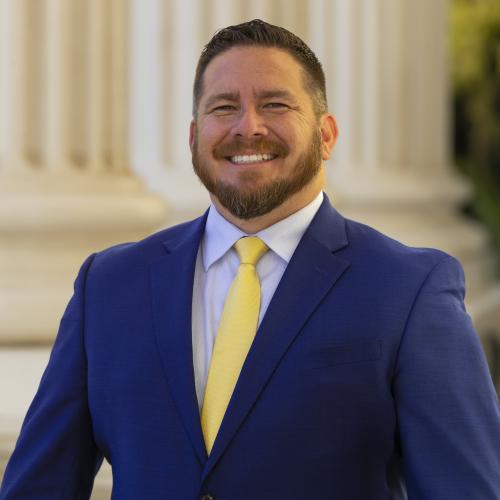
Asm. Juan Alanis
Sponsored bills
The California Global Warming Solutions Act of 2006 designates the State Air Resources Board as the state agency charged with monitoring and regulating sources of emissions of greenhouse gases. The act authorizes the state board to include in its regulation of those emissions the use of market-based compliance mechanisms. Existing law requires all moneys, except for fines and penalties, collected by the state board from the auction or sale of allowances as part of a market-based compliance mechanism to be deposited in the Greenhouse Gas Reduction Fund. Existing law continuously appropriates 25% of the annual proceeds of the fund to the High-Speed Rail Authority for certain purposes. This bill would require the Controller to transfer the sum of $3,000,000,000, from the unencumbered moneys appropriated to the authority before January 1, 2025, from the Greenhouse Gas Reduction Fund to the General Fund. The bill would specify that the transferred moneys, upon appropriation, are available to provide the owner of every gasoline-powered passenger vehicle, as defined, registered in the state with a $100 rebate to offset California's high gasoline prices.
The Petroleum Industry Information Reporting Act of 1980 requires operators of refineries in the state that produce gasoline meeting California specifications, within 30 days of the end of each calendar month, to submit a report to the State Energy Resources Conservation and Development Commission that contains certain information regarding its refining activities related to the production of gasoline that month. Existing law requires the commission to post, among other things, the reported data, in aggregate, on its internet website within 45 calendar days of the end of each calendar month. This bill would additionally require the commission to post, and regularly update, a dashboard on its internet website that includes the difference in average gasoline prices in California compared to national average gasoline prices, California-specific taxes, fees, regulations, and policies that directly or indirectly contribute to higher gasoline prices within the state and their individual contribution to the difference in average gasoline prices, and any substantiated evidence of price gouging or other anticompetitive behavior within the petroleum industry and its contribution to the difference in average gasoline prices, as specified.
The California Global Warming Solutions Act of 2006 establishes the State Air Resources Board as the state agency responsible for monitoring and regulating sources emitting greenhouse gases. The act requires the state board to adopt rules and regulations to achieve the maximum technologically feasible and cost-effective greenhouse gas emissions reductions to ensure that the statewide greenhouse gas emissions are reduced to at least 40% below the statewide greenhouse gas emissions limit, as defined, no later than December 31, 2030. Pursuant to the act, the state board has adopted the Low-Carbon Low Carbon Fuel Standard regulations. This bill would prohibit the state board from amending the Low-Carbon Low Carbon Fuel Standard regulations prior to January 1, 2026.
Existing law requires the State Department of Education to establish a formal liaison with the United States Department of Defense and school districts and county offices of education that enroll military dependents to, among other things, create model memoranda of agreement between military bases and school districts or county offices of education regarding enabling schoolage military dependents to experience a smoother transition from one school to another school. Existing law authorizes a governing board of a school district and a county office of education to undertake certain activities to properly address the needs of military dependents. This bill would require the State Department of Education to establish a nonmonetary California Purple Star School Designation Program to reduce the burden on military-connected pupils and their families and to publicly recognize and designate public schools that meet certain requirements related to supporting military-connected pupils and their families' unique needs, as provided. The bill would require the department to develop an annual application process and adopt application criteria for the California Purple Star School Designation Program, as specified, and would provide that a Purple Star School designation is valid for 3 years, after which a schoolsite seeking to renew its designation is required to reapply.
Existing law prohibits the production, development, duplication, distribution, or possession, as specified, of matter, in specified formats, that depicts a person under 18 years of age engaging in or simulating sexual conduct, as defined. Existing law separately prohibits this conduct where it is done for consideration or where such matter is shared with a minor. Existing law provides an enhanced punishment when these offenses are committed using government property. This bill would expand the scope of certain of these provisions to include matter that is digitally altered or generated by the use of artificial intelligence, as such matter is defined. By expanding the scope of an existing crime, this bill would impose a state-mandated local program. The California Constitution requires the state to reimburse local agencies and school districts for certain costs mandated by the state. Statutory provisions establish procedures for making that reimbursement. This bill would provide that no reimbursement is required by this act for a specified reason. This bill would become operative only if SB 1381 of the 2023–24 Regular Session is enacted and takes effect on or before January 1, 2025.
Existing law requires the Governor to appoint every officer whose mode of appointment is not prescribed by law. Existing law also prescribes the manner of the Governor's appointment of those officers. This bill would require the office of the Governor, commencing January 1, 2026, to maintain on its internet website a list of every state board and commission that includes, for each state board or commission, the membership list, stated purpose, duties, meeting frequency, internet website, and vacancies in the membership. The bill would require the office of the Governor, on or before January 1, 2027, and annually thereafter, to create and publish on its internet website a report containing aggregate demographic information of appointments made by the office during the prior calendar year, as specified.
Existing law authorizes a public or private elementary or secondary school to determine whether or not to make emergency naloxone hydrochloride or another opioid antagonist and trained personnel available at its school, and to designate one or more volunteers to receive related training to address an opioid overdose, as specified. Existing law prohibits a person who has completed that training and who administers, in good faith and not for compensation, naloxone hydrochloride or another opioid antagonist to a person who appears to be experiencing an opioid overdose from being subject to professional review, liable in a civil action, or subject to criminal prosecution for the person's acts or omissions in administering the naloxone hydrochloride or another opioid antagonist, unless the person's acts or omissions constituted gross negligence or willful and wanton misconduct, as provided. This bill would prohibit a school district, county office of education, or charter school from prohibiting a pupil 12 years of age or older, while on a schoolsite or participating in school activities, from carrying or administering, for the purposes of providing emergency treatment to persons who are suffering, or reasonably believed to be suffering, from an opioid overdose, a naloxone hydrochloride nasal spray or any other opioid overdose reversal medication that is federally approved for over-the-counter, nonprescription use, as provided. The bill would prohibit a pupil 12 years of age or older of those local educational agencies who administers those opioid antagonists on a schoolsite or while participating in school activities to a person who appears to be experiencing an opioid overdose, from being held liable in a civil action or being subject to criminal prosecution for their acts or omissions, unless the pupil's acts or omissions constitute gross negligence or willful and wanton misconduct, as provided. The bill would also prohibit those local educational agencies, or an employee of those local educational agencies, from being subject to professional review, liable in a civil action, or subject to criminal prosecution for a pupil's acts or omissions in administering those opioid antagonists, unless an act or omission of the local educational agency, or the employee of the local educational agency, constitutes gross negligence or willful and wanton misconduct connected to the administration of those opioid antagonists.
Existing law establishes the California Community Colleges under the administration of the Board of Governors of the California Community Colleges, the California State University under the administration of the Trustees of the California State University, and the University of California under the administration of the Regents of the University of California as the 3 segments of public postsecondary education in the state. Existing law requires the office of the Chancellor of the California State University and the office of the Chancellor of the California Community Colleges, and requests the office of the President of the University of California, to require each of their respective campuses that provide campus-owned, campus-operated, or campus-affiliated student housing to collect and post on its external and internal internet websites, data on student housing, as specified. This bill would require the office of the Chancellor of the California State University and the office of the Chancellor of the California Community Colleges, and request the office of the President of the University of California, to require each of their respective campuses that provide campus-owned, campus-operated, or campus-affiliated student housing to include additional information regarding students who are veterans, as defined, in the above-described data on student housing. To the extent the bill imposes additional duties on community college districts, the bill would impose a state-mandated local program. The California Constitution requires the state to reimburse local agencies and school districts for certain costs mandated by the state. Statutory provisions establish procedures for making that reimbursement. This bill would provide that, if the Commission on State Mandates determines that the bill contains costs mandated by the state, reimbursement for those costs shall be made pursuant to the statutory provisions noted above.
Existing law defines the term "public works" for the purposes of requirements regarding the payment of prevailing wages, the regulation of working hours, and the securing of workers' compensation for public works projects. Existing law requires an entity awarding a public works contract, as specified, to provide notice to the Department of Industrial Relations. Existing law requires civil penalties to be imposed on an entity that fails to provide that required notice and authorizes the Labor Commissioner to issue a citation for civil penalties to an entity that fails to provide the required notice. This bill would additionally require the awarding body to provide notice to the department, within 30 days, if there is a change in the identity of a contractor or subcontractor performing the project or, if the total amount of the contract change exceeds specified thresholds. The bill would exempt projects of awarding bodies operating labor compliance programs that are approved and monitored by the department and covered by a valid project labor agreement. By creating new notification requirements for public agencies, this bill would impose a state-mandated local program. The California Constitution requires the state to reimburse local agencies and school districts for certain costs mandated by the state. Statutory provisions establish procedures for making that reimbursement. This bill would provide that, if the Commission on State Mandates determines that the bill contains costs mandated by the state, reimbursement for those costs shall be made pursuant to the statutory provisions noted above.