

The Small Business Procurement and Contract Act permits a state agency or the California State University to award a contract for goods, services, or information technology with an estimated value between $5,000 and $250,000 to a certified small business, including a microbusiness and a disabled veteran business enterprise, without complying with specified competitive bidding requirements. This bill would increase the maximum estimated value of a contract for goods, services, or information technology awarded pursuant to the act from $250,000 to $350,000. Commencing January 1, 2028, and biennially thereafter, the bill would require the Director of General Services to conduct a review of that maximum value, and would authorize the director to adjust that value to reflect changes in the California Consumer Price Index.
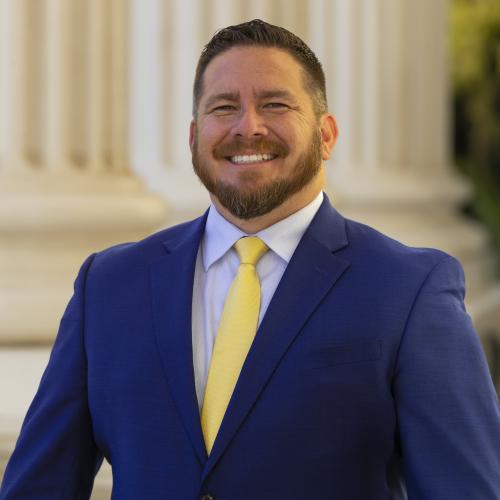
Asm. Juan Alanis
Sponsored bills
Existing law establishes the Office of Land Use and Climate Innovation in the Governor's office for the purpose of serving the Governor and the Governor's cabinet as staff for long-range planning and research and constituting the comprehensive state planning agency. Existing law authorizes a local agency to finance infrastructure projects through various means, including by authorizing a city or county to establish an enhanced infrastructure financing district to finance public capital facilities or other specified projects of communitywide significance that provide significant benefits to the district or the surrounding community. This bill would require the office, upon appropriation by the Legislature, to establish the Infrastructure Gap-Fund Program to provide grants to local agencies for the development and construction of infrastructure projects, as defined, facing unforeseen costs after starting construction. The bill would authorize the office to provide funding for up to 20% of a project's additional projected cost, as defined, after the project has started construction, subject to specified conditions, including, among other things, that the local agency has allocated existing local tax revenue for at least 45% of the initially budgeted total cost of the infrastructure project. When applying to the program, the bill would require the local agency to demonstrate challenges with completing the project on time and on budget and how the infrastructure project helps meet state and local goals, as specified. The bill would require the office to develop guidelines to implement the program that establish the criteria by which grant applications will be evaluated and funded. The bill would make these provisions operative on January 1, 2030.
Existing law establishes a motor vehicle inspection and maintenance (smog check) program that is administered by the Department of Consumer Affairs. The smog check program requires inspection of motor vehicles upon initial registration, biennially upon renewal of registration, upon transfer of ownership, and in certain other circumstances. Existing law exempts specified vehicles from being inspected biennially upon renewal of registration, including, among others, all motor vehicles manufactured prior to the 1976 model year. Existing law also exempts from specified portions of the smog test, both biennially and at transfer, a collector motor vehicle that is insured as a collector motor vehicle, is at least 35 model years old, complies with the exhaust emissions standards for that motor vehicle's class and model year as prescribed by the department, and that passes a functional inspection of the fuel cap and a visual inspection for liquid fuel leaks. This bill would, commencing on January 1, 2027, additionally fully exempt from the smog check requirements, both biennially and at transfer, a motor vehicle that was manufactured prior to the 1981 model year, has been assigned a special identification plate indicating that it is a historical vehicle, and is insured as a collector motor vehicle, as specified. The bill, beginning January 1, 2028, would expand this exemption by one model year, every year, for 5 years. The bill would be known, and may be cited as, Leno's Law.
Existing law, the California Emergency Services Act, authorizes the Governor to declare a state of emergency during conditions of disaster or extreme peril to persons or property. Existing law authorizes the Governor, during a state of emergency, to suspend any regulatory statute, or statute prescribing the procedure for conduct of state business, or the orders, rules, or regulations of any state agency, if the Governor determines and declares that strict compliance with any statute, order, rule, or regulation would in any way prevent, hinder, or delay the mitigation of the effects of the emergency. Under the authority of the California Emergency Services Act, on March 1, 2025, Governor Gavin Newsom issued a proclamation of a state of emergency that suspends applicable state statutes, rules, regulations, and requirements that fall within the jurisdiction of boards, departments, and offices within the California Environmental Protection Agency or the Natural Resources Agency to the extent necessary for expediting critical fuels reduction projects, as provided. The proclamation requires an individual or entity desiring to conduct a critical fuels reduction project to request the secretary of the appropriate agency to make a determination that the proposed project is eligible for the suspension and requires the California Environmental Protection Agency and the Natural Resources Agency to maintain on their respective internet website a list of all suspensions approved. This bill would, on or before January 31, 2026, require the California Environmental Protection Agency and the Natural Resources Agency to each report to the Legislature information on the implementation of the above-described proclamation of emergency, as provided. The California Environmental Quality Act (CEQA) requires a lead agency, as defined, to prepare, or cause to be prepared, and certify the completion of an environmental impact report on a project that it proposes to carry out or approve that may have a significant effect on the environment or to adopt a negative declaration if it finds that the project will not have that effect. CEQA also requires a lead agency to prepare a mitigated negative declaration for a project that may have a significant effect on the environment if revisions in the project would avoid or mitigate that effect and there is no substantial evidence that the project, as revised, would have a significant effect on the environment. CEQA exempts from its requirements certain projects. This bill would, until January 1, 2028, exempt from CEQA critical fuels reduction projects conducted in communities located in very high fire hazard severity zones, as provided. The bill would require the lead agency to hold a noticed public meeting to hear and respond to public comments before determining that a project is exempt and would require the lead agency to provide notice of the public meeting on its internet website at least 30 days before the public meeting. The bill would require the lead agency, if it determines that a project is not subject to CEQA and approves or carries out that project, to file a notice of exemption with the Office of Land Use and Climate Innovation and with the clerk of the county in which the project will be located. Because a lead agency would be required to determine whether a project qualifies for this exemption, the bill would impose a state-mandated local program. The California Constitution requires the state to reimburse local agencies and school districts for certain costs mandated by the state. Statutory provisions establish procedures for making that reimbursement. This bill would provide that no reimbursement is required by this act for a specified reason.
Existing law makes it a crime for a person who has the care or custody of a child to willfully cause or permit the person or health of that child to be injured or willfully cause or permit that child to be placed in a situation where the child's health may be endangered, as specified. Existing law imposes a 4-year enhancement on a person who violates that provision and who willfully causes or permits a child to suffer, inflicts thereon unjustifiable physical pain or injury that results in death, or, having the care or custody of a child, willfully causes or permits that child to be injured or harmed, as specified, and that injury or harm results in death. Existing law requires a person who, having the care or custody of a child who is under 8 years of age, assaults the child by means of force that to a reasonable person would be likely to produce great bodily injury, resulting in the child's death, to be punished by imprisonment in the state prison for 25 years to life. Under existing law, a prisoner can reduce their term of imprisonment by earning credit for, among other things, continuous incarceration, good behavior, and participation in approved rehabilitative programming. The California Constitution grants to the Department of Corrections and Rehabilitation the sole authority to award credits for good behavior and approved rehabilitative or educational achievements. Existing law prohibits a prisoner convicted of specified felony offenses from earning credit if the prisoner previously has been convicted of one of those felony offenses 2 or more times and has served 2 or more separate prior prison terms. Existing law makes an inmate of a state prison, or of a county jail, who has completed training for assignment to a correctional institution as an inmate firefighter, or who is assigned to a correctional institution as an inmate firefighter, eligible to earn 2 days of credit for every one day served in that assignment or after completing that training. This bill, Ryla's Law, would make a person convicted of specific child abuse crimes ineligible to earn 2 days of credit for every one day served as an inmate firefighter or after completing inmate firefighting training. By reducing the amount of credits an inmate sentenced to county jail can earn, this bill would create a state-mandated local program. The California Constitution requires the state to reimburse local agencies and school districts for certain costs mandated by the state. Statutory provisions establish procedures for making that reimbursement. This bill would provide that no reimbursement is required by this act for a specified reason.
This measure would call on members of the United States Congress to oppose reductions to funding that negatively impact educational services for students with disabilities and would call on the President of the United States and Congress to ensure that services and funding for students with disabilities are uninterrupted.
This measure would recognize February 2025 as Black History Month, urge all citizens to join in celebrating the accomplishments of African Americans during Black History Month, and encourage the people of California to recognize the many talents of African Americans and the achievements and contributions they make to their communities to create equity and equality for education, economics, and social justice. The measure would also recognize the significance in protecting citizens' right to vote and remedying racial discrimination in voting.
Existing law authorizes a private ambulance owner to operate an emergency ambulance service upon obtaining a license from the Department of the California Highway Patrol, as specified. This bill would authorize those license holders or a person who operates ambulances owned or operated by a fire department of a federally recognized Indian tribe to transport a police canine, as defined, or a search and rescue dog, as defined, that is injured in the line of duty, to a veterinary clinic or similar facility if there is no other person requiring medical attention or transport at that time. The bill would require an ambulance operator, except as specified, that provides transport to police canines or search and rescue dogs injured in the line of duty to develop policies regarding the transport of these dogs. The bill would require these policies to be submitted to, and approved by, the local emergency medical services agency. Existing law requires emergency services and care to be provided to any person requesting the services or care, as specified. Existing law authorizes an emergency responder to provide basic first aid to dogs and cats, as specified, and exempts from civil liability specified emergency personnel who, in good faith and not for compensation, render emergency medical or nonmedical care, including to dogs and cats, at the scene of an emergency, as specified, resulting from any act or omission. This bill would authorize an emergency responder to provide basic first aid to a police canine or search and rescue dog that is injured in the line of duty while the police canine or search and rescue dog is being transported to a veterinary clinic or similar facility, and would exempt that person from civil or criminal liability if they act in good faith and not for compensation to provide basic first aid to an injured police canine or search and rescue dog while the police canine or search and rescue dog is being transported to a veterinary clinic or similar facility, subject to a specified limitation. Existing law makes it unlawful for any person to practice veterinary medicine unless the person holds a valid license, as specified, subject to specified exemptions, including that an emergency responder may provide basic first aid to dogs and cats, as defined, to the extent that the provision of that care is not prohibited by the responder's employer. This bill would make clarifying changes to those provisions authorizing an emergency provider to provide basic first aid to dogs and cats.
Maddy summarySCR 97 designates September 2025 as California Emergency Preparedness Month. This procedural resolution does not create new laws or affect specific groups; it solely serves to formally recognize and promote public awareness about emergency preparedness during that month. The measure directs state agencies and organizations to encourage community activities related to emergency planning and safety. It has no direct policy impact beyond this symbolic designation.
Maddy summaryThis resolution designates August 2025 as "Chicano Heritage Month" in California. It symbolically recognizes the historical contributions of Chicanos/Chicanas to U.S. society, including their role in cultural, educational, and political movements. The resolution encourages all Californians to acknowledge and celebrate this heritage, without creating new programs, funding, or legal requirements. It directly affects the public by promoting awareness of this cultural identity, aligning with similar declarations like Santa Ana's 2021 adoption. The resolution was unanimously passed by the California Assembly on August 25, 2025.