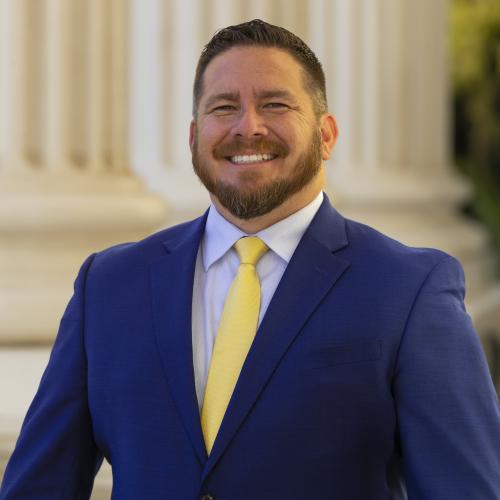
Photo of Juan Alanis
R California Assembly · District 22 On the 2026 ballot

Asm. Juan Alanis

Compare
Total votes
10,307
all sessions
Attendance
93%
551 missed
Lower than 85% of chamber peers
With party
95%
of cast votes
Near the chamber average
Bipartisan score
3%
crosses aisle rarely
Near the chamber average
Sponsored
1,102
bills & resolutions
Higher than 91% of chamber peers
Committees
19
assignments
1,102 bills and resolutions

Sponsored bills

Total
1,102
Primary
101
Co-sponsor
1,001
This page
1,102
matching current filters
Primary AJR 15
Signed into law · California Assembly · Lead sponsor
The Major Richard Star Act.

This measure would urge the United States Congress to pass the Major Richard Star Act to ensure veterans with disabilities receive their full United States Department of Defense retirement pay and United States Department of Veterans Affairs disability compensation without offset.

Signed into law Sep 5, 2025 0 co-sponsors
Co-sponsor HR 67
Passed · California Assembly · Co-sponsor
Relative to All California Day.

Maddy summaryHR 67 designates November 9 as "All California Day" to celebrate California's shared history and cultural ties with Baja California and Baja California Sur. The resolution encourages community events and cultural celebrations across the state to honor this interconnected heritage, including contributions from Indigenous peoples and Mexican heritage communities. As a ceremonial resolution (not a binding law), it has no direct regulatory or financial impact on any specific group or policy. The measure was adopted by the California Assembly on September 4, 2025.

Passed Sep 4, 2025 1 co-sponsor
Co-sponsor HR 58
Passed · California Assembly · Co-sponsor
Relative to California Promotoras Month.

Maddy summaryThis House Resolution (HR 58) declares October 2025 as "California Promotoras Month" to formally recognize the work of promotoras - community health workers who serve as cultural brokers and connect underserved communities (particularly Latino populations) to essential services like health, housing, and disaster response. It acknowledges their role in improving community resilience and access to resources, while highlighting the need for better support, training, and equitable compensation for this workforce. The resolution is symbolic and does not create new laws, funding, or programs; it solely aims to raise awareness and honor promotoras' contributions through a designated month of recognition.

Passed Sep 4, 2025 1 co-sponsor
Co-sponsor HR 70
Passed · California Assembly · Co-sponsor
Relative to Direct Support Professional Recognition Week.

Maddy summaryThis is a symbolic resolution, not a substantive bill. It designates September 7-13, 2025, as "Direct Support Professional Recognition Week" in California. The resolution acknowledges direct support professionals who assist Californians with intellectual and developmental disabilities (IDD) through the state's Lanterman Act system, which serves over 450,000 residents. It formally recognizes their role in enabling community inclusion and independence but does not create new policies, funding, or legal obligations.

Passed Sep 4, 2025 1 co-sponsor
Co-sponsor HR 71
Passed · California Assembly · Co-sponsor
Relative to National Fried Rice Day.

Maddy summaryThis symbolic resolution recognizes September 20, 2025, as National Fried Rice Day in California, highlighting the dish's cultural significance to Asian American communities and its connection to California's rice-growing economy (noting the state's status as the second-largest rice producer). It has no legal effect or policy changes - it serves solely to celebrate culinary traditions and community diversity. The resolution was adopted by the California Assembly with no opposing votes.

Passed Sep 4, 2025 1 co-sponsor
Co-sponsor HR 65
Passed · California Assembly · Co-sponsor
Relative to Filipino American History Month.

Maddy summaryThis House Resolution designates a month as Filipino American History Month in California. It recognizes the historical contributions of Filipino Americans to the state, including early settlement (dating to 1587), agricultural labor, community building (such as "Little Manila" in Stockton), and military service during World War II. As a symbolic resolution, it does not create new laws, policies, or direct effects on any specific group.

Passed Sep 2, 2025 1 co-sponsor
Co-sponsor SB 55
Passed · California Senate · Co-sponsor
State parks: facilities pass: Gold Star Family members.

Existing law requires the Department of Parks and Recreation to issue a park pass for free use of all park facilities in the state park system to a veteran of war in which the United States has been, or may be, engaged, who is a resident of this state, who presents to the department proof of a disability, proof of being held captive as a prisoner of war, or proof of being a recipient of a Congressional Medal of Honor, and proof of an honorable discharge from service. This bill would require an eligible Gold Star Family member, as defined, upon presentation of proof to the department, to be issued a pass for use of all facilities, including boat launching facilities, in units of the state park system.

Passed Aug 29, 2025 1 co-sponsor
Co-sponsor AB 793
Passed · California Assembly · Co-sponsor
Potentially dangerous and vicious dogs: designation and disposition: burden of proof.

(1) Existing law regulates potentially dangerous and vicious dogs and requires the chief officer of the public animal shelter or animal control department, or the head of the local law enforcement agency, if probable cause exists to believe that a dog is potentially dangerous or vicious, to petition the superior court for a hearing in a limited civil proceeding to determine, upon a preponderance of the evidence, whether the dog should be declared potentially dangerous or vicious. Existing law also authorizes a city or county to establish an administrative hearing procedure to hear and dispose of petitions filed for these purposes. Existing law authorizes the owner or keeper of the dog to contest the determination through an appeal to the superior court, as specified, and requires the superior court to make its own determination, upon a preponderance of the evidence, as to the potential danger and viciousness of the dog. Existing law authorizes a dog determined to be a vicious dog to be destroyed by the animal control department when it is found, after one of those proceedings conducted by a court or other hearing entity, that the release of the dog would create a significant threat to the public health, safety, and welfare. For purposes of these provisions, existing law generally defines "potentially dangerous dog" and "vicious dog" as a dog that, when unprovoked, engages in specified conduct, as applicable. This bill would require a court or other hearing entity in a proceeding on original jurisdiction, or a court in a proceeding on appeal, to determine whether a dog is vicious upon clear and convincing evidence and, when determining whether a dog is potentially dangerous or vicious, to make factual findings to support the conclusion that each requirement for placement in that category has been met, including findings specific to whether the dog was provoked. The bill would define the term "provoke" for purposes of these provisions. The bill would require any order issued under these provisions to end a dog's life for reasons of public health, safety, and welfare to be supported by clear and convincing evidence that the jurisdiction's requirements for the order are met and to include specified findings. The bill would provide that provocation shall be a factor when considering whether and how a dog can be regulated to mitigate risk to public health, safety, and welfare, as specified. (2) Existing law prohibits a dog from being declared potentially dangerous or vicious under the above-described proceedings under specified circumstances, including, among others, if any injury or damage is sustained by a person who, at the time the injury or damage was sustained, was teasing, tormenting, abusing, or assaulting the dog. This bill would also prohibit a dog from being declared potentially dangerous or vicious under these provisions if any injury or damage is sustained by a person who, at the time the injury or damage was sustained, was provoking the dog, as specified. (3) Under existing law, the above-described provisions regulating potentially dangerous and vicious dogs do not prevent a city or county from adopting or enforcing its own program for the control of potentially dangerous or vicious dogs if that program does not regulate these dogs in a manner that is specific as to breed, as specified. This bill would require such a program adopted by a city or county to comply with certain requirements, including, among others, requirements to apply the clear and convincing evidence burden of proof in a hearing that could or will result in an order of death to protect public health, safety, and welfare and to apply the same requirements described above applicable to issuing an order to end a dog's life for reasons of public health, safety, and welfare. (4) This bill would provide that the above-described provisions governing the regulation of potentially dangerous and vicious dogs apply only to governmental or judicial proceedings to evaluate and address a risk to public health, safety, and welfare posed by individual dogs and do not apply to any civil action for remedies. (5) The bill would include findings that certain changes proposed by this bill address a matter of statewide concern rather than a municipal affair and apply to all counties and cities, including charter counties and charter cities.


Passed Aug 29, 2025 1 co-sponsor
Co-sponsor SB 431
Passed · California Senate · Co-sponsor
Assault and battery: utility workers.

Existing law defines an assault as an unlawful attempt, coupled with present ability, to commit a violent injury upon the person of another. Existing law defines a battery as any willful and unlawful use of force or violence upon the person of another. Under existing law, an assault or battery committed against specified professionals engaged in the performance of their duties, including peace officers, firefighters, and emergency medical personnel, is punishable by imprisonment in a county jail not exceeding one year, by a fine not exceeding $2,000, or by both that fine and imprisonment. This bill would make an assault or battery committed against a utility worker, as defined, who is engaged in the performance of their duties punishable by imprisonment in a county jail not exceeding one year, by a fine not exceeding $2,000, or by both that fine and imprisonment. By expanding the scope of these crimes, this bill would impose a state-mandated local program. The California Constitution requires the state to reimburse local agencies and school districts for certain costs mandated by the state. Statutory provisions establish procedures for making that reimbursement. This bill would provide that no reimbursement is required by this act for a specified reason.

Passed Aug 29, 2025 1 co-sponsor
Co-sponsor AB 1105
Passed · California Assembly · Co-sponsor
Conservatorships.

Existing law, the Guardianship-Conservatorship Law, generally establishes the standards and procedures for the appointment and termination of an appointment for a guardian or conservator of a person, an estate, or both. Existing law authorizes a conservator to authorize the placement of a conservatee in a secured perimeter residential care facility for the elderly upon a court making specific findings. This bill would also authorize a conservator to authorize the placement of a conservatee in a residential facility, an intermediate care facility, or a skilled nursing facility, as defined, that has a secured perimeter, a delayed egress device, or both a secured perimeter and a delayed egress device, as specified. The bill would require court approval for a subsequent placement of a conservatee in a different facility if specific regulations have not been promulgated for the type of facility to which the conservator is seeking to move the conservatee. The bill would require the State Department of Social Services and the State Department of Public Health to update their regulations related to these provisions, including, among other things, to create regulations to protect the rights, health, and safety of residents, by January 1, 2027, and would authorize those departments to promulgate emergency regulations prior to that date.

Passed Aug 29, 2025 1 co-sponsor
Showing 371 to 380 of 1,102 bills
Previous 1 … 37 38 39 … 111 Next