

Passed Jan 18, 2024
1 co-sponsor
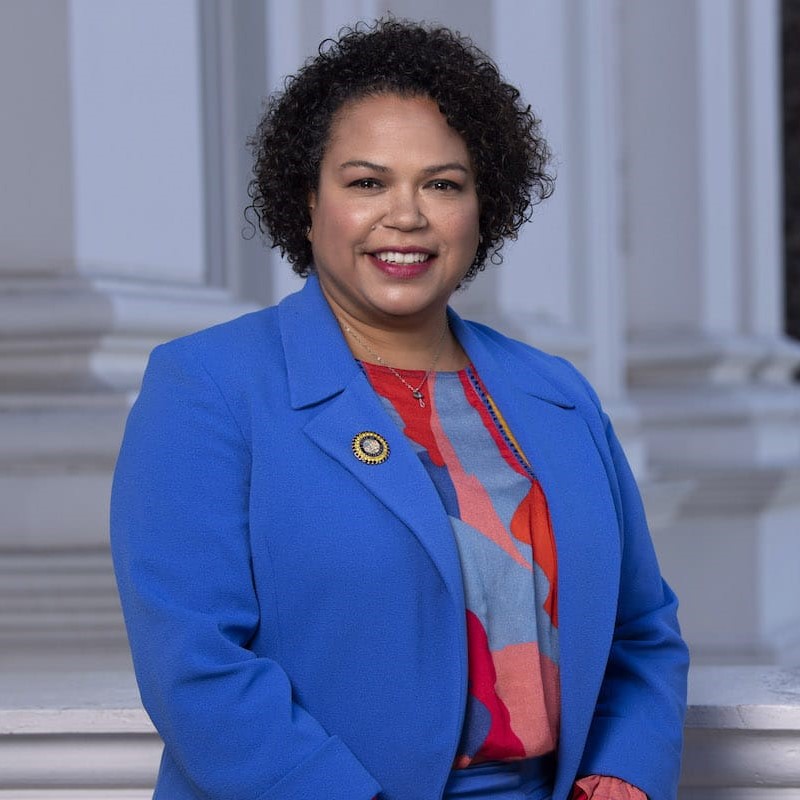
Asm. Mia Bonta
Total votes
12,577
all sessions
Attendance
92%
902 missed
Near the chamber average
With party
99%
of cast votes
Near the chamber average
Bipartisan score
0%
crosses aisle rarely
Near the chamber average
Sponsored
1,139
bills & resolutions
Higher than 80% of chamber peers
Committees
14
assignments
1,139 bills and resolutions
Sponsored bills
Total
1,139
Primary
116
Co-sponsor
1,023
This page
1,139
matching current filters
Passed Jan 16, 2024
1 co-sponsor
Juveniles: informal supervision.
Existing law subjects a person between 12 and 17 years of age, inclusive, who commits a crime, and a person under 12 years of age who commits specified crimes, to the jurisdiction of the juvenile court, which may adjudge that person to be a ward of the court. Existing law authorizes a probation officer, in certain circumstances, to delineate a specific program of supervision for a minor who is alleged to have committed a crime. Existing law makes a minor ineligible for that program of supervision for specified reasons, including if the minor is alleged to have committed an offense in which the restitution owed to the victim exceeds $1,000, except in those unusual cases in where the interest of justice would best be served. This bill would instead prohibit a minor from participating in a program of supervision if the minor has committed an offense in which the restitution owed exceeds $5,000. Upon receipt of an application to commence proceedings in the juvenile court, as specified, existing law requires a probation officer to make any investigation the officer deems necessary to determine whether proceedings in the juvenile court should be commenced. Existing law requires the probation officer to commence proceedings within 48 hours if the minor has been referred to the probation officer for specified offenses, including if the minor is alleged to have committed an offense in which restitution owed to the victim exceeds $1,000. This bill would instead require the probation officer to commence proceedings within 48 hours if the minor is alleged to have committed an offense in which restitution owed to the victim exceeds $5,000.
Signed into law Oct 13, 2023
1 co-sponsor
State highways: worker safety.
(1) Existing law establishes the Department of Transportation and provides that the department has full possession and control of all state highways and property and rights in property acquired for state highway purposes. Existing law authorizes the department to construct, improve, and maintain state highways. Existing law requires the department to update guidance by July 1, 2021, to specify the appropriate use of positive protection measures with the goal of isolating workers or work zones from traffic. Existing law requires the department to provide compensation for the use of a safety device where the updated guidance allows, but does not require, the optional safety device when requested by a contractor on a public works project. Existing law requires the department to submit a report to the Legislature by January 1, 2024, that includes findings and recommendations on the use of positive protection measures used pursuant to these provisions. Existing law repeals these provisions on January 1, 2025. This bill would eliminate the January 1, 2025, repeal date, thereby extending these provisions indefinitely. The bill would specify that the department is only required to compensate for an optional safety device requested for use on a public works project of the department. After the submittal of the report due on January 1, 2024, the bill would require the department to prescribe standards and specifications to require the appropriate use of positive protection on all covered activities on the state highway system, as specified. The bill would authorize the department to adopt regulations as necessary or appropriate to carry out the purposes of these provisions, and would exempt those regulations from the Administrative Procedures Act. (2) Existing law grants the Division of Occupational Safety and Health, which is within the Department of Industrial Relations, jurisdiction over all employment and places of employment, with the power necessary to enforce and administer all occupational health and safety laws and standards. This bill would require a contractor that has requested and received compensation from the department for an optional safety device to use the optional safety device in conformance with the department's guidance. The bill would authorize the division to adopt regulations as necessary or appropriate to enforce this requirement.
Signed into law Oct 13, 2023
1 co-sponsor
Vehicles: speed safety system pilot program.
Existing law establishes a basic speed law that prohibits a person from driving a vehicle upon a highway at a speed greater than is reasonable or prudent given the weather, visibility, traffic, and highway conditions and in no event at a speed that endangers the safety of persons or property. This bill would authorize, until January 1, 2032, the Cities of Los Angeles, San Jose, Oakland, Glendale, and Long Beach, and the City and County of San Francisco to establish a Speed Safety System Pilot Program if the system meets specified requirements. The bill would require a participating city or city and county to adopt a Speed Safety System Use Policy and a Speed Safety System Impact Report before implementing the program, and would require the participating city or city and county to engage in a public information campaign at least 30 days before implementation of the program, including information relating to when the systems would begin detecting violations and where the systems would be utilized. The bill would require a participating city or city and county to issue warning notices rather than notices of violations for violations detected within the first 60 calendar days of the program. The bill would also require a participating city or city and county to develop uniform guidelines for, among other things, the processing and storage of confidential information. The bill would designate all photographic or administrative records, not including data about the number of violations issued or the speeds at which they were issued for, made by a system as confidential, and would only authorize public agencies to use and allow access to these records for specified purposes. This bill would specify that any violation of a speed law recorded by a speed safety system authorized by these provisions would be subject only to the provided civil penalties. The bill would, among other things, provide for the issuance of a notice of violation, an initial review, an administrative hearing, and an appeals process, as specified, for a violation under this program. The bill would require any program created pursuant to these provisions to offer a diversion program for indigent speed safety system violation recipients, as specified. The bill would require a city or city and county participating in the pilot program to submit a report to evaluate the speed safety system to determine the system's impact on street safety and economic impact on the communities where the system is utilized. Existing law establishes a $25 filing fee for specified appeals and petitions. This bill would require a $25 filing fee for an appeal challenging a notice of violation issued as a result of a speed safety system until January 1, 2032. Existing constitutional provisions require that a statute that limits the right of access to the meetings of public bodies or the writings of public officials and agencies be adopted with findings demonstrating the interest protected by the limitation and the need for protecting that interest. This bill would make legislative findings to that effect. This bill would make legislative findings and declarations as to the necessity of a special statute for the Cities of Los Angeles, San Jose, Oakland, Glendale, and Long Beach, and the City and County of San Francisco.
Signed into law Oct 13, 2023
1 co-sponsor
Minimum wages: health care workers.
Existing law generally requires the minimum wage for all industries to not be less than specified amounts to be increased until it is $15 per hour commencing January 1, 2022, for employers employing 26 or more employees, and commencing January 1, 2023, for employers employing 25 or fewer employees. Existing law makes a violation of minimum wage requirements a misdemeanor. This bill would establish 5 separate minimum wage schedules for covered health care employees, as defined, depending on the nature of the employer. This bill would require, for any covered health care facility employer, as defined, with 10,000 or more full-time equivalent employees (FTEE) , as defined, any covered health care facility employer that is a part of an integrated health care delivery system or a health care system with 10,000 or more FTEEs, a covered health care facility employer that is a dialysis clinic or is a person that owns, controls, or operates a dialysis clinic, or a covered health facility owned, affiliated, or operated by a county with a population of more than 5,000,000 as of January 1, 2023, the minimum wage for covered health care employees to be $23 per hour from June 1, 2024, to May 31, 2025, inclusive, $24 per hour from June 1, 2025, to May 31, 2026, inclusive, and $25 per hour from June 1, 2026, and until as adjusted as specified. This bill would require, for any hospital that is a hospital with a high governmental payor mix, an independent hospital with an elevated governmental payor mix, a rural independent covered health care facility, or a covered health care facility that is owned, affiliated, or operated by a county with a population of less than 250,000 as of January 1, 2023, as those terms are defined, the minimum wage for covered health care employees to be $18 per hour from June 1, 2024, to May 31, 2033, inclusive, and $25 per hour from June 1, 2033, and until as adjusted as specified. This bill would require, for specified clinics that meet certain requirements, the minimum wage for covered health care employees to be $21 per hour from June 1, 2024, to May 31, 2026, inclusive, and $22 per hour from June 1, 2026, to May 31, 2027, inclusive, and $25 from June 1, 2027, and until as adjusted as specified. This bill would require, for all other covered health care facility employers, the minimum wage for covered health care employees to be $21 per hour from June 1, 2024, to May 31, 2026, inclusive, $23 per hour from June 1, 2026, to May 31, 2028, inclusive, and $25 per hour from June 1, 2028, and until as adjusted as specified. This bill would provide that a covered health care facility that is county owned, affiliated, or operated must implement the appropriate minimum wage schedule described above, as applicable, beginning January 1, 2025. This bill would also separately require, for a licensed skilled nursing facility, as described, the minimum wage for certain other covered health care employees, as described, to be $21 per hour from June 1, 2024, to May 31, 2026, inclusive, $23 per hour from June 1, 2026, to May 31, 2028, inclusive, and $25 per hour from June 1, 2028, and until as adjusted as specified. The bill would make this minimum wage requirement effective only when a patient care minimum spending requirement applicable to skilled nursing facilities is in effect. This bill would provide that the health care worker minimum wages constitute the state minimum wage for covered health care employment for all purposes under the Labor Code and the Wage Orders of the Industrial Welfare Commission. The bill would provide that a health care worker minimum wage is enforceable by the Labor Commissioner or by a covered worker through a civil action, through the same means and with the same relief available for violation of any other state minimum wage requirement. By establishing new minimum wages, the violation of which would be a crime, the bill would impose a state-mandated local program. This bill would require, for covered health care employment where the employee is paid on a salary basis, that the employee earn a monthly salary equivalent to no less than 150% of the health care worker minimum wage or 200% of the applicable minimum wage, whichever is greater, for full-time employment in order to qualify as exempt from the payment of minimum wage and overtime. This bill would require the Department of Health Care Access and Information to publish, on or before January 31, 2024, and on the department's internet website, specified information, including a list of hospitals that qualify under certain classifications. The bill would provide, until January 31, 2025, a process for hospitals excluded from that list to request classification. This bill would authorize, until January 1, 2025, the adoption of any necessary rules and regulations for purposes of implementing certain provisions of the bill as emergency regulations in accordance with the Administrative Procedure Act and would deem the adoption of those emergency regulations an emergency and necessary for the immediate preservation of the public peace, health and safety, or general welfare. The bill would require the Department of Health Care Access and Information to consider input from specified stakeholders when adopting those rules and regulations, as specified. This bill would, by March 1, 2024, require the Department of Industrial Relations, in collaboration with the State Department of Health Care Services and the Department of Health Care Access and Information, to develop a waiver program that would allow a covered health care facility, as defined, to apply for and receive a temporary pause or alternative phase in schedule of the minimum wage requirements described above. In order to obtain a waiver, the bill would require a covered health care facility to demonstrate that compliance with the minimum wage requirements would raise doubts about the covered health care facility's ability to continue as a going concern under generally accepted accounting principles, as specified. The bill would provide that issuance of the terms of the pause or alternative phase in schedule is solely and exclusively within the authority of the Department of Industrial Relations, and the authority regarding whether the covered health care facility demonstrates the inability to continue as a going concern pursuant is solely and exclusively within the authority of the State Department of Health Care Services. This bill would prohibit any ordinance, regulations, or administrative action that is applicable to a covered health care facility and that establishes, requires, imposes, limits, or otherwise relates to wages or compensation for covered health care facility employees from being enacted or enforced in or by any city, county, or city and county, except as provided. This bill would also make its provisions severable. This bill would make legislative findings and declarations as to the necessity of a special statute for health care workers. The bill would include findings that changes proposed by this bill address a matter of statewide concern rather than a municipal affair and, therefore, apply to all cities, including charter cities. The California Constitution requires the state to reimburse local agencies and school districts for certain costs mandated by the state. Statutory provisions establish procedures for making that reimbursement. This bill would provide that no reimbursement is required by this act for a specified reason.
Signed into law Oct 13, 2023
1 co-sponsor
Tenancy: security deposits.
Existing law regulates the terms and conditions of residential tenancies, and prohibits a landlord from demanding or receiving security for a rental agreement for residential property, however denominated, in an amount or value in excess of an amount equal to 2 months' rent, in the case of unfurnished residential property, and an amount equal to 3 months' rent, in the case of furnished residential property, in addition to any rent for the first month paid on or before initial occupancy. This bill would, beginning July 1, 2024, instead prohibit a landlord from demanding or receiving security for a rental agreement for residential property in an amount or value in excess of an amount equal to one month's rent, regardless of whether the residential property is unfurnished or furnished, in addition to any rent for the first month paid on or before initial occupancy. The bill, unless the prospective tenant is a service member, as defined, would prohibit a landlord from demanding or receiving security for a rental agreement for residential property in an amount or value in excess of 2 months' rent, in addition to any rent for the first month, if the landlord (1) is a natural person or a limited liability corporation in which all members are natural persons and (2) owns no more than 2 residential rental properties that collectively include no more than 4 dwelling units offered for rent.
Signed into law Oct 11, 2023
1 co-sponsor
Local agencies: airports: customer facility charges.
(1) Existing law authorizes airports to require rental companies to collect a customer facility charge or an alternative customer facility charge under specified circumstances for purposes that include financing, designing, and constructing airport vehicle rental facilities and common-use transportation systems. Existing law, beginning January 1, 2024, provides that the authorization for an airport to impose a customer facility charge becomes inoperative when the bonds used for financing are paid, except as specified. This bill would delete the provision ending the authorization described above. (2) If a bond or other form of indebtedness is not used for financing, or a bond or other form of indebtedness used for financing has been paid, existing law, beginning January 1, 2024, authorizes the Oakland International Airport to require the collection of a customer facility charge for a period of up to 10 years from the imposition of the charge for specified purposes and subject to certain conditions. This bill would delete that provision. (3) Existing law requires an airport to initiate the process for obtaining the authority to require or increase an alternative customer facility charge no later than January 1, 2025, as provided. This bill would remove the requirement on an airport to initiate the process described above by January 1, 2025. (4) This bill would make other conforming changes.
Signed into law Oct 10, 2023
1 co-sponsor
Pupil meals.
(1) Existing law establishes a system of public elementary and secondary schools in this state. This system is composed of local educational agencies throughout the state that provide instruction to pupils in kindergarten and grades 1 to 12, inclusive, at schoolsites operated by these agencies. Existing law, commencing with the 2022–23 school year, requires each school district and county superintendent of schools maintaining kindergarten or any of grades 1 to 12, inclusive, and each charter school to provide 2 nutritiously adequate school meals free of charge during each schoolday, regardless of the length of the schoolday, to any pupil who requests a meal without consideration of the pupil's eligibility for a federally funded free or reduced-price meal, as specified, with a maximum of one free meal for each meal service period. Existing law requires the department to develop and maintain nutrition guidelines for school lunches and breakfasts, and for all food and beverages sold on public school campuses. Existing law requires a school district, county superintendent of schools, or charter school to provide each needy pupil with one nutritionally adequate free or reduced-price meal during each schoolday, except as provided. This bill would revise and recast provisions regarding school meals for needy pupils by, among other things, instead requiring each school district, county superintendent of schools, and charter school to make available a nutritionally adequate breakfast, as defined, and a nutritionally adequate lunch, as defined, free of charge during each schoolday, as defined, to any pupil who requests a meal, without consideration of the pupil's eligibility for a federally funded free or reduced-price meal, as provided. The bill would require each school district, county office of education, or charter school that offers independent study to meet the above meal requirements for any pupil on any schoolday that the pupil is scheduled for educational activities, as provided. The bill would require the State Department of Education to submit a waiver request to the United States Department of Agriculture to allow for one meal to be provided during a schoolday lasting 4 hours or less to be served in a noncongregate manner. The bill would authorize each school district, county superintendent of schools, and charter school to make available either a nutritionally adequate breakfast or a nutritionally adequate lunch, as defined, in a noncongregate manner, as provided, if the State Department of Education receives approval for the federal noncongregate waiver. The bill would require each school district, county superintendent of schools, and charter school to provide pupils with adequate time to eat, as determined by that school district, county superintendent of schools, or charter school in consideration of the recommendations provided by the department. The bill would require a chartering authority, among other things, to provide technical assistance to a charter school to meet these meal requirements, as provided. If the federal School Breakfast Program and federal National School Lunch Program allow more added sugar or sodium than is recommended by the most recent Dietary Guidelines for Americans, as described, the bill would require the department to convene representatives from specified entities to work in partnership to provide maximum daily added sugar and sodium intake recommendations for each grade level, as provided. The bill also would make conforming changes to related provisions of law. By imposing additional duties on local educational agencies and officials, the bill would impose a state-mandated local program. (2) Existing law authorizes the governing board of a school district to establish rules to determine which pupils are needy and authorizes a nominal cash payment for school meals to be collected from pupils that are not eligible for free meals and requires the State Department of Education to determine the amount of cash payment that may be required of those pupils. Existing law requires the Superintendent of Public Instruction to reimburse school districts for free and reduced-price meals served or sold based on the median statewide meal costs. This bill would delete those provisions. (3) Existing federal law provides for the permanent and nationwide Summer Electronic Benefit Transfer for Children (Summer EBT) program, under which pupils who are eligible for free and reduced-price school meals receive $40 per month during summer months for grocery benefits. This bill would require the State Department of Education to work in partnership with the State Department of Social Services to maximize participation in the federal Summer EBT program, as provided. (4) The California Constitution requires the state to reimburse local agencies and school districts for certain costs mandated by the state. Statutory provisions establish procedures for making that reimbursement. This bill would provide that, if the Commission on State Mandates determines that the bill contains costs mandated by the state, reimbursement for those costs shall be made pursuant to the statutory provisions noted above.
Signed into law Oct 8, 2023
1 co-sponsor
Literacy: libraries: Local Public Library Partnership Program.
Existing law declares that it is in the interest of the people and of the state that there be a general diffusion of knowledge and intelligence through the establishment and operation of public libraries. Existing law authorizes the State Librarian to give advisory, consultive, and technical assistance with respect to public libraries to librarians and library authorities, and assist all other authorities, state and local, in assuming their full responsibility for library services. This bill would establish the Local Public Library Partnership Program, under the administration of the State Librarian, for purposes of ensuring that all pupils have access to a local public library by 3rd grade. The bill would require the State Librarian to offer resources to assist each local public library, as defined, to find student success card dispensing strategies that work best for their communities, coordinate with each local public library to determine the most effective means to ensure each pupil in each local educational agency, as defined, is issued a student success card by 3rd grade, and, ensure, on or before January 1, 2026, that partnerships between local public libraries and local educational agencies have been established to enable each pupil enrolled at a schoolsite of each local educational agency to be issued a student success card by 3rd grade, as provided. To the extent these provisions impose additional duties on public libraries and local educational agencies, the bill would impose a state-mandated local program. The bill would require, on or before January 1, 2029, and each year thereafter, the State Librarian to report to the Legislature on the Local Public Library Partnership Program, as provided. The California Constitution requires the state to reimburse local agencies and school districts for certain costs mandated by the state. Statutory provisions establish procedures for making that reimbursement. This bill would provide that, if the Commission on State Mandates determines that the bill contains costs mandated by the state, reimbursement for those costs shall be made pursuant to the statutory provisions noted above.
Signed into law Oct 8, 2023
1 co-sponsor
Ask Maddy
·
AI policy assistant
Ask Maddy about Mia Bonta
Scope: CA
Hi! I can help you understand Mia Bonta's legislative record. What would you like to know?
Try one of these
i
Maddy answers using official bill text and legislative records. Always verify before sharing.
Sources cited inline