

Existing law establishes various real estate disclosure requirements applicable to the transfer of residential real property. This bill would require an owner of residential real property, defined to include a single-family residential property that is occupied by a tenant or a multifamily residential property to take various actions before offering the residential real property for sale to any purchaser, soliciting any offer to purchase the residential real property, or otherwise entering into a contract for sale of the residential real property. The bill would exempt certain transfers of a residential real property from its provisions, including, among others, a transfer between spouses, domestic partners, parent and child, siblings, grandparent and grandchild, a transfer pursuant to a court order, and a transfer by eminent domain. This bill would require the owner of the residential real property to notify each tenant and each qualified entity, as defined, of the owner's intent to sell the residential real property. The bill would provide each qualified entity with 10 days to notify the property owner of their interest in purchasing the property and further provide a qualified entity with either 60 days or 40 days, depending on the number of units of the property, to submit an offer to purchase the residential real property. This bill would allow a property owner to sell the property to any party if the property owner does not receive any interest to purchase the property from a qualified entity or receive an offer from a qualified entity within these timeframes. The bill would allow a property owner to reject any offer received from a qualified entity and sell to a party that is not a qualified entity, but would provide a qualified entity that submits a rejected offer with 10 days to invoke a right of first refusal to match a subsequent offer accepted by the property owner. This bill would require a qualified entity that purchases a residential real property pursuant to these provisions and all successive owners to retain all existing tenancies and to restrict the units of the property to rents affordable to persons and families of low and moderate income, with the maximum average income of the tenants not to exceed 80% of the area median income. The bill would make these affordability requirements recordable and enforceable. This bill would require the qualified entity to provide the tenants of a single-family residential real property or a current or future resident organization in a multifamily residential real property with 18 months to purchase the entire residential real property, or, if ownership of the land will be retained by a community land trust under a 99-year ground lease, the opportunity to purchase improvements, after the qualified entity takes title of the property. This bill would require the Department of Housing and Community Development to develop a process for qualified entities, including, among others, a local public entity, eligible nonprofit corporation, limited equity housing cooperative, and resident organizations formed for the purpose of acquiring a multifamily residential real property, to notify the department of their interest in purchasing residential real property. The bill would require the department to maintain a list of those organizations that have submitted this notice on its internet website. This bill would require each owner that sells a residential real property to record, or cause to be recorded, a certification of compliance under penalty of perjury at the time of sale, as specified, and would make failure to file the certificate an infraction punishable as specified. By expanding existing crimes, the bill would impose a state-mandated local program. The bill would also grant a private cause of action to specified entities to enforce the provisions of the bill, and would allow for civil remedies, as specified. Existing law imposes various requirements to be satisfied prior to exercising a power of sale under a mortgage or deed of trust. Existing law, with respect to residential real property containing up to 4 dwelling units, requires a mortgagee, trustee, beneficiary, or authorized agent to provide to the mortgagor or trustor a copy of the recorded notice of default and a copy of the recorded notice of sale. This bill would additionally require a mortgagee, trustee, beneficiary, or authorized agent to, upon filing a notice of default, provide to the mortgagor or trustor a list of qualified entities located within the county of the residential real property, as defined. The bill would also require the mortgagee, trustee, beneficiary, or authorized agent to notify the tenant of the residential real property of the filing of a notice of default. The California Constitution requires the state to reimburse local agencies and school districts for certain costs mandated by the state. Statutory provisions establish procedures for making that reimbursement. This bill would provide that no reimbursement is required by this act for a specified reason.
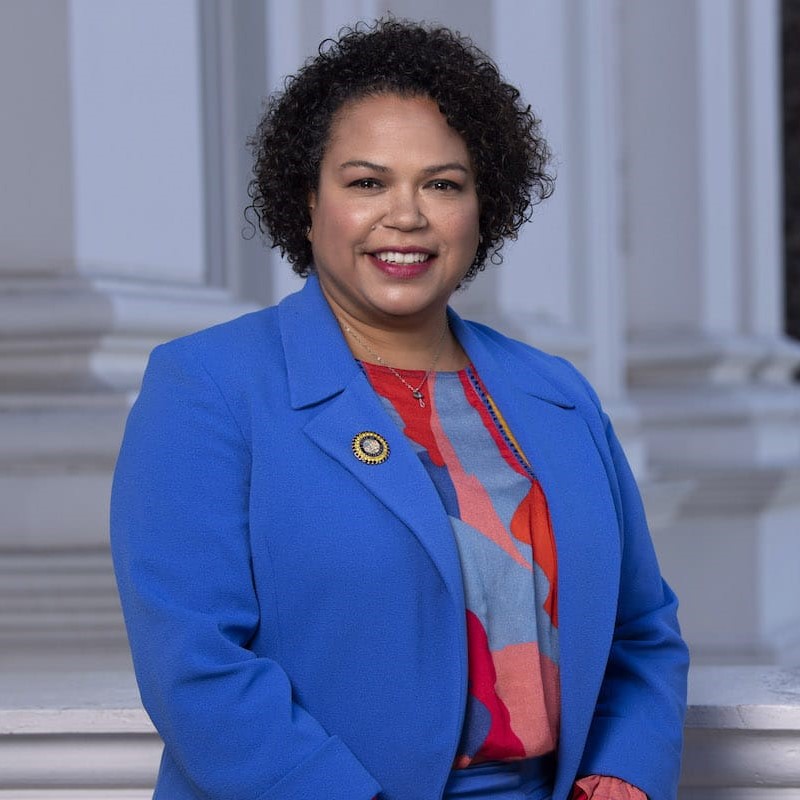
Asm. Mia Bonta
Sponsored bills
Existing law, the California Values Act, prohibits a California law enforcement agency, defined as including both state and local agencies but excluding the Department of Corrections and Rehabilitation, from providing a person's release date or responding to a request for notification of a release date, unless that information is available to the public. The bill would prohibit the Department of Corrections and Rehabilitation from detaining on the basis of a hold request, providing an immigration authority with release date information, or responding to a notification request, transferring to an immigration authority, or facilitating or assisting with a transfer request any individual who is eligible for release pursuant to specified provisions, including, among others, youth offender, elderly, and medical parole releases. Existing law requires the Department of Corrections and Rehabilitation to cooperate with the United States Department of Homeland Security by providing the use of prison facilities, transportation, and general support, as needed, for the purposes of conducting and expediting deportation hearings and subsequent placement of deportation holds on undocumented immigrants who are incarcerated in state prison. Existing law requires the department to identify inmates serving terms in state prison who are undocumented aliens subject to deportation. Existing law would require the department, upon the enactment of any federal law requiring these persons to be incarcerated in federal prison, to provide this information to the federal government, as specified. This bill would repeal these provisions.
Existing law requires the State Department of Social Services to establish and supervise a county- or county consortia-administered program to provide cash assistance for aged, blind, or disabled legal immigrants who are not citizens who, due to their immigration status, are not eligible for the Supplemental Security Income/State Supplementary Program for the Aged, Blind, and Disabled, also known as SSI/SSP benefits. Under existing law, an individual is eligible for this program if their immigration status meets SSI/SSP eligibility criteria but they are not eligible for those benefits solely due to their immigration status, as specified. Existing law also requires any person who is found to be eligible by the department for federally funded SSI to apply for SSI benefits. This bill would expand eligibility for that program to aged, blind, and disabled individuals regardless of immigration status if the individual meets the eligibility criteria for the program and is not eligible solely due to their immigration status. This bill would exempt individuals who are not qualified immigrants, as specified, from having to apply for SSI in order to receive benefits. The bill would also delete several inoperative provisions. The bill would make the implementation of these substantive changes contingent upon an appropriation for its express purposes. By expanding county duties under the program, this bill would impose a state-mandated local program. The California Constitution requires the state to reimburse local agencies and school districts for certain costs mandated by the state. Statutory provisions establish procedures for making that reimbursement. This bill would provide that, if the Commission on State Mandates determines that the bill contains costs mandated by the state, reimbursement for those costs shall be made pursuant to the statutory provisions noted above.
(1) Existing law requires a county social worker to investigate the circumstances of each child taken into temporary custody by a peace officer under specified circumstances. Existing law requires the social worker to conduct an investigation, within 30 days of the child's removal, to identify and locate adult relatives of the child, as specified, and to provide them with a notification that the child has been removed from the custody of the child's parents, guardians, or Indian custodian, and an explanation of the various options to participate in the care and placement of the child. This bill would require the social worker to conduct the investigation to identify and locate adult relatives, immediately, and no later than 30 days, after the child has been taken into temporary custody. (2) Existing law establishes procedures for an initial petition hearing by the juvenile court if a child is being taken into temporary custody. Existing law requires a social worker to report to the court the reasons the child was removed from the parent's, guardian's, or Indian custodian's physical custody and the need, if any, for continued detention, available services, and if there are any relatives who are willing and able to take temporary physical custody of the child. This bill would additionally require the social worker to report to the court what efforts, and in the case of an Indian child, the active efforts, as defined, and findings the social worker has made to locate any relatives or kin who could provide family support or possible placement of the child or nonminor dependent and the names of those relatives or kin. (3) Existing law provides that a child may be adjudged to be a dependent of the juvenile court because of abuse or neglect, and that after this determination, the court is required to hear evidence on the question of the proper disposition to be made of the child. Existing law requires that before determining the appropriate disposition, the court receive in evidence, among other things, the social study of the child made by the social worker and evaluation made by a child advocate appointed by the court. Existing law further prescribes the information that is required to be included in that social study or evaluation, including the appropriateness of any relative placement. Existing law requires the court to review the status of every dependent child in foster care no less frequently than once every 6 months and requires a supplemental report to be filed as part of that review. This bill would additionally require the social study, and any supplemental report, to include the efforts, and in the case of an Indian child, the active efforts, as defined, and findings that the social worker has made to locate any relatives or kin who could provide family support or possible placement of the child or nonminor dependent and the name of those relatives or kin. The bill would also require the court, in conducting the periodic status review, to additionally determine whether the social worker has continued efforts, and in the case of an Indian child, the active efforts, as defined, to locate any relatives or kin who could provide family support or possible placement of the child and the names of those relatives or kin. (4) Existing law requires a probation officer, upon delivery of a minor who has been taken into temporary custody, to immediately investigate the circumstances of the minor and the facts surrounding the minor being taken into custody and to immediately release the minor to the custody of their parent, legal guardian, or responsible relative, including a grandparent, adult sibling, or other relative, unless evidence before the court demonstrates that continuance in the home is contrary to the child's welfare, as specified. This bill would additionally require that the probation officer, if it is known or there is reason to know the child is an Indian child, to search additionally for an extended family member, as defined, to whom the child may be released. The bill would define for the purpose of these provisions "sibling" as a person related to the child by blood, adoption, or affinity through common legal or biological parent. The bill would require the probation officer to document their efforts, and in the case of an Indian child, the active efforts, as defined, to locate any relatives or kin who could provide family support or possible placement for the child or nonminor dependent and the names of those relatives or kin. (5) By imposing additional duties on county officials, the bill would impose a state-mandate local program. (6) This bill would incorporate additional changes to Section 319 of the Welfare and Institutions Code proposed by AB 81 and SB 578 to be operative only if this bill and AB 81, this bill and SB 578, or all 3 bills are enacted and this bill is enacted last. (7) The California Constitution requires the state to reimburse local agencies and school districts for certain costs mandated by the state. Statutory provisions establish procedures for making that reimbursement. This bill would provide that with regard to certain mandates no reimbursement is required by this act for a specified reason. With regard to any other mandates, this bill would provide that, if the Commission on State Mandates determines that the bill contains costs so mandated by the state, reimbursement for those costs shall be made pursuant to the statutory provisions noted above.
The Political Reform Act of 1974 regulates the use of campaign funds held by candidates for elective office, elected officers, and campaign committees. The act authorizes a candidate or elected officer to use campaign funds to pay or reimburse the state for the costs of installing and monitoring a home or office electronic security system if specified conditions are met. These conditions include that the candidate or elected officer has received threats to physical safety that have been verified by law enforcement and that no more than $5,000 in campaign funds be used for this purpose. This bill would eliminate those conditions. The bill would instead authorize a candidate or elected officer to use campaign funds to pay or reimburse the state for the reasonable costs of installing and monitoring a home or office electronic security system, and for the reasonable costs of providing personal security to a candidate, elected officer, or the immediate family or staff of a candidate or elected officer, provided that the threat or potential threat to safety arises from the candidate's or elected officer's activities, duties, or status as a candidate or elected officer. The bill would require the return of the security system to the committee that paid for the security system or reimbursement by the candidate, elected officer, immediate family, or staff, to the campaign fund account of the committee that paid for the security system and reporting of the reimbursement to the Fair Political Practices Commission, as specified. The Political Reform Act of 1974, an initiative measure, provides that the Legislature may amend the act to further the act's purposes upon a 23 vote of each house of the Legislature and compliance with specified procedural requirements. This bill would declare that it furthers the purposes of the act.
Existing law requires the California School Finance Authority (authority) to administer the Charter School Facility Grant Program, and provides that the grant program is intended to provide assistance with facilities rent and lease costs for pupils in charter schools. Existing law requires the authority to, among other things, determine eligibility, as specified, including a requirement that the charter schoolsite either gives a preference in admission to pupils who are currently enrolled in a public elementary school in which 55% or more of the pupil enrollment is eligible for free or reduced-price meals and to pupils who reside in the elementary school attendance area where the charter schoolsite is located, or 55% or more of the pupil enrollment at the charter schoolsite is eligible for free or reduced-price meals. This bill would clarify the above preference in admissions, including for when the charter school is a dual immersion program, and require that changes to the preference in admissions be incorporated into a charter school's charter petition during the next charter renewal cycle, as specified. The bill would also require the authority to update its regulations before opening the 2025–26 funding round to include specified requirements. The bill would require charter schools to identify their school type, confirm they are a classroom-based charter school, and include documentation confirming their status as nonprofit organizations in their applications. This bill would require the sale or lease of an educational facility, as defined, other than to the charter school occupying the educational facility or a nonprofit related-party entity of the charter school, where the charter school occupying the facility has received substantial funding, as defined, from the Charter School Facility Grant Program (program) for an educational facility acquired, financed, constructed, or modernized on or after January 1, 2025, and for which the property title is held by a related-party entity, as defined, to be consistent with specified requirements, including that the educational facility is offered to certain entities in a specified order. If, within 60 days of issuing a notice, as provided, none of the entities listed has submitted an offer for the educational facility, the bill would authorize the educational facility to then be sold or leased to another entity, as specified. If a charter school occupying an educational facility has received substantial funding from the program and the title to the property is held by a related-party entity and the educational facility is sold within 10 years of the charter school last receiving program funds to any entity not listed and the proceeds are not used for capital outlay in the state, the bill would require an amount equal to the program funds received by the charter school in the previous 10 years to be returned to the authority, as specified. This bill would require a charter school participating in a conduit financing program to notify the conduit issuer in certain situations, including, among others, when the charter school occupying the financed facility is closing. The bill would require a charter school to annually notify the conduit issuer of the status of a facility with outstanding conduit bonds when the charter school has closed or vacated the building but the building has not been sold, as provided. To the extent these provisions would impose additional duties on charter schools, the bill would impose a state-mandated local program. The Charter Schools Act of 1992 provides for the establishment and operation of charter schools. Existing law requires a petition for the establishment of a charter school to contain comprehensive descriptions of various matters and procedures, including procedures to be used if the charter school closes, including a final audit of the charter school to determine the disposition of all assets and liabilities of the charter school, as specified. If a charter school leases or rents its facility from a related party or subsidiary, as specified, or owns its facility, this bill would require the charter school to include a statement describing its plans for the use of the facility in its final audit. This bill would incorporate additional changes to Section 47605 of the Education Code proposed by SB 10 and SB 671 to be operative only if this bill and either or both of those bills are enacted and this bill is enacted last. This bill would incorporate additional changes to Section 47605.6 of the Education Code proposed by SB 10 and SB 671 to be operative only if this bill and either or both of those bills are enacted and this bill is enacted last. The California Constitution requires the state to reimburse local agencies and school districts for certain costs mandated by the state. Statutory provisions establish procedures for making that reimbursement. This bill would provide that, if the Commission on State Mandates determines that the bill contains costs mandated by the state, reimbursement for those costs shall be made pursuant to the statutory provisions noted above.
Existing law establishes homeless youth emergency service pilot projects in the City of Los Angeles and the City and County of San Francisco providing services to homeless minors, including food and access to an overnight shelter and counseling to address immediate emotional crises or problems. Existing law also requires similar programs to be established in the Counties of San Diego and Santa Clara, and all of these programs to be operated by an agency in accordance with a grant award agreement with the Office of Emergency Services. Existing law requires the Governor to create the California Interagency Council on Homelessness and specifies the duties of the council. Existing law requires agencies and departments administering state programs to collaborate with the council to adopt guidelines and regulations to incorporate core components of Housing First, which include, among other things, a tenant screening process that accepts applicants regardless of sobriety, not rejecting applicants based on poor credit or financial history, and prohibiting participation in services or program compliance from being a requirement for permanent housing. This bill, until January 1, 2027, and upon appropriation by the Legislature for these purposes, would require the Department of Housing and Community Development to establish the Unicorn Homes Transitional Housing for Homeless LGBTQ+ Youth Program, to be administered by local community-based organizations that provide a majority of its services to the LGBTQ+ community. The bill would require the department to fund community-based organizations in the participating Counties of San Diego and Sacramento that provide transitional housing for LGBTQ+ youth, 18 to 24 years of age, inclusive, experiencing homelessness due to family rejection, with the ultimate goal of reunification with the youth's original family. The bill would require the community-based organization to place eligible youth with volunteer host families who meet specified criteria, pursuant to the results of a background check, and who are able to provide crisis intervention with a trauma-informed approach, as defined, to their care. The bill would also require the program to comply with the existing core components of Housing First. The bill would require each community-based organization to prepare and submit an annual report to the department, with the first report due on or before December 1, 2024, and a final report due on or before June 30, 2026, which would be required to include specified information, including the number of times the organization was contacted by youths, how many of those contacts became participants in the program, and how many of those initial contacts became repeat contacts. The bill would also require the department to compile the annual reports into a final report, to be submitted to the Legislature on or before December 31, 2026.
Existing law establishes within the Department of Industrial Relations the Division of Labor Standards Enforcement and the Division of Occupational Safety and Health, with duties and powers, as prescribed. Existing law, the California Occupational Safety and Health Act of 1973, requires employers to comply with certain standards ensuring healthy and safe working conditions, as specified. The act charges the Division of Occupational Safety and Health with enforcement of the act, subject to oversight by the Chief of the Division of Occupational Safety and Health. The act excludes household domestic service from the definition of "employment." The act requires the chief, or a representative of the chief, to convene an advisory committee for the purposes of creating voluntary guidance and making recommendations to the department and the Legislature on policies the state may adopt to protect the health and safety of privately funded household domestic service employees, except publicly funded household domestic service and family daycare homes, as specified. The act requires the advisory committee to develop voluntary industry-specific occupational health and safety guidance relating to workplace hazards and the prevention or minimization of work-related injuries and illnesses. The act requires the advisory committee to make recommendations, as specified, on additional policies to protect the health and safety of household domestic service employees. Under specified circumstances, a violation of the act is a crime. Existing law requires the Division of Labor Standards Enforcement, upon appropriation of funding for this purpose, to establish and maintain an outreach and education program for the purpose of promoting awareness of, and compliance with, labor protections that affect the domestic work industry and fair and dignified labor standards in this industry and other low-wage industries. Existing law requires the Division of Labor Standards Enforcement to issue a competitive request to community-based organizations (CBOs) to provide education and outreach services in this connection and prescribes requirements for these organizations. Existing law makes CBOs responsible for developing and consulting with the Division of Labor Standards Enforcement regarding the core education and outreach materials, as specified. Existing law requires the Division of Labor Standards Enforcement and CBOs to meet at least biannually to coordinate efforts around outreach, education, and enforcement, including sharing information, in accordance with applicable privacy and confidentiality laws, that will shape and inform the overall enforcement strategy of the division regarding low-wage industries, including the domestic work industry. Existing law prohibits the Division of Labor Standards Enforcement from expending more than 5% of the budget allocation on the administration of the program. This bill would make CBOs responsible for developing and consulting with the Division of Occupational Safety and Health regarding the core education and outreach materials regarding health and safety standards, retaliation, and the division's workplace safety complaint and retaliation process, including specific issues that affect the domestic work industry differently. The bill would make CBOs responsible for all costs related to the development, printing, advertising, or distribution of the education and outreach materials. The bill would require the chief, representatives of the consultation services and enforcement branches of the Division of Occupational Safety and Health, and CBOs to meet periodically, as specified, to coordinate efforts around outreach, education, and enforcement. The bill would prohibit the Division of Labor Standards Enforcement and the Division of Occupational Safety and Health from expending more than 5% of the budget allocation on the administration of the program. This bill, for purposes of the California Occupational Safety and Health Act of 1973, commencing January 1, 2025, would narrow the exclusion of household domestic service from the definition of "employment" to exclude only publicly funded household domestic service and family daycare homes, as specified. The bill would require the Division of Occupational Safety and Health, by January 1, 2025, to adopt industry guidance to assist household domestic service employers on their legal obligations under existing occupational safety and health laws and regulations that apply to the work activity of household domestic service employees. The bill would require the guidance to be consistent with the voluntary industry guidelines established by the advisory committee. The bill would require a household domestic services employer, by January 1, 2025, to comply with, and adhere to, all applicable occupational safety and health regulations. The bill would require the Division of Occupational Safety and Health, if the division determines that additional industry-specific regulations are necessary, to propose those regulations to the standards board for its review, and would require the standards board to adopt regulations by January 1, 2026. By expanding the application of criminal penalties under the act to household domestic service employers, this bill would impose a state-mandated local program. The bill would make related legislative findings and declarations. The California Constitution requires the state to reimburse local agencies and school districts for certain costs mandated by the state. Statutory provisions establish procedures for making that reimbursement. This bill would provide that no reimbursement is required by this act for a specified reason.
Existing law provides for the payment of unemployment compensation benefits and extended benefits to eligible individuals who meet specified requirements. Under existing law, unemployment benefits are paid from the Unemployment Fund, which is continuously appropriated for these purposes. Existing law makes an employee ineligible for benefits if the employee left work because of a trade dispute and specifies that the employee remains ineligible for the duration of the trade dispute. Existing case law holds that employees who left work due to a lockout by the employer, even if it was in anticipation of a trade dispute, are eligible for benefits. This bill would restore eligibility after the first 2 weeks for an employee who left work because of a trade dispute. The bill would codify specified case law that holds that employees who left work due to a lockout by the employer, even if it was in anticipation of a trade dispute, are eligible for benefits. The bill would specify that the bill's provisions do not diminish eligibility for benefits of individuals deprived of work due to an employer lockout or similar action, as specified. Because this bill would expand the categories of people eligible to receive benefits from a continuously appropriated fund, it would make an appropriation.
Existing law requires county offices of education and the governing boards of school districts and community college districts, except those incorporating the merit system, to employ persons for positions not requiring certification qualifications or that are not academic, as applicable, and to classify those employees and positions, and requires that they be known as the classified service, as provided. This bill would require these governing boards and county offices, including those incorporating the merit system and including certain joint powers authorities formed by them, to offer vacancies for part-time or full-time positions, as a right of first refusal for 10 business days, with specified priorities, to current regular nonprobationary classified employees who meet the minimum job qualifications of the position or who could meet the minimum job qualifications before their start date, unless otherwise negotiated by the education employer and the exclusive representatives of the applicable employees. The bill would require these employers, referred to in the bill as education employers, to adhere to specified requirements, including, among others, that they provide all of their classified employees and their exclusive representatives notice of, and instructions for applying for, any new classified position, and that they not offer the position to any applicant until after the position has been noticed for 10 business days. The bill would authorize an employee who accepts a new assignment to elect to either add the hours for the new assignment to their current assignment, if feasible, or, if the new assignment is more hours than their current assignment, would authorize the employee to replace their current assignment with the new assignment, and would require the education employer to provide reasonable modifications to the assignment schedules to allow the employee to work both assignments, as provided. The bill would require an education employer to accept a current part-time employee's number of years of service with the education employer, regardless of the capacity in which they were earned, when that part-time employee applies for an additional part-time assignment that requires a certain number of years of service. The bill would require classified employees who work part-time assignments that equal the number of hours for a full-time assignment for the same education employer to receive the same benefits as employees who work a full-time assignment. The bill would expressly prohibit retaliation against classified employees for either refusing or accepting a vacancy. The bill would prohibit applicants from being offered a vacancy if the total of the regular hours of the 2 positions would require overtime pay or otherwise violate the federal Fair Labor Standards Act of 1938 or any other state or federal law. The bill would not apply to (1) an employee who is in the process of completing a written performance improvement plan, who was previously involuntarily demoted from the same position as the vacancy, who has been suspended, or who is the subject of a pending disciplinary action for suspension or dismissal, or (2) confidential or management employees or vacancies for their positions, as provided. Existing law requires a person laid off by a county office of education, school district, or community college district because of lack of work or funds to be eligible for reemployment for period of 39 months, as specified. This bill would provide that its provisions do not supersede that requirement, and would also not apply to an education employer with a contravening collective bargaining agreement in effect on January 1, 2024, until the expiration or renewal of that agreement.