

Under existing law, the Legislature finds and declares that the purpose of sentencing is public safety achieved through punishment, rehabilitation, and restorative justice, and that programs should be available for incarcerated persons, including educational, rehabilitative, and restorative justice programs that are designed to promote behavior change and to prepare all eligible offenders for successful reentry into the community. This bill would make legislative findings and declarations relating to corrections and rehabilitation, including that the deprivation of liberty satisfies the punishment purpose of sentencing. The bill would require the Department of Corrections and Rehabilitation to facilitate access for community-based programs in order to meaningfully effectuate the principles outlined in the findings and declarations. This bill would incorporate additional changes to Section 1170 of the Penal Code proposed by SB 852 to be operative only if this bill and SB 852 are enacted and this bill is enacted last.
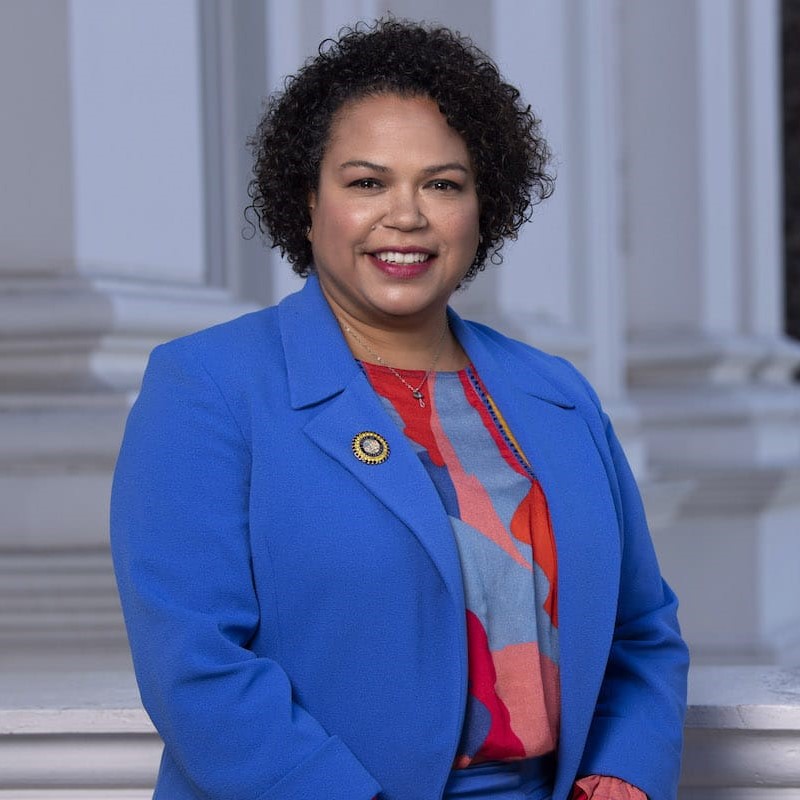
Asm. Mia Bonta
Sponsored bills
Existing law suspends, by operation of law, a money judgment or order for support of a child for any period exceeding 90 consecutive days in which the person ordered to pay support is incarcerated or involuntarily institutionalized unless the person owing support has the means to pay while incarcerated or involuntarily institutionalized. Under existing law, the obligation resumes on the first day of the first full month after the release of the person owing support in the amount previously ordered. This bill would instead require the child support obligation to resume on the first day of the 10th month after the release of the person from incarceration or involuntary institutionalization for persons who are released on or after January 1, 2024. The bill would authorize the person to whom the support is owed or the local child support agency to seek a court order reinstating child support obligations at the amount determined by a court.
Existing law generally provides for the compensation of victims and derivative victims of specified types of crimes by the California Victim Compensation Board from the Restitution Fund, a continuously appropriated fund, for specified losses suffered as a result of those crimes, including emotional injuries where the crime was a violation of specified provisions. This bill would expand eligibility for compensation to include emotional injuries from felony violations of, among other things, attempted murder, rape and sexual assault, mayhem, and stalking. By expanding the authorization for the use of moneys in the continuously appropriated Restitution Fund, this bill would make an appropriation.
Existing law establishes the California DREAM Loan Program, which provides a student attending a participating campus of the University of California or California State University with a loan, referred to as a DREAM loan, if the student satisfies specified requirements, including a requirement that the student be exempt from paying nonresident tuition or meets equivalent requirements adopted by the Regents of the University of California, and that the student be enrolled in an instructional program, as defined, or, commencing with the 2020–21 academic year, a graduate program. This bill would, commencing with the 2024–25 academic year, authorize participating institutions to award DREAM grants to grant-eligible students, as defined, if the institution has unawarded funds in the institution's DREAM revolving fund, as specified. The bill would require the amount of the DREAM grant offered to an individual student to be determined by the institution, not to exceed the student's financial need, and would prohibit a DREAM grant awarded pursuant to these provisions from counting towards the annual or aggregate borrowing limits established for the California DREAM Loan Program.
Existing law requires the governing board of a school district to employ persons for positions not requiring certification qualifications and to classify those employees and positions, and requires that they be known as the classified service. This bill would require the State Department of Education, in consultation with the Division of Occupational Safety and Health, the Department of Industrial Relations, the Labor Commissioner, representatives of employee organizations, and representatives of voluntary local educational agencies, as defined, to convene the Classified Employee Staffing Ratio Workgroup on or before December 31, 2024. The bill would require the workgroup to group classified assignments in a manner that reflects the environmental setting of the assignment, the type of work to be completed, the impact on the assignment made by enrollment at a schoolsite, specialized needs, including certifications or licenses, and other reasonable factors, as specified, and to recommend staffing ratios per grouping, as specified. The bill would require the workgroup to report its recommendations to the Legislature on or before December 31, 2025, as specified. The bill would become operative on July 1, 2024.
Existing law establishes a system of public elementary and secondary schools in this state, and provides for their governance. Existing law establishes county boards of education and school districts throughout the state to administer the public elementary and secondary schools within their respective jurisdictions. Existing law requires county boards of education and the governing board of each school district to prescribe and enforce rules not inconsistent with state law for their own government. Existing law requires a petition to establish a charter school to include, among other things, a reasonably comprehensive description of the governance structure of the charter school. Existing law requires county boards of education, school district governing boards, and, commencing July 1, 2023, the governing body of a charter school or of an entity managing multiple charter schools to appoint at least one high school pupil as a pupil member of the board or body, as applicable, in response to a petition from high school pupils requesting the appointment of one or more pupil members. Existing law authorizes the members of city or county boards of education or the governing boards of school districts to receive compensation, as provided. Existing law, on an annual basis, authorizes the county board of education or school district governing board to increase the compensation of individual board members beyond these limits in an amount not to exceed 5% based on the present monthly rate of compensation. Existing law authorizes any member who does not attend all meetings held in any month to receive, as compensation for their services, an amount not greater than the maximum amount allowed by law divided by the number of meetings held, and multiplied by the number of meetings actually attended. Existing law also authorizes an absent member to be paid for any meeting if the county board of education or school district governing board, by resolution, makes specified findings. Existing law does not entitle a pupil member of a county board of education, school district governing board, or governing body of a charter school or of an entity managing multiple charter schools to compensation pursuant to these provisions, except that the county board of education, the school district governing board, or the governing body of a charter school or of an entity managing multiple charter schools may award a pupil member elective course credit, as provided. This bill would revise and recast provisions related to the compensation of regular members and pupil members, as defined, of county boards of education, school district governing boards, and governing bodies of charter schools and of entities managing multiple charter schools. The bill would authorize the county board of education, the governing board of a school district, and the governing body of a charter school or of an entity managing multiple charter schools to award a pupil member elective course credit or monthly financial compensation, or both, as provided. For county boards of education and school district governing boards, the bill would authorize a pupil member to also receive partial monthly compensation, as described above, and would authorize an absent pupil member or an absent regular member to be paid for any meeting if the county board of education or school district governing board, by resolution, makes specified findings. This bill would incorporate additional changes to Section 1000 of the Education Code proposed by AB 417 to be operative only if this bill and AB 417 are enacted and this bill is enacted last.
Existing law, the Ralph C. Dills Act (Dills Act) , governs collective bargaining between the state and recognized state public employee organizations. Existing law excludes certain employees from coverage under the Dills Act, including, among others, managerial employees, supervisory employees, and confidential employees, as defined. Existing law creates the Public Employment Relations Board and authorizes it, among other things, to determine appropriate state employee bargaining units, as specified. This bill would enact the Legislature Employer-Employee Relations Act, to provide employees of the Legislature, except certain specified categories of excluded employees, the right to form, join, and participate in the activities of employee organizations of their own choosing for the purpose of representation on all matters of employer-employee relations. The bill would prescribe rights, duties, and prohibitions in this context that parallel those in the Dills Act. For the purposes of bargaining or meeting and conferring in good faith, the bill would define "employer" to mean the Assembly Committee on Rules or the Senate Committee on Rules. The bill would require the employer to meet and confer with representatives of recognized employee organizations regarding matters within the scope of representation. The bill would exclude certain matters from the scope of representation, as specified. The bill would grant exclusive jurisdiction to the Public Employment Relations Board to make an initial determination as to whether charges of unfair practices are justified, and, if so, the necessary remedy, as specified. However, the bill would prohibit the board from issuing a decision or order that intrudes upon or interferes with the Legislature's core function of efficient and effective lawmaking or the essential operation of the Legislature. The bill would require the board to determine appropriate bargaining units, and would prohibit the board from including employees in a bargaining unit that includes employees other than those of the employer. The bill would prohibit the board from including within a bargaining unit employees from both the Assembly and Senate. This bill would make it a misdemeanor for any person to willfully resist, prevent, impede, or interfere with any member of the board, or any of its agents, in the performance of duties pursuant to its provisions. By expanding the definition of a crime, this bill would impose a state-mandated local program. The bill would provide that the provisions of the Legislature Employer-Employee Relations Act are severable. The bill would become operative on July 1, 2026. The California Constitution requires the state to reimburse local agencies and school districts for certain costs mandated by the state. Statutory provisions establish procedures for making that reimbursement. This bill would provide that no reimbursement is required by this act for a specified reason. This bill would additionally exempt from public inspection records related to activities governed by the Legislature Employer-Employee Relations Act that reveal the employer's deliberative processes, impressions, evaluations, opinions, recommendations, meeting minutes, research, work product, theories, or strategy, or that provide instruction, advice, or training to employees who do not have full collective bargaining and representation rights under the Legislature Employer-Employee Relations Act. Existing constitutional provisions require that a statute that limits the right of access to the meetings of public bodies or the writings of public officials and agencies be adopted with findings demonstrating the interest protected by the limitation and the need for protecting that interest. This bill would make legislative findings to that effect.
Existing law, after a tenant has continuously and lawfully occupied a residential real property for 12 months, prohibits the owner of the residential real property from terminating the tenancy without just cause and requires that just cause to be stated in the written notice to terminate tenancy. Existing law distinguishes between at-fault just cause and no-fault just cause and defines no-fault just cause to mean intent to occupy the residential real property by the owner or the owner's spouse, domestic partner, children, grandchildren, parents, or grandparents, withdrawal of the residential real property from the rental market, the owner complying with specified government orders that necessitate vacating the real property, and intent to demolish or to substantially remodel the residential real property. This bill would, with respect to the no-fault just cause related to an eviction based on an intent to occupy the residential real property, require, among other things, that the owner, as defined, or the owner's spouse, domestic partner, children, grandchildren, parents, or grandparents occupy the residential real property for a minimum of 12 continuous months as the person's primary residence, as provided. The bill would also, with respect to the no-fault just cause related to withdrawal of the residential real property from the rental market, require the rental units at the rental property be withdrawn from the rental market, as prescribed. The bill would require an owner who displaces a tenant to substantially remodel or demolish a unit to provide the tenant with written notice providing the tenant with specified information, including a description of the substantial remodel to be completed and the expected duration of the repairs, or the expected date by which the property will be demolished, and a copy of permits required to undertake the substantial remodel or demolition, as specified. This bill would also prescribe new enforcement mechanisms with respect to the provisions described above, including by making an owner who attempts to recover possession of a rental unit in material violation of those provisions liable to the tenant in a civil action for damages of up to 3 times the actual damages, in addition to punitive damages. The bill would authorize the Attorney General and the city attorney or county counsel, within whose jurisdiction the rental unit is located, to bring actions for injunctive relief against the owner, as specified. Existing law, until January 1, 2030, prohibits an owner of residential real property from, over the course of any 12-month period, increasing the gross rental rate for a dwelling or a unit more than 5% plus the percentage change in the cost of living, or 10%, whichever is lower, of the lowest gross rental rate charged for that dwelling or unit at any time during the 12 months before the effective date of the increase, subject to specified conditions. This bill would make an owner who demands, accepts, receives, or retains any payment of rent in excess of the maximum rent increase allowed, as prescribed, liable in a civil action to the tenant from whom those payments are demanded, accepted, received, or retained for certain relief, including, upon a showing that the owner has acted willfully or with oppression, fraud, or malice, damages up to 3 times the amount by which any payment demanded, accepted, received, or retained exceeds the maximum allowable rent. This bill would authorize the Attorney General and the city attorney or county counsel, within whose jurisdiction the residential property is located, to enforce the bill's provisions and bring an action for injunctive relief, as specified. This bill would also make a technical, nonsubstantive change to those provisions. The bill would provide that its provisions become effective on April 1, 2024.
Existing law authorizes the Board of Supervisors of Alameda County to establish the Alameda Health System Hospital Authority for the management, administration, and control of the medical center in that county. Existing law prohibits the hospital authority, before January 1, 2024, from entering into a contract with any other person or entity to replace services being provided by physicians and surgeons who are employed by the hospital authority and in a recognized collective bargaining unit, with services provided by that other person or entity without clear and convincing evidence that the needed medical care can only be delivered cost effectively by that other person or entity. This bill would prohibit the hospital authority, before January 1, 2035, from entering into those contracts.
Existing law prohibits a person from carrying a concealed firearm or carrying a loaded firearm in public. Existing law authorizes a licensing authority, as specified, if good cause exists for the issuance, and subject to certain other criteria including, among other things, the applicant is of good moral character and has completed a specified course of training, to issue a license to carry a concealed handgun or to carry a loaded and exposed handgun, as specified. Under existing law, the required course of training for an applicant is no more than 16 hours and covers firearm safety and laws regarding the permissible use of a firearm. This bill would require the licensing authority to issue or renew a license if the applicant is not a disqualified person for the license and the applicant is at least 21 years of age. The bill would remove the good character and good cause requirements from the issuance criteria. Under the bill, the applicant would be a disqualified person if they, among other things, are reasonably likely to be a danger to self, others, or the community at large, as specified. This bill would add the requirement that the applicant be the recorded owner, with the Department of Justice, of the pistol, revolver, or other firearm capable of being concealed upon the person. This bill would change the training requirement to be no less than 16 hours in length and would add additional subjects to the course including, among other things, the safe storage and legal transportation of firearms. The bill would require an issuing authority, prior to that issuance, renewal, or amendment to a license, if it has direct access to the designated department system to determine if the applicant is the recorded owner of the pistol, revolver, or other firearm. The bill would require an issuing authority without access to that system to confirm the ownership with the sheriff of the county in which the agency is located. By requiring local agencies to issue licenses for concealed firearms, this bill would create a state-mandated local program. The bill would require a licensing authority to provide the applicant notice if a new license or license renewal is denied or revoked. If an application is denied or a license is revoked based on a determination that the applicant is a disqualified person, the bill would permit the applicant to request a hearing to challenge the license denial or revocation, and require the licensing authority to inform the applicant of the ability to seek a hearing. If a new license or license renewal is denied or revoked for any other reason, the bill would authorize the applicant to seek a writ of mandate from a superior court within 30 days of receipt of notice of denial or revocation, and require the licensing authority to inform the applicant of the ability to seek a writ of mandate. By imposing new duties on local licensing authorities, this bill would create a state-mandated local program. Existing law requires an agency issuing a license described above to set forth specified information on the license, including, among other things, the licensee's name, occupation, and reason for desiring a license to carry the weapon. This bill would revise that information to include, among other things, the licensee's driver's license or identification number, fingerprints, and information relating to the date of expiration of the license, and would remove the requirement that the license detail the reason for desiring a license to carry the weapon. Existing law requires an applicant for a license described above to provide fingerprints, as specified. Existing law exempts an applicant from this requirement if they have previously applied to the same licensing authority and the applicant's fingerprints have previously been forwarded to the department, as specified, and instead requires that authority to note data that would provide positive identification in the files of the department, on the copy of any subsequent license submitted to the department. This bill would require the licensing authority to submit fingerprint images and related information to the department for each applicant applying for a new or renewal license. The bill would require the department to notify the licensing authority if the department is unable to ascertain, among other things, the final disposition of an arrest or criminal charge under state or federal law that would prohibit the person from possessing, receiving, owning, or purchasing a firearm. This bill would prohibit a license from being issued or renewed unless the department reports to a licensing authority that the applicant is eligible to possess, receive, own, or purchase a firearm. Existing law requires a licensing authority to charge an additional fee in an amount equal to reasonable processing costs for a new license. Existing law also prohibits a licensing authority from imposing, among other things, a requirement or condition that an applicant pay additional funds or obtain liability insurance. This bill would authorize a licensing authority to charge the additional processing cost fee for a license renewal and would permit the licensing authority to collect the first 50% of the fee upon filing of the application. The bill also removes the prohibition on licensing authority requirements for additional fees or liability insurance. Existing law requires that licenses and applications for licenses be uniform throughout the state, and to be submitted upon forms prescribed by the Attorney General. When revising the standard application form for licenses, existing law requires the Attorney General to convene a committee to review and revise the existing application form. Existing law requires the Attorney General to develop a uniform license that may be used as indicia of proof of licensure throughout the state. Existing law also requires the committee to convene to review and revise the design standard for a uniform license. This bill would authorize the Attorney General to revise the standard form for licenses and the design standard if the committee does not revise the form or issue a design standard within a specified time period. Under existing law, it is a crime to bring a firearm into a state or local building, and makes it a crime to bring a loaded firearm into, or upon the grounds of, any residence of the Governor, any other constitutional officer, or Member of the Legislature. Existing law exempts a licensee from that prohibition if, among other things, the licensee has a valid license to carry the firearm. This bill would remove those exemptions, except as specified. The bill would make it a crime to bring an unloaded firearm into, or upon the grounds of, any residence of the Governor, any other constitutional officer, or Member of the Legislature. The bill would also prohibit a licensee from carrying a firearm to specified locations, including, among other places, a building designated for a court proceeding and a place of worship, as defined, with specific exceptions. By expanding the scope of an existing crime, the bill would impose a state-mandated local program. Existing law prohibits a person from knowingly possessing a firearm in a sterile area of an airport, passenger vessel terminal, or public transit facility, as defined. This bill would additionally prohibit a person from knowingly possessing a firearm in any building, real property, or parking area under the control of an airport or passenger vessel terminal, as specified. By expanding the scope of an existing crime, the bill would impose a state-mandated local program. Existing law, the Gun-Free School Zone Act of 1995, makes it a crime to possess a firearm in a place that the person knows, or reasonably should know, is a school zone. Existing law defines a school zone as an area in, or on the grounds of, a public or private school providing instruction in kindergarten or grades 1 to 12, inclusive, or within a distance of 1,000 feet from the grounds of the public or private school. Existing law provides exceptions to that crime, including if a person with a valid concealed carry license who is carrying the firearm described in the license in an area that is not in, or on the grounds of, a public or private school and when a firearm is an unloaded pistol, revolver, or other firearm capable of being concealed on the person and is in a locked container or within the locked trunk of a motor vehicle. This bill would revise the exception for a person who has a valid concealed carry license to permit them to carry a specified firearm in an area that is not within any building, real property, or parking area under the control of a public or private school, or on a street or sidewalk immediately adjacent to a building, real property, or parking area under the control of that public or private school, as specified. Existing law requires a licensing authority to revoke a license to carry a firearm if the licensing authority is notified by the department or the licensing authority determines that a licensee is prohibited from possessing, receiving, owning, or purchasing a firearm under state or federal law. This bill would also require a licensing authority to revoke a license if, among other things, a licensee has provided inaccurate or incomplete information on their application for a new license or license renewal. Existing law authorizes a licensing authority to impose reasonable restrictions on the time, place, manner, and circumstances when a licensee may carry a firearm capable of being concealed. While carrying a firearm, this bill would prohibit a licensee from, among other things, consuming an alcoholic beverage or controlled substance and from falsely representing that the licensee is a peace officer. The bill would authorize the department to adopt emergency regulations to implement the concealed firearm licensing system, as specified. This bill would make conforming changes. The bill would additionally make various findings and declarations of the Legislature. The bill would state that its provisions are severable. This bill would incorporate additional changes to Section 29805 of the Penal Code proposed by SB 368 to be operative only if this bill and SB 368 are enacted and this bill is enacted last. This bill would also incorporate additional changes to Section 30370 of the Penal Code proposed by AB 135 and SB 135 to be operative only if this bill and either of those bills are enacted and this bill is enacted last. The California Constitution requires the state to reimburse local agencies and school districts for certain costs mandated by the state. Statutory provisions establish procedures for making that reimbursement. This bill would provide that with regard to certain mandates no reimbursement is required by this act for a specified reason. With regard to any other mandates, this bill would provide that, if the Commission on State Mandates determines that the bill contains costs so mandated by the state, reimbursement for those costs shall be made pursuant to the statutory provisions noted above.