

Existing law, the Knox-Keene Health Care Service Plan Act of 1975, provides for the licensure and regulation of health care service plans by the Department of Managed Health Care, and makes a willful violation of the act a crime. Existing law provides for the regulation of health insurers by the Department of Insurance. Existing law requires a pharmacy benefit manager engaging in business with a health care service plan or health insurer to secure a license from the Department of Managed Health Care on or after January 1, 2027, or the date on which the department has established the licensure process, whichever is later. This bill would prohibit a pharmacy benefit manager from, among other things, requiring use of only an affiliated pharmacy, as specified, and from imposing requirements, conditions, or exclusions that discriminate against a nonaffiliated pharmacy in connection with dispensing drugs. The bill would limit a pharmacy benefit manager's income to that derived from a pharmacy benefit management fee for pharmacy benefit management services provided, and would require a pharmacy benefit manager to use a passthrough pricing model. The bill would authorize the Attorney General to recover specified civil penalties and receive equitable relief for violations of the pharmacy benefit manager licensing provisions. Because a violation of these provisions would be a crime, the bill would impose a state-mandated local program. The bill would also require a contract between a health insurer and a pharmacy benefit manager issued, amended, or renewed on or after January 1, 2027, or the date on which the Department of Managed Health Care has established the pharmacy benefit manager licensure process, whichever is later, to require the pharmacy benefit manager to be licensed and in good standing with the Department of Managed Health Care. Existing law requires a health care service plan contract or health insurance policy that provides coverage for outpatient prescription drugs to cover medically necessary prescription drugs and subjects those policies to certain limitations on cost sharing and the placement of drugs on formularies. Existing law limits the maximum amount an enrollee or insured may be required to pay at the point of sale for a covered prescription drug to the lesser of the applicable cost-sharing amount or the retail price, and requires that payment apply to the applicable deductible. This bill would prohibit a health care service plan contract or health insurance policy issued, amended, or renewed on or after January 1, 2026, that provides prescription drug coverage from calculating an enrollee's or insured's cost sharing at an amount that exceeds the actual rate paid by the plan or insurer for the prescription drug, except as specified, and would require the contract or policy to include specified cost-sharing provisions. The bill would prohibit a contract between a pharmacy benefit manager and a health care service plan or health insurer that is executed, amended, or renewed on or after January 1, 2026, from authorizing spread pricing. Because a willful violation of the bill's requirements relative to health care service plans would be a crime, the bill would impose a state-mandated local program. This bill would declare that it does not narrow, abrogate, or otherwise alter the authority of the Attorney General to maintain or restore competitive, fair, and honest markets and prosecute violations of law, and would declare that the provisions of this bill are severable. Existing constitutional provisions require that a statute that limits the right of access to the meetings of public bodies or the writings of public officials and agencies be adopted with findings demonstrating the interest protected by the limitation and the need for protecting that interest. This bill would make legislative findings to that effect. The California Constitution requires the state to reimburse local agencies and school districts for certain costs mandated by the state. Statutory provisions establish procedures for making that reimbursement. This bill would provide that no reimbursement is required by this act for a specified reason.
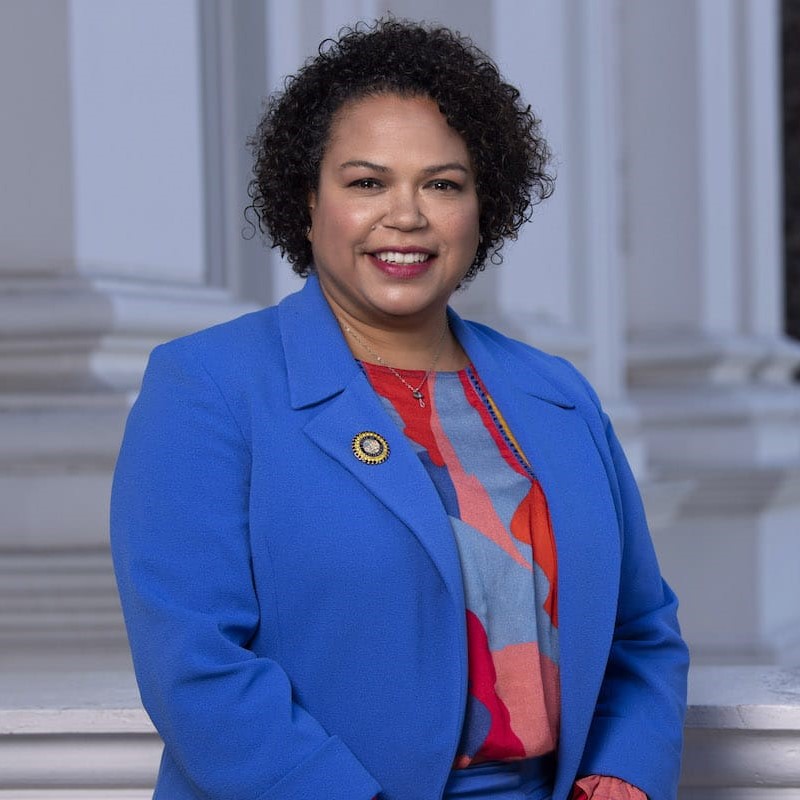
Asm. Mia Bonta
Sponsored bills
Existing law requires the Department of Health Care Access and Information, formerly known as the Office of Statewide Health Planning and Development, to establish a program to contract with programs that train certified nurse-midwives and programs that train licensed midwives in accordance with the global standards for midwifery education and the international definition of "midwife" as established by the International Confederation of Midwives in order to increase the number of students receiving quality education and training as a certified nurse-midwife or as a licensed midwife. Existing law requires these provisions to be implemented only upon an appropriation by the Legislature for these purposes in the annual Budget Act or another act. This bill would require the Department of Health Care Access and Information, upon appropriation from the Legislature for this purpose, to administer funding for a statewide study on midwifery education. The bill would require the study to be conducted by an outside consultant familiar with the health care and midwifery landscapes and workforce in California that would, among other things, identify viable education programs that can serve both rural and urban geographic areas. The bill would require the department to submit a report from the study's findings to the Legislature, to post the report on the department's internet website, and to notify all persons in the department's reproductive health and maternity care electronic mailing list, as specified. The bill would define "reproductive health care professionals" as, among others, medical doctors and licensed midwives.
Existing law provides for the licensure and regulation of various types of clinics, including alternative birth centers, by the State Department of Public Health, and makes a violation of those provisions a crime. Existing law defines an alternative birth center as a clinic that is not part of a hospital and that provides comprehensive perinatal services and delivery care to pregnant women who remain less than 24 hours at the facility. Existing law requires a licensed alternative birth center specialty clinic, and a licensed primary care clinic that provides services as an alternative birth center, to meet certain criteria, including, among others, being located in proximity to a facility with the capacity for management of obstetrical and neonatal emergencies, as specified. Existing law establishes the Medi-Cal program, which is administered by the State Department of Health Care Services and under which qualified low-income individuals receive health care services. The Medi-Cal program is, in part, governed and funded by federal Medicaid program provisions. Existing law sets forth certain criteria for Medi-Cal reimbursement to alternative birth centers for facility-related delivery costs. Under existing law, as a criterion under both the licensing provisions and the Medi-Cal reimbursement provisions described above, the facility is required to be a provider of comprehensive perinatal services as defined in the Medi-Cal provisions. This bill would remove, under both sets of criteria, the certification condition of being a provider of comprehensive perinatal services as defined in the Medi-Cal provisions. The bill would require the facility to provide perinatal services that are comprehensive in nature, as specified, consistent with certain standards. The bill would remove the above-described proximity requirement and would instead require a written policy for hospital transfer. The bill would require the policy to include certain requirements relating to, among other things, arrangements for the referral of a complication, arrangements for the transfer of care, provision of medical records, information about the estimated transfer time, and a clear explanation of the facility's overall emergency transfer plan, as specified. The bill would also make a technical change to an obsolete reference within a related provision. By creating new requirements for an alternative birth center or a primary care clinic that provides services as an alternative birth center, the violation of which is a crime, the bill would impose a state-mandated local program. The California Constitution requires the state to reimburse local agencies and school districts for certain costs mandated by the state. Statutory provisions establish procedures for making that reimbursement. This bill would provide that no reimbursement is required by this act for a specified reason.
Existing law requires the Superintendent of Public Instruction to post, and annually update, on the State Department of Education's internet website and notify local educational agencies of the availability of a list of statewide resources, including community-based organizations, that provide support to youth, and their families, who have been subjected to school-based discrimination, harassment, intimidation, or bullying, as provided. Existing law requires a local educational agency to adopt, on or before December 31, 2019, procedures for preventing acts of bullying, including cyberbullying. This bill would require the department, on or before June 30, 2026, in consultation with relevant stakeholders, to develop, post on its internet website, and distribute to each local educational agency, as defined, a model policy on how to address certain reported acts of cyberbullying occurring outside of school hours and outside of the campus, as specified. The bill would require the model policy to clarify that local educational agencies are authorized, but not required, to address those acts. The bill would require each local educational agency, on or before July 1, 2027, to adopt a policy, or modify its existing procedures for preventing acts of bullying, on how to address certain reported acts of cyberbullying occurring outside of school hours and outside of the campus, as specified. The bill would authorize the adopted policy to be the model policy developed by the department or a locally adopted policy with input from stakeholders. The bill would require each local educational agency to post a copy of the adopted policy on its internet website and the internet website of each of its schoolsites. By imposing additional duties on local educational agencies, the bill would impose a state-mandated local program. The California Constitution requires the state to reimburse local agencies and school districts for certain costs mandated by the state. Statutory provisions establish procedures for making that reimbursement. This bill would provide that, if the Commission on State Mandates determines that the bill contains costs mandated by the state, reimbursement for those costs shall be made pursuant to the statutory provisions noted above.
Existing law finds and declares that prenatal care, delivery service, postpartum care, and neonatal and infant care are essential services necessary to assure maternal and infant health, and that these services are not currently distributed so as to meet the minimum maternal and infant health needs of many Californians. Existing law requires the State Department of Public Health to develop and maintain a statewide community-based comprehensive perinatal services program, as specified, to deliver services in medically underserved areas or areas with demonstrated need. Existing law provides for the licensure of health facilities, including general acute care hospitals, by the department. Existing law generally makes a violation of those licensing provisions a crime. Existing law sets forth provisions for critical access hospitals, as designated by the department and certified as such by the Secretary of the United States Department of Health and Human Services under the federal Medicare Rural Hospital Flexibility Program. This bill would require the department, by July 1, 2026, to establish a 10-year pilot project within up to 5 critical access hospitals to allow participating hospitals, on an application basis, to establish standby perinatal services, as defined. Under the bill, the first 2 hospitals selected, if qualified, would be nonprofit and located in the County of Humboldt and the County of Plumas. The bill would set forth various criteria for the selection of the participating hospitals with regard to standards and resources. The bill would require the department to develop a template to collect and evaluate data on safety, outcomes, utilization, and populations served under the pilot project, as specified. The bill would require the department to prepare and submit an evaluation to the Legislature and to make the evaluation publicly available. Under the bill, an approved standby perinatal service would be subject to all relevant licensing enforcement provisions, as specified. The bill would set forth provisions relating to suspension or revocation for noncompliance and to a hospital's request for program flexibility. The bill would require a hospital requesting approval to establish a standby perinatal service to implement and maintain certain requirements relating to, among other things, compliance with professional standards and recommendations, having specified equipment and supplies, defining the responsibility of the medical staff and administration, implementing contracts, and developing a quality improvement program. The bill would set forth specific requirements for a physician who has responsibility of the standby perinatal services. Because a violation of these provisions would be a crime, the bill would impose a state-mandated local program. This bill would make legislative findings and declarations as to the necessity of a special statute for the County of Humboldt and the County of Plumas. The California Constitution requires the state to reimburse local agencies and school districts for certain costs mandated by the state. Statutory provisions establish procedures for making that reimbursement. This bill would provide that no reimbursement is required by this act for a specified reason.
Existing law subjects a minor between 12 and 17 years of age, inclusive, who violates any federal, state, or local law or ordinance, who persistently or habitually refuses to obey the reasonable and proper orders or directions of the minor's parents, guardian, or custodian, or who is beyond the control of that person, who violates an ordinance establishing a curfew or is truant, and a minor under 12 years of age who is alleged to have committed specified serious offenses, to the jurisdiction of the juvenile court, which may adjudge the minor to be a ward of the court. When a minor is adjudged to be a ward of the court, as previously described, and is placed under the supervision of the probation officer or committed to the care, custody, and control of the probation officer, existing law authorizes the court to make any and all reasonable orders for the conduct of the ward, and to impose and require any and all reasonable conditions that it may determine fitting and proper to the end that justice may be done and the reformation and rehabilitation of the ward enhanced. This bill would limit to 12 months from the most recent disposition hearing the period of time a ward may remain on probation, except that a court may extend the probation period after a noticed hearing and upon proof by a preponderance of the evidence that it is in the ward's and the public's best interest. The bill would require the probation agency to submit a report to the court detailing the basis for any request to extend probation at the noticed hearing. The bill would require the court to provide the ward and the prosecuting attorney with the opportunity to present relevant evidence, as specified. The bill would require the court to hold noticed hearings for the ward not less frequently than every 6 months for the remainder of the wardship period if the court extends probation. The bill would specify that all of these provisions do not apply to specified wards, including a ward who is serving a custodial commitment to a juvenile hall, juvenile home, ranch, camp, or forestry camp. The bill would additionally require, among other things, that conditions of probation for a ward be individually tailored, developmentally appropriate, and reasonable. Existing law authorizes the court, as part of the order adjudging the minor to be a ward of the court, to order the ward to pay restitution, to pay a fine up to $250 for deposit in the county treasury if the court finds the minor has the financial ability to pay, or to participate in an uncompensated work program. This bill would remove the authority of the court to order the minor to pay the $250 fine or participate in an uncompensated work program in lieu of restitution. Existing law requires the court, for specified offenses, to order certain actions as a condition of a minor's probation, including attending counseling, repairing property, repaying the cost of apprehension to the city or county, and performing community service. This bill would, in specified instances, no longer require the court to order certain actions as a condition of a minor's probation.
(1) The Planning and Zoning Law requires each county and city to adopt a comprehensive, long-term general plan for its physical development, and the development of certain lands outside its boundaries, that includes, among other mandatory elements, a housing element. That law, until January 1, 2033, deems a housing development project an allowable use on any real property owned by a local educational agency if the housing development satisfies specified conditions, including, among others, consisting of at least 10 housing units, 100% of the units being rented by local educational agency employees, local public employees, and general members of the public pursuant to a specified priority, and a majority of the units being deed restricted for lower income or moderate-income households, as specified. Existing law, the Housing Accountability Act, among other things, prohibits a local agency from disapproving a housing development project for very low, low-, or moderate-income households unless the local agency makes written findings as to one of certain sets of conditions, as specified, and describes various requirements applicable to housing development projects. This bill would revise and recast the provisions deeming a housing development project an allowable use on any real property owned by a local educational agency. The bill would require the housing development to satisfy specified conditions, and would apply the requirements of the Housing Accountability Act to review of housing development projects subject to these provisions. The bill would provide that a proposed housing development project is eligible for a density bonus, as specified, and would define various terms for these purposes. The bill would extend the operation of these provisions until January 1, 2036. (2) Existing law, prior to the sale, lease, or rental of any excess real property, requires the governing board of each school district to appoint a school district advisory committee to advise the governing board of the school district in the development of districtwide policies and procedures governing the use or disposition of school buildings or space in school buildings that is not needed for school purposes. Notwithstanding that law, existing law authorizes the governing board of a school district to elect not to appoint a school district advisory committee in the sale, lease, or rental of excess real property to be used for teacher or school district employee housing. This bill would specify that the governing board of a school district is authorized to elect not to appoint a school district advisory committee in the sale, lease, or rental of excess real property to be used for teacher or school district employee housing and that is subject to the provisions governing real property owned by a local educational agency described above. (3) The California Environmental Quality Act (CEQA) requires a lead agency, as defined, to prepare, or cause to be prepared, and certify the completion of an environmental impact report on a project that it proposes to carry out or approve that may have a significant effect on the environment or to adopt a negative declaration if it finds that the project will not have that effect. Existing law, until January 1, 2033, exempts from CEQA certain actions taken by a public agency related to affordable housing projects, as defined, if certain requirements are met. This bill would provide that an affordable housing project for purposes of the CEQA exemption includes real property owned by a local educational agency, as described above, and would exempt these projects from certain of the requirements for other affordable housing projects. (4) The bill would include findings that changes proposed by this bill address a matter of statewide concern rather than a municipal affair and, therefore, apply to all cities, including charter cities. (5) By adding to the duties of local planning officials with respect to approving certain development projects, this bill would impose a state-mandated local program. The California Constitution requires the state to reimburse local agencies and school districts for certain costs mandated by the state. Statutory provisions establish procedures for making that reimbursement. This bill would provide that no reimbursement is required by this act for a specified reason.
Former law, Chapter 319 of the Statutes of 2020, until July 1, 2023, established a task force to, among other things, identify, compile, and synthesize the relevant corpus of evidentiary documentation of the institution of slavery that existed within the United States and the colonies, as specified, and to recommend the form of compensation that should be awarded, the instrumentalities through which it should be awarded, and who should be eligible for this compensation. Existing law, the California Fair Employment and Housing Act, establishes the Civil Rights Department and sets forth its powers and duties, including, among others, receiving, investigating, and prosecuting complaints alleging violations of civil rights, as specified. This bill would establish the Bureau for Descendants of American Slavery within the department, under the control of the deputy director, who would be appointed by the Governor and confirmed by the Senate. The bill would require the bureau to create a Genealogy Division, as specified, and to verify an individual's status as a descendant and would require proof of an individual's descendant status to be a qualifying criterion for benefits authorized by the state for descendants. The bill would also require the bureau to create an Education and Outreach Division and a Legal Affairs Division. The bill would impose various requirements on the bureau relating to the collection, storage, and disclosure of personal and genetic information, as specified. The bill would authorize the bureau to receive moneys from any federal, state, or local grant and from any nongovernmental entity, as specified. This bill would make implementation of its provisions contingent upon appropriation by the Legislature, as specified. This bill would include findings and declarations relating to a gift of public funds. Existing constitutional provisions require that a statute that limits the right of access to the meetings of public bodies or the writings of public officials and agencies be adopted with findings demonstrating the interest protected by the limitation and the need for protecting that interest. This bill would make legislative findings to that effect.
Existing law requires the Department of Housing and Community Development to develop and publish specified reports, including, among others, a study of farmworker housing conditions, needs, and solutions. Existing law authorizes the department to provide technical assistance for specified purposes, including in developing housing for students and faculty of universities and colleges, as provided. This bill would require the department, on or before January 1, 2027, to make available on its internet website a form that enables a local educational agency to notify the department of the agency's interest in using real property that it owns for a housing project. The bill would require the department to review the information submitted via the form and make the information available on its internet website. The bill would also require the department to provide technical assistance, as specified, to a local educational agency that submits the notice described above and requests technical assistance, for the purpose of supporting predevelopment activities related to a housing project located on real property owned by the local educational agency.
Existing law requires the Commission on Teacher Credentialing to establish standards for the issuance and renewal of credentials, certificates, and permits. Existing law sets forth the minimum requirements for a preliminary services credential with a specialization in administrative services, which include, among other requirements, completion of an entry-level program of specialized and professional preparation in administrative services or a one-year internship in a program of supervised training in administrative services, subject to approval by the commission, as provided. Existing law also sets forth the minimum requirements for a reading and literacy leadership specialist credential and a reading and literacy added authorization, which include, among other requirements, completion of a program of specialized and professional preparation, as provided. This bill would require the commission to, no later than September 1, 2028, ensure that the program standards for the professional preparation of candidates for a preliminary services credential with a specialization in administrative services meets specified criteria, including, among other things, that the program standards include preparation on how to support teachers in delivering instruction through effective means for teaching literacy, as provided. The bill would require the commission to, no later than January 1, 2028, ensure that the program standards and teaching performance expectations for the professional preparation of candidates for the reading and literacy leadership specialist credential and the reading and literacy added authorization include preparation on how to deliver instruction and support teachers to deliver instruction through effective means for teaching literacy, as provided. Existing law requires the state board to adopt basic instructional materials for use in kindergarten and grades 1 to 8, inclusive, for governing boards of school districts and county boards of education, subject to specified provisions, including, among others, that the State Board of Education adopt at least 5 basic instructional materials for all applicable grade levels in each of the specified subject areas, including, among others, language arts, including, but not limited to, spelling, reading, and English language development. This bill would require the state board, on or before January 31, 2027, and in adherence with specified provisions related to followup adoptions, to adopt instructional materials for kindergarten and grades 1 to 8, inclusive, in English language arts and English language development, as provided. The bill would require the state board to ensure that instructional materials adopted pursuant to these provisions adhere to specified criteria. The bill would require, upon the adoption of instructional materials described above, the state board to update the state Guidance for Local Instructional Materials Adoptions to reflect the criteria described above. The bill would require a local educational agency to follow this guidance for purposes of adopting instructional materials and require a local educational agency that adopts materials that have not been adopted by the state board to certify that the materials align to the criteria described above. By imposing additional duties on local educational agencies, the bill would impose a state-mandated local program. The California Constitution requires the state to reimburse local agencies and school districts for certain costs mandated by the state. Statutory provisions establish procedures for making that reimbursement. This bill would provide that, if the Commission on State Mandates determines that the bill contains costs mandated by the state, reimbursement for those costs shall be made pursuant to the statutory provisions noted above.