

The Corporation Tax Law, in modified conformity with federal tax law, provides an exemption from the taxes imposed by that law for specified organizations. Existing law references federal tax law to give priority to tax-exempt organizations, or to require tax-exempt status, for the purpose of certain grants and service contracts. This bill would provide that where specified federal tax law is referenced to determine eligibility for any state grant or service contract, or for the disbursement of state or local funds, it is deemed to also refer to the relevant provision of the Corporation Tax Law. Existing law designates the State Department of Social Services as the single agency with full power to supervise every phase of the administration of public social services, including services for refugees, immigrants, and asylees, except as specified. Existing law requires the department to allocate federal funds for refugee social services programs to eligible counties and, in certain circumstances, to qualified nonprofit organizations. Existing law requires the department, subject to an appropriation, to provide grants to qualified nonprofit organizations through contracts to provide certain immigration-related legal services to persons residing in, or formerly residing in, the state. Existing law requires the department to administer a rapid response program to award grants or contracts to entities, including nonprofit organizations, that provide critical assistance to immigrants during times of need. Existing law, subject to an appropriation, establishes the Enhanced Services for Asylees and Vulnerable Noncitizens program to provide resettlement services for persons granted asylum by the United States Attorney General or the United States Secretary of Homeland Security or who are eligible to receive refugee cash assistance and services as victims of crime. Existing law requires a grant or contract awarded pursuant to that program to be executed only with a qualified nonprofit organization. Existing law defines "qualified nonprofit organization" or "nonprofit organization" for purposes of these provisions to include a nonprofit organization that, among other things, is exempt from federal income taxation, as specified. This bill would revise the definition of "qualified nonprofit organization" or "nonprofit organization" under the above-described provisions to additionally include a nonprofit organization that meets specified requirements to qualify for state tax-exempt status. This bill would declare that it is to take effect immediately as an urgency statute.
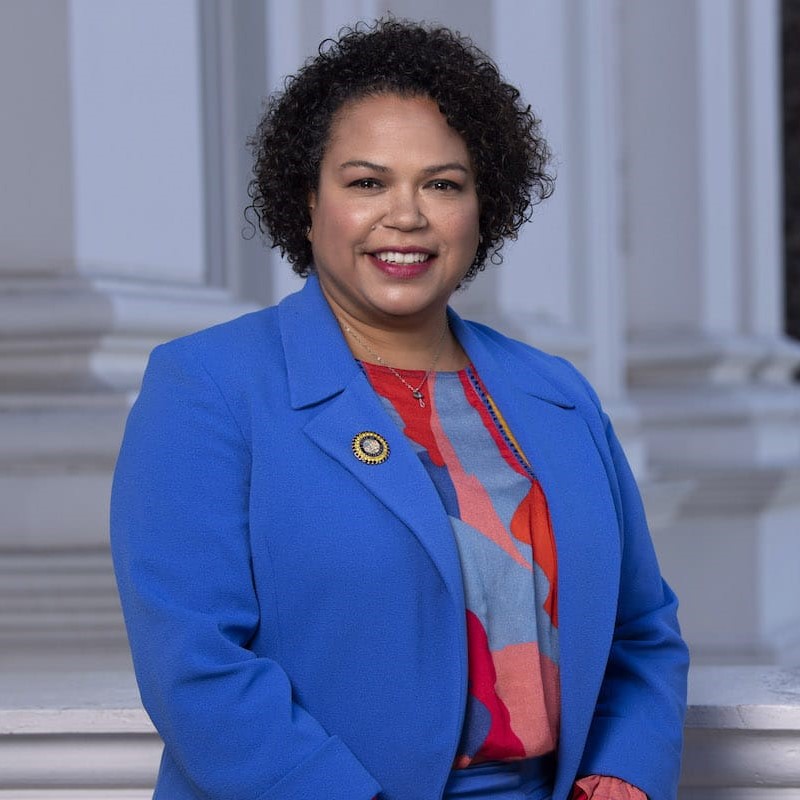
Asm. Mia Bonta
Sponsored bills
Existing law vests the Public Utilities Commission with regulatory authority over public utilities, including telephone corporations. The Moore Universal Telephone Service Act establishes the Universal Lifeline Telephone Service program in order to provide low-income households with access to affordable basic residential telephone service. Existing law requires the commission to accept applications for lifeline telephone service according to procedures specified by the commission. This bill would prohibit the commission, its staff, the lifeline program's third-party administrator, and lifeline service providers, and their contractors, agents, successors, or assignees, from sharing, disclosing, or otherwise making accessible any information provided by an applicant or subscriber to the lifeline program, or a subprogram or pilot program of the lifeline program, to any agency of a local government, a state government, or the federal government, or to an immigration authority, as defined, without a court-ordered subpoena or valid judicial warrant, except as specified. The bill would authorize the commission, its staff, the lifeline program's third-party administrator, and lifeline service providers, and the providers' agents, successors, or assignees, to request, but would prohibit those entities from requiring, applicants and subscribers to provide social security numbers to apply to, or participate in, the lifeline program. Existing law prohibits a telephone or telegraph corporation from making certain categories of personal information available to any other person or corporation without first obtaining the residential subscriber's consent in writing. Existing law exempts information provided to a law enforcement agency in response to lawful process from that prohibition. This bill would define "lawful process," for that purpose, to mean an action taken pursuant to a court-ordered subpoena or judicial warrant. Under existing law, a violation of the Public Utilities Act or any order, decision, rule, direction, demand, or requirement of the commission is a crime. Because certain provisions of this bill would be part of the act and therefore a violation of the bill's requirements, or a violation of a commission action implementing its requirements, would be a crime, the bill would impose a state-mandated local program. The California Constitution requires the state to reimburse local agencies and school districts for certain costs mandated by the state. Statutory provisions establish procedures for making that reimbursement. This bill would provide that no reimbursement is required by this act for a specified reason.
Existing law, for policy years beginning on or after January 1, 2024, requires student health insurance coverage, as defined, to be considered individual health insurance coverage. Existing law, except as specified, requires a blanket disability insurance policy that meets the definition of student health insurance coverage to comply with insurance provisions that are applicable to nongrandfathered individual health insurance, including, among others, essential health benefits requirements and annual limits on out-of-pocket expenses. Existing law exempts student health insurance coverage from certain requirements otherwise applicable to health insurers and health benefit plans, including the establishment of specified enrollment periods, guaranteed availability and renewability, specified coverage level requirements, and single risk pool rating requirements. Existing law requires a notice to be provided in the student health insurance enrollment materials stating that California requires residents and their dependents to obtain and maintain health coverage, either through student health insurance, or through a different method, including Medi-Cal, Covered California, or, if under 26 years of age, their parent's coverage. This bill would, commencing July 1, 2026, authorize a student certificate holder to request to terminate their student health insurance coverage during the policy year if the student graduates, takes a leave of absence, or is no longer enrolled at the institution of higher education. The bill would require the request to be provided to the institution of higher education at least 30 days before the effective date of termination and would, upon receipt of the request to terminate coverage, require the institution to terminate coverage effective within the same calendar month if feasible, but no later than the last day of the calendar month in which the 30-day period ends. The bill would authorize the student to pay only the premium through the date of the termination, as specified. The bill would require a student or dependent of a student to be notified of premium liability to them, if any, if they choose not to terminate coverage pursuant to these provisions. The bill would, commencing July 1, 2026, if a student requests a waiver from student health insurance coverage, require the waiver to be granted if the student obtains or maintains health coverage that is minimum essential coverage, as specified. The bill would prohibit charging the student a fee or premium if the waiver is granted. Existing law requires a health insurer to file with the Department of Insurance all required rate information for grandfathered individual and specified group health insurance policies at least 120 days before implementing any rate change. This bill would authorize the department to prohibit a requested rate change if the insurer fails to comply with the above-described timelines. This bill would also authorize the Insurance Commissioner to exercise their existing authority to enforce the above-described provisions and prohibits an administrative penalty, if assessed, from exceeding $5,000 for each violation, or $10,000 for a willful violation. The bill would also state the intent of the Legislature to encourage self-funded student health coverage offered by the University of California Student Health Insurance Plan and the University of California Voluntary Dependent Plan to maintain or exceed coverage standards of the federal Patient Protection and Affordable Care Act and to comply with the above described provisions.
Existing law authorizes the governing board of a school district to order a pupil expelled upon finding that the pupil committed one or more of a specified act, as provided. Existing law requires an expulsion order to remain in effect until the governing board orders the readmission of a pupil and requires the governing board to recommend a plan of rehabilitation for the pupil at the time of the expulsion order that may include recommendations for, among other things, improved academic performance, tutoring, or counseling. Existing law requires the governing board of each school district to adopt rules and regulations establishing a procedure for the filing and processing of requests for readmission and the process for the required review of all expelled pupils for readmission. Existing law requires the governing board, upon completion of the readmission process, to readmit the pupil unless the governing board makes a finding that the pupil has not met the conditions of the rehabilitation plan or continues to pose a danger to campus safety or to other pupils or employees of the school district. Existing law requires each county superintendent of schools in counties that operate community schools, in conjunction with superintendents of school districts within the county, to develop a plan for providing education services to all expelled pupils in that county, as provided. Existing law requires the plan to enumerate existing educational alternatives for expelled pupils, identify gaps in educational services to expelled pupils, and strategies for filling those service gaps. Existing law requires each school district to maintain specified data related to pupil expulsions, including, among other things, the number of pupils recommended for expulsion. This bill would require a plan of rehabilitation to include periodic review and a preliminary assessment for readmission at least 45 days before the end of the expulsion term, be tailored to the individual pupil's needs, and address the pupil's behavior that led to the expulsion and would authorize the plan of rehabilitation to be developed in consultation with specified school personnel, as provided. The bill would require the governing board of a school district to (1) assist the pupil in locating opportunities accessible to the pupil that are necessary to complete the requirements of a plan for rehabilitation, as provided, and (2) as part of the process for a required review, indicate whether or not the pupil had access to the necessary resources to complete their rehabilitation plan. The bill would prohibit the governing board from requiring the pupil or the pupil's parent or guardian to pay for any costs or services that the governing board determines to be necessary for the pupil to complete a plan of rehabilitation and would prohibit an expelled pupil from being denied readmission due to financial or transportation barriers or a lack of viable opportunities to complete a term of the rehabilitation plan. The bill would require the governing board to instead readmit the pupil, unless the governing board makes a finding that the pupil (1) has not substantially met the conditions of the rehabilitation plan despite having access to the necessary resources and viable opportunities to complete their plan or (2) continues to exhibit documented behaviors that the pupil was expelled for or is documented to have committed one or more new acts during the expulsion term that would make the pupil eligible for another expulsion. The bill would authorize the governing board to extend the expulsion term, as specified, if the governing board makes one of those specified findings, as provided. This bill would require the above-described plan for providing education services to all expelled pupils in the county to (1) include any services that may be required pursuant to an expelled pupil's individualized education program or plan pursuant to Section 504 of the federal Rehabilitation Act of 1973, (2) identify multiple educational programs and services for expelled pupils, (3) outline a timely readmission process after the expulsion term is complete, and (4) describe the steps to be taken by the school district to support the successful transition of a pupil upon readmission, as provided. The bill would require each school district to maintain additional data related to pupil expulsions, including, among other things, the average length of expulsion terms, including any extensions, and would delete obsolete provisions related to that data. By imposing additional duties on local educational agencies or local officials, the bill would constitute a state-mandated local program. The California Constitution requires the state to reimburse local agencies and school districts for certain costs mandated by the state. Statutory provisions establish procedures for making that reimbursement. This bill would provide that, if the Commission on State Mandates determines that the bill contains costs mandated by the state, reimbursement for those costs shall be made pursuant to the statutory provisions noted above.
(1) Existing law, the Pharmacy Law, requires the California State Board of Pharmacy within the Department of Consumer Affairs to license and regulate the practice of pharmacy, including pharmacists, pharmacy technicians, and pharmacies. Existing law authorizes the board, with the approval of the Director of Consumer Affairs, to appoint an executive officer to exercise certain powers and to perform certain duties delegated by the board, as specified. Existing law repeals the provisions establishing the board and authorizing the appointment of an executive officer on January 1, 2026, rendering the board subject to review by the appropriate policy committees of the Legislature. This bill would provide that the board has exclusive authority to administer and enforce the Pharmacy Law related to the practice of pharmacy and the licensing of pharmacists and pharmacies, and would specify that its provisions do not prohibit the board from evaluating or acting regarding unlicensed activity, as provided. The bill would extend the repeal date of the above-described provisions to January 1, 2030. The bill would additionally require the board to establish a Pharmacy Technician Advisory Committee to advise and make recommendations to the board, as specified. Existing law specifies the fees for issuance or renewal of licenses issued pursuant to the Pharmacy Law, including, among others, pharmacy licenses. This bill would require the board to waive the application fee for a pharmacy operating a physical location in a medically underserved area, as defined, and would authorize the board to waive the fee for the annual renewal of a license if the licensee provides the board with certification of continued operation in the medically underserved area. (2) Existing law authorizes a pharmacist to perform various procedures and functions, including those related to dispensing or furnishing drugs or devices, as specified. Existing law generally requires a pharmacist's dispensing or furnishing drugs to be done pursuant to a valid prescription, except as provided in specified circumstances. Those exceptions include furnishing an FDA-approved opioid antagonist, emergency contraception drug therapy, self-administered hormonal contraceptives, nicotine replacement products, certain medications for individuals traveling outside of the United States, and certain HIV medications, as specified. Existing law requires certain conditions to be met for a pharmacist to authorize the initiation of a prescription under certain of those exceptions or to otherwise provide clinical advice, services, information, or patient consultation. This bill would revise and recast the above-described provisions to authorize a pharmacist to, among other things, furnish dangerous devices, to furnish FDA-approved or authorized medications as part of preventative health care services that do not require a diagnosis, as specified, and to complete missing information on a prescription for a noncontrolled medication if there is evidence to support the change. The bill would require that a pharmacist provide those and other specified services or activities consistent with the accepted standard of care, defined to mean the degree of care a prudent and reasonable pharmacist licensed under the Pharmacy Law, with similar education, training, experience, resources, and setting, would use in a similar situation. The bill would make nonsubstantive, conforming changes. Existing law requires the clinical advice, services, information, or patient consultation that a pharmacist provides to be provided to a health care professional or to a patient. This bill would authorize a pharmacist to provide the clinical advice, services, information, or patient consultation to a patient's agent. Existing law, until January 1, 2026, authorizes a pharmacist to furnish COVID-19 oral therapeutics, as defined, following a positive test for SARS-CoV-2, the virus that causes COVID-19, in accordance with specified requirements. This bill would delete the January 1, 2026, repeal date, thereby extending this authorization indefinitely. Existing law prohibits a dangerous drug from being refilled without the authorization of the prescriber, except under specified circumstances. Under those circumstances, existing law requires a pharmacist to make every reasonable effort to contact the prescriber. This bill would remove the above-described requirement that the pharmacist make every reasonable effort to contact the prescriber. Existing law authorizes a pharmacist to dispense not more than a 90-day supply of a dangerous drug other than a controlled substance pursuant to a valid prescription that specifies an initial quantity of less than a 90-day supply followed by periodic refills of that amount if certain requirements are met. Existing law prohibits a pharmacist from dispensing a greater supply pursuant to that provision if the prescriber indicates that there is to be no change to the quantity of the refill, as specified. This bill would remove that prohibition. Existing law authorizes a pharmacy to dispense epinephrine auto-injectors to a prehospital emergency medical care person or lay rescuer for the purpose of rendering emergency care, as specified. This bill would remove the above-described authorization. (3) Existing law authorizes a licensed pharmacist to perform additional functions if the licensee is recognized by the board as "an advanced practice pharmacist" by meeting certain requirements. Those additional functions include, among others, performing patient assessments, ordering and interpreting drug therapy-related tests, and initiating, adjusting, or discontinuing drug therapy, as specified. The requirements for recognition as an advanced practice pharmacist include having completed a combination of specified certifications, postgraduate residencies, or experience under a collaborative practice agreement or protocol with a physician. Existing law also requires an advanced practice pharmacist to complete 10 hours of continuing education in addition to the continuing education otherwise required at the time of a second or subsequent license renewal. This bill would revise those and other related provisions to refer to those licensees as "advanced pharmacist practitioners," instead of as "advanced practice pharmacists." (4) Existing law prohibits any person from furnishing or dispensing any dangerous drug or device on the internet for delivery to any person in California without a prescription issued pursuant to a "good faith prior examination," as provided. This bill would instead refer to that examination as an "appropriate prior examination." (5) Existing law authorizes the board to issue citations containing fines and orders of abatement for violations of specified law, as provided. Existing law authorizes the board to bring an action against a chain community pharmacy under common ownership or management for fines for a violation of the Pharmacy Law that was expressly encouraged by the common owner or manager, as provided. This bill would instead apply those fines for a violation that was expressly encouraged by any owner or manager of the chain community pharmacy. Existing law authorizes the board to bring an action for fines for repeated violations of materially similar provisions of the Pharmacy Law within 5 years by 3 or more pharmacies operating under common ownership or management within a chain community pharmacy, as specified. Existing law provides a pharmacy with a defense if it establishes that the violation was contrary to a written policy that was communicated by the common owner or manager to all employees where the violation occurred. Existing law also provides a defense if the pharmacy establishes that, within 6 months after the violation, the common owner or manager corrected all unlawful policies, communicated the change in policies, and provided the board with proof of abatement of the violation, as specified. This bill would, for the defense that the violation was contrary to a written policy, also require the entity to establish that it has complied with the policy. The bill would revise the above-described corrective-actions defense by allowing those actions to be undertaken by any owner or manager of the pharmacy. The bill would additionally authorize the board to bring an action for fines for repeated violations of materially similar provisions of the Pharmacy Law against a mail order pharmacy, defined as a nonresident pharmacy that dispenses medications and ships them to patients via the postal service or other mail delivery method, as provided. The bill would require the board, in determining the amount of the fine, to consider mitigating and aggregating factors, as specified. (6) Existing law prohibits the board from issuing a pharmacy license to a person who has a shared community or financial interest with a person authorized to prescribe or write a prescription, as provided. This bill would establish an exception to the above-described prohibition under which the applicant and the prescriber would be required to provide statements that the prescriber disavows any community or financial interest in the license and to transmute any interest in the license that is shared community property into the separate property of the applicant, as provided. The bill would prohibit a pharmacy granted a license pursuant to this exception from filling any prescriptions issued or prescribed by a person who shares a community or other financial interest with the licensee or a prescriber at the same place of business as that person if the prescriber owns an interest greater than 10% in the practice issuing the prescription. Existing law authorizes the board to issue a retired license to a licensed pharmacist, as specified. Existing law authorizes the holder of a retired license to restore their license to active status by passing the examination that is required for initial licensure with the board. This bill would instead authorize the holder of a retired license to request to restore their license to active status within 3 years of issuance of the retired license by paying a renewal fee and successfully completing certain continuing education within the 2 years preceding the request, as specified. If more than 3 years have elapsed since the issuance of the retired license, the bill would require the holder of the retired license to reapply for licensure as a pharmacist, as specified. Existing law authorizes the board to deny a license application if the applicant has been convicted of a crime or subjected to formal discipline that would be grounds for denial of a federal registration to distribute controlled substances. This bill would also authorize the board to deny a license application if the applicant has been convicted of a crime involving fraud in violation of state or federal laws related to health care or involving financial identity theft. Existing law requires certain licensed facilities to perform a self-assessment evaluating compliance with specified provisions of the Pharmacy Law, as provided. This bill would require all licensed facilities to complete a self-assessment every odd-numbered year and within 30 days of certain changes to the license, management personnel, and location, as provided. The bill would require this self-assessment to be signed under penalty of perjury, thereby imposing a state-mandated local program by expanding the crime of perjury. (7) Existing law requires a pharmacy to designate a pharmacist-in-charge and notify the board within 30 days of that designation, as specified. Existing law authorizes the pharmacist-in-charge to, among other things, make staffing decisions and notify store management of dangerous conditions, as specified. This bill would require the pharmacist-in-charge to determine the appropriate pharmacist-to-technician ratio, within prescribed limits, and prohibit anyone else from interfering with the exercise of the pharmacist-in-charge's independent professional judgment in setting this ratio. The bill would additionally require the pharmacist-in-charge to notify the owner or hospital administrator of dangerous conditions, as specified. Existing law provides for the licensing of nonresident pharmacies, as specified. Existing law prohibits a pharmacist at a nonresident pharmacy whose license has been revoked from prescribing a dangerous drug or providing other pharmacy-related services, as specified. This bill would, beginning July 1, 2026, require a nonresident pharmacy, as a prerequisite to registering with the board and ongoing licensure, to identify a California-licensed pharmacist employed and working at the nonresident pharmacy to be proposed to serve as the pharmacist-in-charge. The bill would also require the nonresident pharmacy, within 90 days of designating a pharmacist-in-charge, to notify the board of the identity and license number of that pharmacist and the date they were designated, as specified. The bill would require the nonresident pharmacy, within 90 days, to notify the board of a pharmacist-in-charge ceasing to act as the pharmacist-in-charge and to propose another pharmacist to take over as the pharmacist-in-charge. The bill would additionally, beginning July 1, 2026, prohibit a nonresident pharmacy from permitting a pharmacist-in-charge who is not licensed in California from working at a nonresident pharmacy. The bill would authorize the board to inspect a nonresident pharmacy. The bill would require a nonresident pharmacy to deposit a reasonable amount, as determined by the board, necessary to cover the board's estimated reasonable costs of performing the inspection, as specified. (8) Existing law limits a pharmacy with only one pharmacist to one pharmacy technician performing packaging, manipulative, repetitive, or other nondiscretionary tasks. This bill would increase this limit to 3 pharmacy technicians performing those tasks. (9) Existing law requires a pharmacy to preserve certain records, as provided. This bill would require a pharmacy to additionally maintain records related to prescribed policies and procedures in a readily retrievable format. The bill would also impose requirements related to electronically maintained records. (10) This bill would incorporate additional changes to Section 4064.5 of the Business and Professions Code proposed by SB 418 to be operative only if this bill and SB 418 is enacted and this bill is enacted last. This bill would incorporate additional changes to Section 4076 of the Business and Professions Code proposed by AB 260 to be operative only if this bill and AB 260 are enacted and this bill is enacted last. (11) Because a violation of these provisions would be a crime, the bill would impose a state-mandated local program. The California Constitution requires the state to reimburse local agencies and school districts for certain costs mandated by the state. Statutory provisions establish procedures for making that reimbursement. This bill would provide that no reimbursement is required by this act for a specified reason.
Existing law declares the public policy of the state regarding labor organization, including, among other things, that it is necessary for a worker to have full freedom of association, self-organization, and designation of representatives of their own choosing, to negotiate the terms and conditions of their employment, and to be free from the interference, restraint, or coercion of employers of labor, or their agents, in the designation of such representatives or in self-organization or in other concerted activities for the purpose of collective bargaining or other mutual aid or protection. Existing law establishes the Public Employment Relations Board (PERB) in state government as a means of resolving disputes and enforcing the statutory duties and rights of specified public employers and employees under various acts regulating collective bargaining. Under existing law, PERB has the power and duty to investigate an unfair practice charge and to determine whether the charge is justified and the appropriate remedy for the unfair practice. Existing law, the federal National Labor Relations Act (NLRA) , establishes a comprehensive statutory scheme regulating unfair labor practices on the part of employers and labor organizations in industries affecting interstate commerce, and vests in the National Labor Relations Board (NLRB) the power to conduct elections to determine employee representatives and to prevent unfair labor practices affecting commerce. Existing law, the California Public Records Act, requires that public records, as defined, be available to the public for inspection and made promptly available to any person. This bill would expand PERB's jurisdiction by authorizing a worker, to petition PERB to protect and enforce prescribed rights under specified circumstances, including if the worker is employed in a position subject to the NLRA but the NLRB has expressly or impliedly ceded jurisdiction. The bill would authorize PERB to, among other things, decide unfair labor practice cases pursuant to a specified timeline and order all appropriate relief for a violation, including civil penalties, as prescribed. In order to pursue relief from PERB, the bill would require a covered worker or their representative to file an unfair practice charge or petition that includes specified information, including, where applicable, the original charge or petition filed with the NLRB. The bill would require PERB to hold the supporting documentation and evidence confidential and maintain it as part of its investigatory file and would exempt this documentation and evidence from the California Public Records Act. If PERB determines, among other things, it has insufficient resources to process certain cases or doing so would prevent it from meeting specified statutory deadlines, the bill would require PERB to process and prioritize charges, as specified. The bill would also establish the Public Employment Relations Board Enforcement Fund (fund) in the State Treasury, would require the above-described civil penalties to be deposited into the fund, and would make moneys in the fund available upon appropriation by the Legislature to PERB for the purpose of administering the above-specified provisions. The bill would authorize PERB to rely on its own decisions and precedent under the NLRA and would authorize review of its decisions by a state appellate court, as specified. Existing law, the Alatorre-Zenovich-Dunlap-Berman Agricultural Labor Relations Act of 1975, grants agricultural employees the right to form and join labor organizations and engage in collective bargaining, as specified, and prohibits agricultural employers and labor organizations from engaging in unfair labor practices. Those provisions establish the Agricultural Labor Relations Board (ALRB) and empower the ALRB to prevent any person from engaging in those practices. Existing law establishes various definitions for these purposes. Existing law requires the ALRB to follow applicable precedents of the NLRA. This bill would specify that the ALRB has exclusive jurisdiction in all phases of the administration of the act, and to determine whether any person or entity meets one or more of those definitions. The bill would instead authorize the board to follow applicable precedents of the NLRA, but would not obligate the board to follow precedents where the ALRB deems it inappropriate to do so. This bill would make related findings and declarations and would make its provisions severable. Existing constitutional provisions require that a statute that limits the right of access to the meetings of public bodies or the writings of public officials and agencies be adopted with findings demonstrating the interest protected by the limitation and the need for protecting that interest. This bill would make legislative findings to that effect.
Existing law, the Pharmacy Law, establishes in the Department of Consumer Affairs the California State Board of Pharmacy to license and regulate the practice of pharmacy. Exiting law requires a pharmacist, when furnishing self-administered hormonal contraceptives, to follow specified standardized procedures or protocols developed and approved by both the board and the Medical Board of California in consultation with the American Congress of Obstetricians and Gynecologists, the California Pharmacists Association, and other appropriate entities. Existing law requires those standardized procedures or protocols to require that the patient use a self-screening tool that will identify related patient risk factors and that require the pharmacist to refer the patient for appropriate followup care, as specified. Existing law requires the pharmacist to provide the recipient of the drug with a standardized factsheet that includes the indications and contraindications for use of the drug, the appropriate method for using the drug, the need for medical followup, and other appropriate information. Existing law authorizes a pharmacist furnishing an FDA-approved, self-administered hormonal contraceptive pursuant to the above-described protocols to furnish, at the patient's request, up to a 12-month supply at one time. This bill would limit the application of those requirements to self-administered hormonal contraceptives that are prescription-only, and would authorize a pharmacist to furnish over-the-counter contraceptives without following those standardized procedures or protocols. The bill would additionally authorize a pharmacist to furnish up to a 12-month supply at one time of over-the-counter contraceptives at the patient's request. The bill would make related conforming changes. This bill would declare that it is to take effect immediately as an urgency statute.
(1) The Confidentiality of Medical Information Act (CMIA) prohibits a provider of health care, a health care service plan, a contractor, or a corporation and its subsidiaries and affiliates from intentionally sharing, selling, using for marketing, or otherwise using any medical information, as defined, for any purpose not necessary to provide health care services to a patient, except as provided. The CMIA prohibits a provider of health care, health care service plan, or contractor from disclosing medical information regarding a patient of the provider of health care or an enrollee or subscriber of a health care service plan without first obtaining authorization from the patient, except if the disclosure is compelled by, among other things, a search warrant lawfully issued to a governmental law enforcement agency or a court order. Existing law makes a violation of these provisions that results in economic loss or personal injury to a patient punishable as a misdemeanor. This bill would revise the definition of "medical information" to include immigration status, including current and prior immigration status, and place of birth, if that information is known or collected, as specified, and would define "immigration enforcement" to mean any and all efforts to investigate, enforce, or assist in the investigation or enforcement of any federal civil immigration law, and also includes any and all efforts to investigate, enforce, or assist in the investigation or enforcement of any federal criminal immigration law that penalizes a person's presence in, entry or reentry to, or employment in, the United States. The bill would specify that a provider of health care, health care service plan, or contractor shall disclose medical information regarding a patient of the provider of health care or an enrollee or subscriber or a health care service plan pursuant to a valid search warrant issued by a judicial officer, including a magistrate, to a governmental law enforcement agency, or pursuant to a state or federal court order issued by a court of this state or a federal court. The bill would also prohibit, except to the extent expressly authorized by a patient, enrollee, or subscriber, or as otherwise permitted or required, a provider of health care, health care service plan, contractor, or corporation and its subsidiaries and affiliates from disclosing medical information for immigration enforcement. Because the bill would expand the scope of a crime, it would impose a state-mandated local program. (2) Under existing law, the State Department of Public Health is responsible for the licensing and regulation of various facilities and settings that provide health care services, as specified. Existing law makes a willful violation of these provisions a crime. This bill would require health care provider entities, as defined, to establish or amend procedures for monitoring, documenting, and receiving visitors to health care provider entities to the extent possible. The bill would require health care provider entity personnel to immediately notify health care provider entity management, administration, or legal counsel of any request for access to a health care provider entity site or patient for immigration enforcement, and to provide any requests for review of health care provider entity documents, as prescribed. The bill would prohibit, unless required by state or federal law, a health care provider entity and its personnel from allowing any person access to nonpublic areas of the provider's facilities for immigration enforcement purposes, except as specified. The bill would require health care provider entities to inform staff and relevant volunteers on how to respond to requests relating to immigration enforcement that grants access to health care provider entity sites or to patients. The bill would require that health care provider entities comply with these provisions within 45 days from their effective date. By expanding the scope of a crime and increasing duties on local health officials, the bill would impose a state-mandated local program. The California Constitution requires the state to reimburse local agencies and school districts for certain costs mandated by the state. Statutory provisions establish procedures for making that reimbursement. This bill would provide that with regard to certain mandates no reimbursement is required by this act for a specified reason. With regard to any other mandates, this bill would provide that, if the Commission on State Mandates determines that the bill contains costs so mandated by the state, reimbursement for those costs shall be made pursuant to the statutory provisions noted above. This bill would provide that no reimbursement is required by this act for a specified reason. This bill would declare that it is to take effect immediately as an urgency statute.
(1) Existing law prohibits, except as required by state or federal law or as required to administer a state or federally supported educational program, school officials and employees of a school district, county office of education, or charter school from collecting information or documents regarding citizenship or immigration status of pupils or their family members. Existing law requires the superintendent of a school district, the superintendent of a county office of education, and the principal of a charter school, as applicable, to report to the respective governing board or body of the local educational agency in a timely manner any requests for information or access to a schoolsite by an officer or employee of a law enforcement agency for the purpose of enforcing the immigration laws in a manner that ensures the confidentiality and privacy of any potentially identifying information. This bill would prohibit school officials and employees of a local educational agency from allowing an officer or employee of an agency conducting immigration enforcement to enter a nonpublic area of a schoolsite, as defined, for any purpose without being presented with a valid judicial warrant, judicial subpoena, or a court order. The bill would require school officials and employees of a local educational agency, to the extent practicable, to request valid identification of any officer or employee of an agency conducting immigration enforcement seeking to enter a nonpublic area of a schoolsite. The bill would also prohibit a local educational agency and its personnel from disclosing or providing, in writing, verbally, or in any other manner, the education records of or any information about a pupil or a pupil's family and household without the pupil's parents' or guardians' written consent, a school employee, or a teacher to an officer or employee of an agency conducting immigration enforcement without a valid judicial warrant or judicial subpoena, or court order directing the local educational agency or its personnel to do so. By imposing additional duties on local educational agencies, the bill would impose a state-mandated local program. (2) Existing law requires the Attorney General, by April 1, 2018, in consultation with the appropriate stakeholders, to publish model policies limiting assistance with immigration enforcement at public schools, to the fullest extent possible consistent with federal and state law, and ensuring that public schools remain safe and accessible to all California residents, regardless of immigration status, as provided. Existing law requires local educational agencies, by July 1, 2018, to adopt those model policies developed by the Attorney General or equivalent policies. This bill would require the Attorney General, by December 1, 2025, to update those model policies to ensure that the policies align with the above-described prohibitions on school officials and employees of local educational agencies allowing an officer or employee of an agency conducting immigration enforcement to enter a nonpublic area of a schoolsite without a valid judicial warrant or judicial subpoena, or a court order and from disclosing or providing certain information to those officers or employees, as provided. The bill also would require a local educational agency to update its model policy by March 1, 2026, and to make the policy available to the State Department of Education upon request. By imposing additional duties on local educational agencies, the bill would impose a state-mandated local program. (3) This bill would make these provisions severable. (4) The California Constitution requires the state to reimburse local agencies and school districts for certain costs mandated by the state. Statutory provisions establish procedures for making that reimbursement. This bill would provide that, if the Commission on State Mandates determines that the bill contains costs mandated by the state, reimbursement for those costs shall be made pursuant to the statutory provisions noted above. (5) This bill would declare that it is to take effect immediately as an urgency statute.
Existing law makes it a misdemeanor to wear a mask, false whiskers, or any personal disguise, as specified, with the purpose of evading or escaping discovery, recognition, or identification while committing a public offense, or for concealment, flight, evasion, or escape from arrest or conviction for any public offense. This bill would make it a crime for a law enforcement officer to wear a facial covering in the performance of their duties, except as specified. The bill would define law enforcement officer as anyone designated by California law as a peace officer who is employed by a city, county, or other local agency, and any officer or agent of a federal law enforcement agency or law enforcement agency of another state, or any person acting on behalf of a federal law enforcement agency or agency of another state. The bill would make a violation of these provisions punishable as an infraction or a misdemeanor, as specified. By creating a new crime, this bill would impose a state-mandated local program. The bill would require any law enforcement agency operating in California to, by July 1, 2026, maintain and publicly post a written policy limiting the use of facial coverings, as specified. The bill would exempt personnel of any agency from the crime of wearing a facial covering if an agency maintains a policy pursuant to this section no later than July 1, 2026. The bill would deem a policy consistent with these provisions for the purposes of that exception unless a member of the public, an oversight body, or a local governing authority challenges it. The bill would also impose a specified civil penalty against certain officers for tortious conduct, including, but not limited to, false imprisonment or false arrest of an individual while wearing a facial covering. The bill would, if the agency does not address deficiencies within 90 days, authorize the complaining party to proceed to a court of competent jurisdiction for a judicial determination of the exemption, as specified. The bill would define a law enforcement agency for these purposes as any entity of a city, county, or other local agency, that employs anyone designated by California law as a peace officer, any federal law enforcement agency, or any law enforcement agency of another state. By imposing additional duties on local law enforcement agencies, this bill would create a state-mandated local program. This bill would declare its provisions to be severable. This bill would make related findings and declarations. The California Constitution requires the state to reimburse local agencies and school districts for certain costs mandated by the state. Statutory provisions establish procedures for making that reimbursement. This bill would provide that with regard to certain mandates no reimbursement is required by this act for a specified reason. With regard to any other mandates, this bill would provide that, if the Commission on State Mandates determines that the bill contains costs so mandated by the state, reimbursement for those costs shall be made pursuant to the statutory provisions noted above.