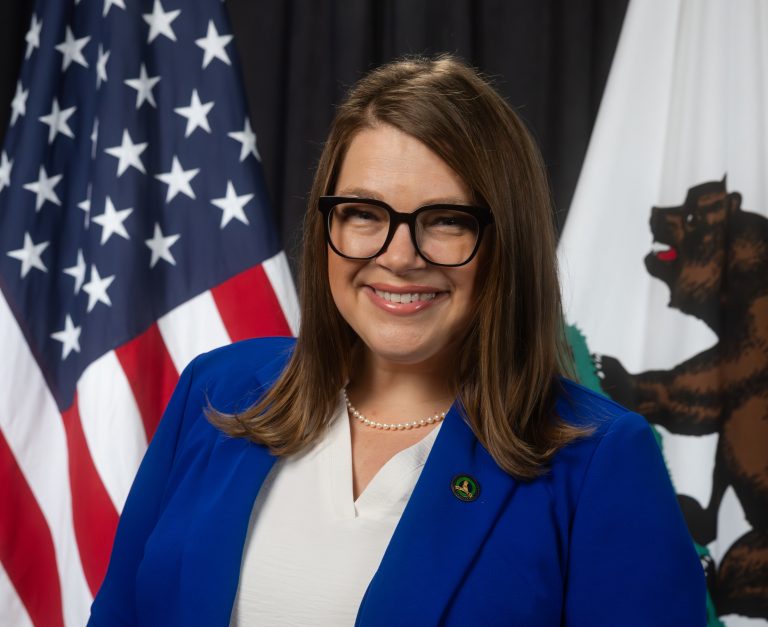
Photo of Heather Hadwick
R California House · District 1 On the 2026 ballot

Rep. Heather Hadwick

Compare
Total votes
4,292
all sessions
Attendance
90%
385 missed
Near the chamber average
With party
98%
of cast votes
Lower than 81% of chamber peers
Bipartisan score
1%
crosses aisle rarely
Higher than 79% of chamber peers
Sponsored
401
bills & resolutions
Near the chamber average
Committees
16
assignments
401 bills and resolutions

Sponsored bills

Total
401
Primary
42
Co-sponsor
359
This page
401
matching current filters
Co-sponsor HR 86
Passed · California House · Co-sponsor
Relative to Canine "K-9" Appreciation Week.

Maddy summaryCalifornia Assembly Resolution 86 proclaims the week of September 1 through 7, 2026, as Canine "K-9" Appreciation Week to honor police dogs and their handlers. The resolution cites the historical growth of canine units in California and highlights their contributions to law enforcement, such as apprehending suspects, detecting narcotics, and locating missing persons. It also notes that these teams often reduce the need for lethal force and engage with the public through community demonstrations.

Passed Aug 19, 2026 1 co-sponsor
Co-sponsor HR 136
Passed · California House · Co-sponsor
Relative to Home Hardening Week.

Maddy summaryCalifornia House Resolution 136 designates the second week of September each year as Home Hardening Week to promote fire safety measures for residents. The resolution cites rising wildfire risks and insurance costs as reasons for encouraging homeowners to use fire-resistant building materials and manage defensible space around their properties. It urges local organizations and county boards of supervisors to distribute information about these protective steps, which studies suggest can significantly increase the likelihood that a home survives a wildfire.

Passed Aug 17, 2026 1 co-sponsor
Co-sponsor HR 128
Passed · California House · Co-sponsor
Relative to Aromatic L-Amino Acid Decarboxylase Deficiency Awareness Day.

Maddy summaryCalifornia House Resolution 128 designates October 23, 2026, as Aromatic L-Amino Acid Decarboxylase (AADC) Deficiency Awareness Day. The resolution aims to increase public and medical community awareness of this ultrarare genetic condition, which prevents the body from producing dopamine and causes severe developmental delays. By highlighting the challenges faced by patients and their caregivers, the bill encourages Californians to learn more about the disease to support earlier diagnosis and continued research into treatments.

Passed Aug 13, 2026 1 co-sponsor
Co-sponsor HR 131
Passed · California House · Co-sponsor
Relative to Student Cancer Education, Detection, and Prevention Week.

Maddy summaryCalifornia Assembly Resolution 131 proclaims October 11 through 17, 2026, as Student Cancer Education, Detection, and Prevention Week. The resolution encourages middle schools, high schools, colleges, public health agencies, pediatricians, and community health providers to promote educational campaigns on cancer prevention and detection. These efforts aim to inform students about risk factors, warning signs, and the importance of timely screenings to support better health outcomes for young people in the state.

Passed Aug 13, 2026 1 co-sponsor
Co-sponsor AB 1826
Passed · California House · Co-sponsor
Cannabis: recall, embargo, and destruction of cannabis and cannabis products.

Existing law, the Medicinal and Adult-Use Cannabis Regulation and Safety Act (MAUCRSA) , governs the licensure and regulation of commercial cannabis activities. MAUCRSA prohibits engaging in certain commercial activities with cannabis or a cannabis product that is misbranded or adulterated. Among the conditions for which cannabis or a cannabis product is deemed misbranded, MAUCRSA includes packaging or labeling that does not conform to specified requirements. Among the conditions for which cannabis or a cannabis product is deemed adulterated, MAUCRSA includes instances in which concentrations differ from, or its purity or quality is below, that which it is represented to possess. This bill would revise the standards for determining whether cannabis or a cannabis product has been misbranded or adulterated by eliminating certain conditions, including the conditions described above. MAUCRSA establishes the Department of Cannabis Control for the administration and enforcement of its provisions. Existing law gives the department various enforcement powers and duties related to the recall, embargo, seizure, and destruction of cannabis and cannabis products that have been deemed misbranded or adulterated, or whose sale would otherwise be in violation of MAUCRSA. When the department has evidence that cannabis or a cannabis product has been adulterated or misbranded or when the department issues an embargo, existing law requires the department to notify the licensee. This bill would require those notifications to include certain documentation supporting the finding of adulteration or misbranding, or the finding of probable cause to issue an embargo, as specified. Existing law authorizes a licensee to conduct a voluntary recall of the affected cannabis or cannabis product and to remediate the cannabis or cannabis product, if approved by the department, otherwise, existing law requires the licensee to destroy the affected cannabis or cannabis product under the supervision of the department. This bill would authorize, rather than require, the licensee to destroy the affected cannabis or cannabis product under those circumstances. The bill would require the department, prior to a voluntary recall by the licensee, to provide the licensee with an opportunity for an informal conference on why the cannabis or cannabis product is considered adulterated or misbranded. The bill would prohibit the department from permitting destruction of the product until either the informal conference process has concluded or the licensee has declined to participate in the informal conference. Existing law authorizes the department to issue a mandatory recall if the cannabis or cannabis product creates or poses an immediate and serious threat to human life or health, as specified. Existing law requires the department to provide an opportunity for an informal proceeding on the recall within 5 days, as specified. This bill would require the department to provide the evidence supporting the mandatory recall simultaneously with the issuance of the order. The bill would require the department to provide the licensee with an opportunity for an informal conference on the recall, instead of an informal proceeding, as specified. The bill would prohibit the department from requiring destruction of cannabis or cannabis product prior to the conclusion of either the informal conference process or the licensee's decision not to participate in the informal conference. Existing law requires the department to affix an embargo tag or other appropriate marking to cannabis or cannabis product that the department finds or has probable cause to believe is in violation of MAUCRSA, as specified. Existing law prohibits the embargoed cannabis or cannabis product from being removed or disposed of by sale or otherwise until the department or a court gives permission. Existing law authorizes the licensee to request that the department remove the tag or other marking to permit correction if the adulteration or misbranding can be corrected by proper labeling or additional processing, and other requirements are met. Existing law authorizes the department to remove the tag or other marking if it finds that the embargoed cannabis or cannabis product is not in violation of MAUCRSA, as specified. This bill would require the department to provide the licensee with an opportunity for an informal conference on an embargo, as specified, and would require the department to make a final determination on the embargo order within 15 calendar days from the date of the informal conference. The bill would require the department to remove the embargo tag or other marking within 5 calendar days of finding that cannabis or a cannabis product is not in violation of MAUCRSA, as specified. Existing law authorizes the department to condemn cannabis or a cannabis product that is embargoed. Existing law also authorizes the licensee or product owner of embargoed cannabis or cannabis product to destroy or remediate the cannabis or cannabis product pursuant to a corrective action plan approved by the department and under the supervision of the department. This bill would authorize the department to initiate condemnation proceedings, as provided, if the department does not approve a corrective action plan or does not receive a response from the licensee with 7 days of the notice of the embargo. This bill would prohibit the department from requiring a licensee to conduct a voluntary recall, sign a waiver of liability, or waive any right to an informal meeting or an administrative or judicial hearing or appeal as a condition of the department taking certain actions. Those actions include approving a voluntary recall, authorizing remediation, supervising the destruction of the cannabis or cannabis product, removing an embargo tag, approving a corrective plan, and permitting the destruction of product. The bill would make failure to comply with a condemnation order a separate cause for disciplinary action against a licensee. Existing law authorizes the department to issue a citation to a licensee or unlicensed person for any act or omission that violates or has violated any provision of MAUCRSA and requires the citation to include a provision that notifies the licensee or person that a hearing may be requested to contest the finding of a violation. Existing law requires the hearing to be conducted pursuant to specified provisions of the Administrative Procedure Act that govern formal hearings. This bill would instead require the citation to include a provision that notifies the licensee that a hearing or informal conference, or both, may be requested to contest the violation, as specified. The bill would require the informal hearing to be conducted pursuant to different provisions of the Administrative Procedure Act, other than the provisions governing formal hearings, and would set forth additional specific procedures for the informal conference. The bill would require a citation issued under these provisions to be issued within 3 years after the performance of the act or omission that violates MAUCRSA.


Passed Aug 13, 2026 1 co-sponsor
Primary AB 1868
Passed · California House · Lead sponsor
Health facilities: cardiac surgery.

Existing law provides for the licensure and regulation of health facilities, including general acute care hospitals, by the State Department of Public Health. Existing law authorizes a general acute care hospital to be approved to offer special services, including, among others, cardiac surgery. Existing regulation requires, when a general acute care hospital is providing cardiovascular operative service, that a minimum of 3 surgeons constitute a surgical team if the procedure requires extracorporeal bypass. This bill would require the department, on or before January 1, 2030, to update that regulation to reflect current professional standards of care relating to extracorporeal bypass surgery.

Passed Aug 13, 2026 0 co-sponsors
Co-sponsor AB 2046
Passed · California House · Co-sponsor
Vehicles: pollution control devices.

Existing law prohibits a person from operating or leaving standing upon a highway a motor vehicle that is required to be equipped with a motor vehicle pollution control device or any other certified motor vehicle pollution control device, as specified, unless the motor vehicle is equipped with the required motor vehicle pollution control device that is correctly installed and in operating condition, and prohibits a person from disconnecting, modifying, or altering that device. Existing law also prohibits a person from installing, selling, offering for sale, or advertising any device, apparatus, or mechanism intended for use with, or as a part of, a required motor vehicle pollution control device or system that alters or modifies the original design or performance of the motor vehicle pollution control device or system. Existing law exempts from these provisions an alteration, modification, or modifying device, apparatus, or mechanism found by resolution of the State Air Resources Board to not reduce the effectiveness of a required motor vehicle pollution control device or to result in emissions from the modified or altered vehicle that comply with existing state or federal standards, as specified. A violation of these provisions is a crime. This bill would additionally exempt from the above-described provisions an alternative fuel retrofit system for a light-duty or medium-duty gasoline-fueled vehicle that converts the vehicle to a dual-fueled vehicle that can utilize gasoline or E85 fuel if the alternative fuel retrofit system has been certified by the United States Environmental Protection Agency as a clean alternative fuel conversion system, as specified, and would prohibit the State Air Resources Board from requiring state certification, executive order approval, or any additional testing or demonstration for such an alternative fuel retrofit device.

Passed Aug 13, 2026 1 co-sponsor
Co-sponsor HR 112
Passed · California House · Co-sponsor
Relative to Black Music Month.

Maddy summaryThis House Resolution officially designates September as Black Music Month to honor the significant contributions of Black artists to American culture. The measure recognizes a wide range of musical genres, including jazz, blues, gospel, and hip-hop, by highlighting their historical origins and influential figures. While the text celebrates these artistic achievements, it does not impose any new legal requirements or funding mandates.

Passed Aug 13, 2026 1 co-sponsor
Primary AB 2679
Passed · California House · Lead sponsor
State highways: public parking: traffic control.

Existing law establishes the Department of Transportation and vests the department with full possession and control of all state highways and all property and rights in property acquired for state highway purposes. Existing law establishes the Tahoe Transportation District as a special purpose district managed by representatives from the States of California and Nevada to, among other things, operate a public transportation system in the Lake Tahoe Basin. This bill would authorize the department, within the Tahoe corridor, to contract with a state agency, a local government, or the district relating to safety, access, and parking in the corridor to (1) designate the portions of state highways that constitute the corridor, (2) prevent unsafe parking and pedestrian movement in the corridor, as provided, and (3) enhance public access to the corridor and public recreation sites, by, among other things, developing public parking, establishing and collecting fees for public parking, and developing transit facilities and pedestrian pathways to connect public parking to recreation sites, as specified. This bill would require all moneys collected from a fee for that public parking to be deposited into the Tahoe Safe Recreation Access Fund, which the bill would establish, and would, upon appropriation by the Legislature, require the department to use those moneys for purposes of improving transportation facilities on state highways in the Tahoe Basin, as specified. The bill would require all penalty moneys collected through citations issued for failing to pay parking fees to be deposited into the Tahoe Safe Recreation Access Penalty Account, which the bill would establish, and would, upon appropriation by the Legislature, require the department to use those moneys for enforcement of parking restrictions and prohibitions on state highways in the Tahoe Basin. This bill would make legislative findings and declarations as to the necessity of a special statute for the Lake Tahoe Basin.

Passed Aug 13, 2026 0 co-sponsors
Co-sponsor SB 1330
Passed · California Senate · Co-sponsor
Assault and battery: utility workers.

Existing law defines an assault as an unlawful attempt, coupled with present ability, to commit a violent injury upon the person of another. Existing law defines a battery as any willful and unlawful use of force or violence upon the person of another. Under existing law, an assault or battery committed against specified professionals engaged in the performance of their duties, including peace officers, firefighters, and emergency medical personnel, is punishable by imprisonment in a county jail not exceeding one year, by a fine not exceeding $2,000, or by both that fine and imprisonment. This bill would make an assault or battery committed against a utility worker, as defined, who is engaged in the performance of their duties punishable by imprisonment in a county jail not exceeding one year, by a fine not exceeding $2,000, or by both that fine and imprisonment. By expanding the scope of these crimes, this bill would impose a state-mandated local program. The California Constitution requires the state to reimburse local agencies and school districts for certain costs mandated by the state. Statutory provisions establish procedures for making that reimbursement. This bill would provide that no reimbursement is required by this act for a specified reason.

Passed Aug 13, 2026 1 co-sponsor
Showing 61 to 70 of 401 bills
Previous 1 6 7 8 41 Next