

The California Constitution establishes the Fish and Game Commission and provides for the delegation to the commission of powers relating to the protection and propagation of fish and game. Existing law places the Fish and Game Commission in the Natural Resources Agency. This bill would require the commission to, on or before January 1, 2028, adopt regulations, as provided, to increase opportunities to fish, and to hunt big game, wild pigs, upland game birds, and migratory game birds, for resident youth with life-threatening illnesses. The bill would require the commission, in adopting those regulations, to ensure reasonable accommodations for participants in accordance with federal and state disability are incorporated into the regulations and to consider authorizing special hunts, as prescribed. The bill would authorize the commission to include in the regulations additional reasonable accommodations consistent with safe, ethical, and science-based wildlife management practices. The bill would require the Department of Fish and Wildlife to, on or before January 1, 2032, prepare and submit a report to the relevant legislative policy and budget committees in both houses of the Legislature and to the commission, as provided. The bill would make the implementation of its provisions contingent upon an appropriation by the Legislature. The bill would repeal these provisions on January 1, 2033.
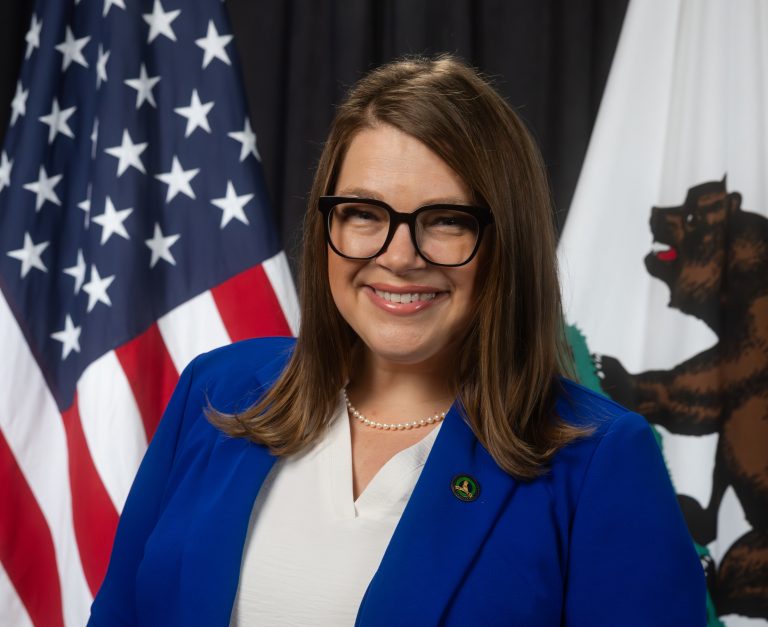
Rep. Heather Hadwick
Sponsored bills
Existing federal law, the Indian Child Welfare Act of 1978 (ICWA) , governs the proceedings for determining the placement of an Indian child when that child is removed from the custody of the child's parent or guardian. Existing law specifies that the state is committed to protecting the essential tribal relations and best interest of an Indian child by promoting practices in accordance with ICWA. Existing law also provides for the state and an Indian tribe to enter into an agreement regarding the care and custody of Indian children and jurisdiction over Indian child custody proceedings. Existing law establishes, in order to provide additional funds to eligible Indian tribes that have entered into an agreement with the state pursuant to those provisions, the Tribally Approved Homes Compensation Program to provide funds to recruit and approve homes for the purpose of foster or adoptive placement of an Indian child and the Tribal Dependency Representation Program to provide funds to pay for legal counsel to represent the Indian tribe in a California Indian child custody proceeding. This bill would establish the Tribal Foster Care Prevention Program to provide funding to assist any federally recognized Indian tribe located in California, or with lands that extend into California, in funding the costs associated with services aimed at preserving families and preventing the entry of children into foster care. The bill would require an Indian tribe that seeks funding for this purpose to submit an annual letter of interest to the department. The bill would require the department, subject to an appropriation in the annual Budget Act for this purpose, to provide each Indian tribe that enters into a specified agreement and submits a letter of interest an annual allocation. The bill would require an Indian tribe that receives funds to submit a progress report regarding the number of Indian children and their families served to the department on or before September 30 following the close of the fiscal year in which funding was received. This bill would authorize the department to issue written guidance to implement, interpret, or make specific these provisions without taking any regulatory action.
The California Constitution provides that all property is taxable and requires that it be assessed at the same percentage of fair market value, unless otherwise provided by the California Constitution or federal law. The California Constitution and existing property tax law provide various exemptions from taxation, including, among others, a disabled veterans' exemption. Under existing law, the disabled veterans' exemption exempts from taxation part of the full value of property that constitutes the principal place of residence of a veteran, the veteran's spouse, or the veteran and veteran's spouse jointly, and the unmarried surviving spouse of a veteran, as provided, if the veteran incurred specified injuries or died while on active duty in military service, as described. Existing law exempts that part of the full value of the residence that does not exceed $100,000, or $150,000 if the household income of the claimant does not exceed $40,000, as adjusted for inflation, as specified. This bill would, until January 1, 2037, exclude service-connected disability payments from the definition of "household income" for purposes of the disabled veterans' exemption. The bill would also correct an erroneous cross-reference in the above-described provisions. By imposing additional duties on local tax officials, the bill would impose a state-mandated local program. Existing law requires any bill authorizing a new tax expenditure to contain, among other things, specific goals, purposes, and objectives that the tax expenditure will achieve, detailed performance indicators, and data collection requirements. This bill would include additional information required for any bill authorizing a new tax expenditure. The California Constitution requires the state to reimburse local agencies and school districts for certain costs mandated by the state. Statutory provisions establish procedures for making that reimbursement. This bill would provide that, if the Commission on State Mandates determines that the bill contains costs mandated by the state, reimbursement for those costs shall be made pursuant to the statutory provisions noted above. Existing law requires the state to reimburse local agencies annually for certain property tax revenues lost as a result of any exemption or classification of property for purposes of ad valorem property taxation. This bill would provide that, notwithstanding those provisions, no appropriation is made and the state shall not reimburse local agencies for property tax revenues lost by them pursuant to the bill. This bill would take effect immediately as a tax levy.
Existing law, upon appropriation of the Legislature, requires the Office of Emergency Services to enter into a joint powers agreement with the Department of Forestry and Fire Protection to develop and administer a comprehensive wildfire mitigation program. Existing law requires the department to delegate its duties and responsibilities for this program to the Office of the State Fire Marshal. Existing law requires the State Fire Marshal, in consultation with other officials, to identify measures eligible for financial assistance under the wildfire mitigation program that are both cost effective and provide for appropriate site or structure fire risk reduction, as specified. Existing law requires the joint powers authority to develop eligibility criteria for property owners, community organizations, and local governments who may receive financial assistance under the wildfire mitigation program. Existing law requires the joint powers authority to submit a report to the Legislature regarding the implementation of the wildfire mitigation financial assistance program that includes, among other things, an evaluation of the cost-effectiveness of the wildfire mitigation program compared to other structure hardening, defensible space, vegetation management, and fuel reduction incentive programs and an evaluation of the overall wildfire risk reduction achieved statewide through awards of financial assistance under the wildfire mitigation program. Existing law repeals these provisions on July 1, 2029. This bill would extend the repeal date of the above provisions to January 1, 2030.
Maddy summaryThis bill serves as a commemorative resolution to mark the 50th anniversary of the Surface Mining and Reclamation Act of 1975. It does not create new laws or alter existing regulations but instead formally acknowledges the milestone achievement of the original legislation. The measure is intended to honor the history of mining and land reclamation efforts established by the 1975 act.
Maddy summaryThis bill designates June 2026 as Men's Mental Health Month to raise awareness about mental health issues affecting men. The measure is a formal proclamation that does not change laws or allocate funding, but rather encourages public recognition of the topic. Once passed, it serves as an official declaration without imposing new requirements on individuals or organizations.
This measure would declare the month of June 2026 as Alzheimer's Disease and Brain Awareness Month, and would urge all Californians to commemorate the month of June 2026 as Alzheimer's Disease and Brain Awareness Month.
Maddy summaryThis bill designates June 23, 2026, as Social Media Harms Victim Remembrance Day in California. The measure requires the state to officially proclaim this date, creating a specific day for remembrance. It does not change laws or impose new requirements on individuals or organizations. The primary effect is to establish a formal date for commemoration within the state.
This measure would recognize June 19, 2026, as Juneteenth and would urge the people of California to join in celebrating Juneteenth as a day to honor and reflect on the significant role that African Americans have played in the history of the United States and how they have enriched society through their steadfast commitment to promoting unity and equality.
Maddy summaryThis House Resolution in the California Legislature formally recognizes October 11, 2026, as International Referees' Day to honor sports officials at all levels. The bill aims to acknowledge the dedication, integrity, and essential role referees play in ensuring fair and safe athletic competitions. It encourages athletes, coaches, families, and communities to express appreciation for officials and foster a culture of respect and sportsmanship during events.