

The Small Business Procurement and Contract Act permits a state agency or the California State University to award a contract for goods, services, or information technology with an estimated value between $5,000 and $250,000 to a certified small business, including a microbusiness and a disabled veteran business enterprise, without complying with specified competitive bidding requirements. This bill would increase the maximum estimated value of a contract for goods, services, or information technology awarded pursuant to the act from $250,000 to $350,000. Commencing January 1, 2028, and biennially thereafter, the bill would require the Director of General Services to conduct a review of that maximum value, and would authorize the director to adjust that value to reflect changes in the California Consumer Price Index.
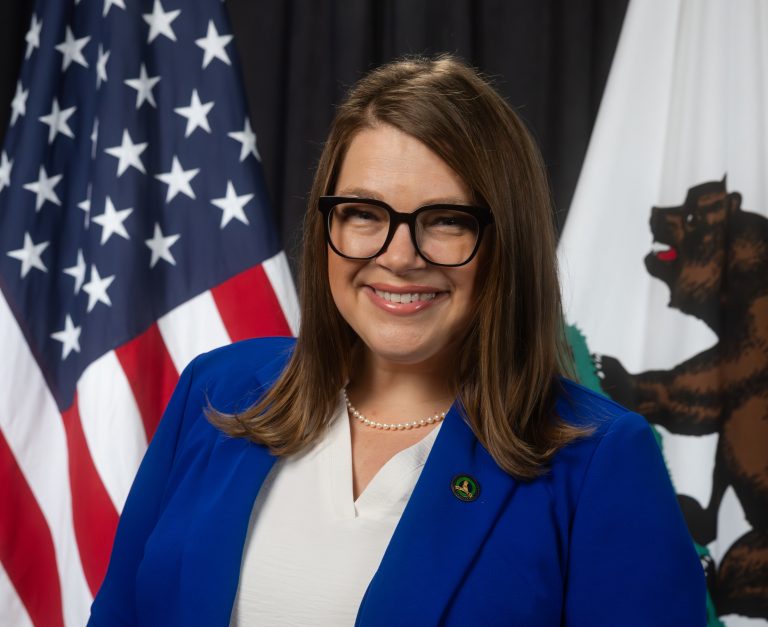
Asm. Heather Hadwick
Sponsored bills
Existing law establishes a motor vehicle inspection and maintenance (smog check) program that is administered by the Department of Consumer Affairs. The smog check program requires inspection of motor vehicles upon initial registration, biennially upon renewal of registration, upon transfer of ownership, and in certain other circumstances. Existing law exempts specified vehicles from being inspected biennially upon renewal of registration, including, among others, all motor vehicles manufactured prior to the 1976 model year. Existing law also exempts from specified portions of the smog test, both biennially and at transfer, a collector motor vehicle that is insured as a collector motor vehicle, is at least 35 model years old, complies with the exhaust emissions standards for that motor vehicle's class and model year as prescribed by the department, and that passes a functional inspection of the fuel cap and a visual inspection for liquid fuel leaks. This bill would, commencing on January 1, 2027, additionally fully exempt from the smog check requirements, both biennially and at transfer, a motor vehicle that was manufactured prior to the 1981 model year, has been assigned a special identification plate indicating that it is a historical vehicle, and is insured as a collector motor vehicle, as specified. The bill, beginning January 1, 2028, would expand this exemption by one model year, every year, for 5 years. The bill would be known, and may be cited as, Leno's Law.
Existing law authorizes the governing board of a community college district to enter into a College and Career Access Pathways (CCAP) partnership with the governing board of a school district, a county office of education, or the governing body of a charter school for the purpose of offering or expanding dual enrollment opportunities for pupils who may not already be college bound or who are underrepresented in higher education, as provided. Existing law requires the partnership agreement to outline the terms of the partnership, as specified, and to establish protocols for information sharing, joint facilities use, and parental consent for high school pupils to enroll in community college courses. Existing law requires the protocols to only require a high school pupil participating in a CCAP partnership to submit one parental consent form and principal recommendation for the duration of the pupil's participation in the CCAP partnership. This bill would revise the CCAP partnership provisions to eliminate the requirement that the protocols require principal recommendation. Existing law requires the Chancellor of the California Community Colleges to revise the special part-time student application process to allow a pupil to complete one application for the duration of the pupil's attendance at a community college as a special part-time student participating in a CCAP partnership agreement. This bill would require a CCAP partnership agreement to also establish protocols that authorize a pupil to complete one application for the duration of the pupil's attendance at a community college as a special part-time student participating in a CCAP partnership agreement. Existing law authorizes a community college district to allow a special part-time student participating in a CCAP partnership agreement to enroll in up to a maximum of 15 units per term in courses offered at the community college campus or the participating high school campus if certain circumstances are satisfied, including that the units constitute no more than 4 community college courses per term. This bill would eliminate the 4 community college courses per term limit for a special part-time student enrolling in up to 15 units under a CCAP partnership agreement. Existing law requires, for each CCAP partnership agreement, the affected community college district and school district, county office of education, or charter school to annually report specified information to the office of the Chancellor of the California Community Colleges, including the total number of community college courses, by course category and type and by schoolsite, enrolled in by CCAP partnership participants. This bill instead would require the affected community college district and school district, county office of education, or charter school to annually report the total number of high school pupils who successfully completed 12 or more units of college coursework by graduation, completed a certificate, or completed the courses required for an associate degree or an associate degree for transfer.
Existing law appropriates, for the 2023–24 fiscal year, $375,000,000 from the General Fund to the State Air Resources Board for the California Hybrid and Zero-Emission Truck and Bus Voucher Incentive Project (HVIP) to fund grants to local educational agencies, as defined, for zero-emission schoolbuses to replace heavy-duty internal combustion schoolbuses owned by local educational agencies, as specified. Existing law requires any schoolbuses that are replaced pursuant to the HVIP to be scrapped no later than 24 months from date of delivery of the replacement. Existing law requires grantees to provide to the state board proof of scrap of the retired internal combustion schoolbus or schoolbuses. This bill would exclude a schoolbus from that scrapping requirement if the schoolbus is 25 years of age or less at the time of delivery of the replacement vehicle and its ownership is transferred to a frontier local educational agency meeting certain requirements.
(1) Existing law, the Control, Regulate and Tax Adult Use of Marijuana Act (AUMA) , an initiative measure, authorizes a person who obtains a state license under AUMA and any applicable local ordinances to engage in commercial adult-use cannabis activity pursuant to that license, if conducted as prescribed. Existing law, the Medicinal and Adult-Use Cannabis Regulation and Safety Act (MAUCRSA) , among other things, consolidates the licensure and regulation of commercial medicinal and adult-use cannabis activities, and requires the Department of Cannabis Control to administer its provisions. Existing law prohibits cannabis or cannabis products from being sold by a licensee unless specified quality assurance standards and testing standards are met. Existing law requires representative samples of the cannabis or cannabis products in their final form to be tested by a licensed testing laboratory, and requires the department to develop criteria to determine which batches are tested. Existing law authorizes the testing laboratory to retest a sample if the testing laboratory notifies the department, in writing, that the test was compromised due to equipment malfunction, staff error, or another circumstance authorized by the department, and the department authorizes the retest of that sample. Existing law requires the testing laboratory to issue a certificate of analysis that the cannabis batch has passed the testing requirements, and authorizes the testing laboratory to amend the certificate of analysis to correct minor errors, as specified. This bill would specify that all cannabis or cannabis products are subject to test or retest, and would revise the retest requirements to instead authorize a testing laboratory to retest a sample of cannabis or cannabis products if either the testing laboratory notifies the department, in writing, that the test was compromised due to equipment malfunction, staff error, or other circumstances allowed by regulation, if the department requires the retest, or if the department authorizes the request. This bill would require the licensee to allow the department to obtain or access any cannabis or cannabis products held or offered for retail sale for the purposes of conducting off-the-shelf laboratory testing. The bill would also require a retailer and any other licensee authorized to engage in the retail sale of cannabis or cannabis products to provide the certificate of analysis associated with any cannabis or cannabis product held or offered for retail sale to a customer upon request. This bill would also require a testing laboratory to be subject to performance testing, as specified, to ensure consistency of results across laboratories. (2) Existing law, upon the issuance of a certificate of analysis by the testing laboratory, requires a distributor to conduct a quality assurance review before distribution of cannabis or cannabis products to ensure the labeling and packaging conform to the requirements of MAUCRSA. Existing law also requires a quality assurance compliance monitor, who is an employee or contractor of the department, to conduct random quality assurance reviews at a distributor's licensed premises before distribution to ensure the labeling and packaging of the cannabis and cannabis products conform to the requirements of MAUCRSA. This bill would repeal the requirement that a quality assurance compliance monitor conduct random quality assurance reviews, and instead would require the department to conduct those reviews. The bill would expand those reviews to include a microbusiness or retailer's licensed premises, and would require the department to additionally ensure the testing of the cannabis and cannabis products conform to the requirements of MAUCRSA. (3) Existing law authorizes a testing laboratory to receive and test samples of cannabis or cannabis products from state or local law enforcement, or a prosecuting or regulatory agency, as specified, and provides that the testing of that cannabis is not commercial cannabis activity for purposes of MAUCRSA and is not arranged or overseen by the department. This bill would require a licensed testing laboratory to comply with the department's request to evaluate the laboratory's testing practice. (4) Existing law, if the department finds or has probable cause to believe that cannabis or a cannabis product is adulterated or misbranded, or sold in violation of MAUCRSA, requires the department to affix a tag or other appropriate marking to the cannabis or cannabis product, and to give notice that the cannabis or cannabis product is in violation of MAUCRSA and has been embargoed. Existing law makes it unlawful to remove, sell, or dispose of embargoed cannabis or an embargoed cannabis product without written permission of the department or a court, and subjects each violation to a fine. This bill would remove the requirement that the department affix a tag or other appropriate marking to the cannabis or cannabis product, and instead would require the notice to reasonably identify the cannabis or cannabis product subject to the embargo. The bill would also require the licensee, within one business day of receiving a notice of the embargo, to physically separate all embargoed cannabis and cannabis products from all other inventory, as specified.
Under existing law, the Department of Toxic Substances Control generally regulates the management and handling of hazardous waste and hazardous materials. Existing law authorizes certain entities to operate household hazardous waste collection facilities, as defined, under permits issued by the department. A violation of the hazardous waste control laws is a crime. This bill would, until January 1, 2029, require the department to evaluate opportunities to increase safety and convenience related to the management and disposal of vape pens confiscated from students by a school, as provided, and identify any recommendations that require future legislative action. The bill would authorize a household hazardous waste collection facility to conduct physical treatment activities involving the disassembly of household hazardous waste to separate batteries, valves, electronic components and other parts containing liquids or gases, including, but not limited to, the disassembly of vape pens, in a manner that does not result in the unauthorized release of hazardous materials. Existing law authorizes a public agency, or its contractor, to conduct a materials exchange program at a household hazardous waste collection facility to make reusable household hazardous products or materials available to recipients, as a part of its household hazardous waste collection program, if the public agency, or its contractor, complies with specified requirements. The bill would prohibit a public agency, or its contractor, from including vape pens in a materials exchange program. Because a violation of these provisions would be a crime, the bill would impose a state-mandated local program. The California Constitution requires the state to reimburse local agencies and school districts for certain costs mandated by the state. Statutory provisions establish procedures for making that reimbursement. This bill would provide that no reimbursement is required by this act for a specified reason.
This measure would call on members of the United States Congress to oppose reductions to funding that negatively impact educational services for students with disabilities and would call on the President of the United States and Congress to ensure that services and funding for students with disabilities are uninterrupted.
This measure would recognize February 2025 as Black History Month, urge all citizens to join in celebrating the accomplishments of African Americans during Black History Month, and encourage the people of California to recognize the many talents of African Americans and the achievements and contributions they make to their communities to create equity and equality for education, economics, and social justice. The measure would also recognize the significance in protecting citizens' right to vote and remedying racial discrimination in voting.
Maddy summarySCR 97 designates September 2025 as California Emergency Preparedness Month. This procedural resolution does not create new laws or affect specific groups; it solely serves to formally recognize and promote public awareness about emergency preparedness during that month. The measure directs state agencies and organizations to encourage community activities related to emergency planning and safety. It has no direct policy impact beyond this symbolic designation.
Maddy summaryThis House Resolution designates September as "Student Parent Month" in California. It recognizes the approximately 400,000 student parents across the state - over half a million children - and aims to raise awareness of their needs. The resolution does not create new policies or funding but encourages colleges, policymakers, and communities to honor student parents and support their educational success. It follows California’s prior legislative actions (like AB 2881 and AB 2458) that established concrete support mechanisms for student parents.