Maddy summaryThis House Resolution recognizes March 21, 2026, as the International Day of Nowruz in California to honor the Persian New Year celebrated by over 300 million people globally. The bill highlights Nowruz as a 3,000-year-old tradition symbolizing renewal, peace, and community unity that is observed by diverse groups including Afghan, Iranian, Armenian, and Jewish communities, as well as Americans of various backgrounds. By formally acknowledging this date, the resolution aims to celebrate cultural heritage and strengthen ties among different peoples within the state.
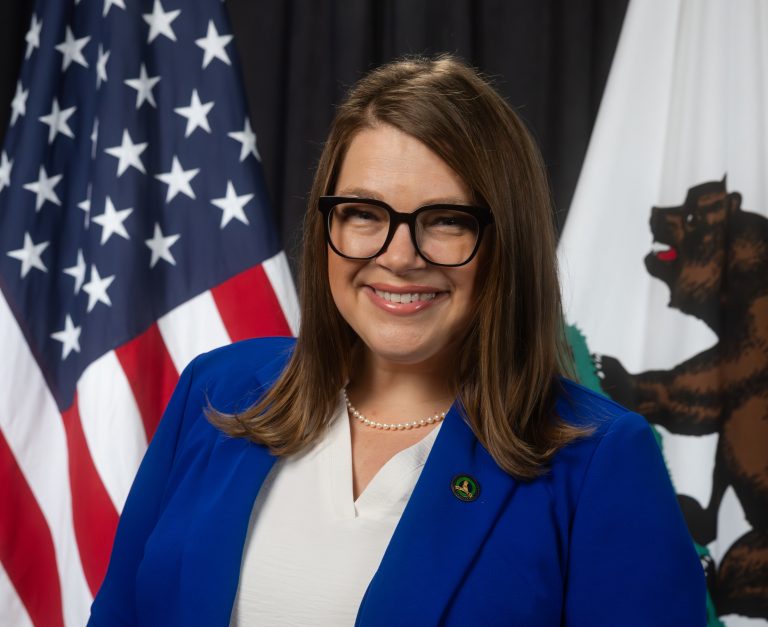
Asm. Heather Hadwick
Sponsored bills
Existing law designates specific days as holidays in this state, including Cesar Chavez Day on March 31, and requires the Governor to annually proclaim March 31 as Cesar Chavez Day. This bill would instead designate March 31 as Farmworkers Day and would require the Governor to annually proclaim March 31 as Farmworkers Day. This bill would declare that it is to take effect immediately as an urgency statute.
Existing law imposes various limitations on emissions of air contaminants for the control of air pollution from vehicular and nonvehicular sources. Existing law designates the State Air Resources Board as the state agency with the primary responsibility for the control of vehicular air pollution and as the state agency responsible for monitoring and regulating sources emitting greenhouse gases. Existing law requires the state board to adopt standards, rules, and regulations necessary for the proper execution of the powers and duties granted to, and imposed upon, the state board. This bill would require the state board, when it revises, adopts, or establishes any policy, standard, rule, or regulation that would have a direct financial impact on drivers in the state, to consider the financial burden on drivers, and to prepare a thorough analysis and evaluation of the financial impact of the proposed action on drivers to ensure full transparency.
Existing law establishes the Instructional Quality Commission and requires the commission to, among other things, recommend curriculum frameworks and the adoption of instructional materials to the State Board of Education. Existing law requires the commission to consider incorporating the Model Library Standards into the next revision of the English language arts/English language development (ELA/ELD) curriculum framework after January 1, 2024, and to also consider incorporating media literacy content at each grade level. Existing law requires the commission to consider including the Model Library Standards, including media literacy content, in its criteria for evaluating instructional materials when the state board next adopts ELA/ELD instructional materials after January 1, 2025. Existing law requires the commission to consider incorporating media literacy content into the mathematics, science, and history-social science curriculum frameworks when those frameworks are next revised after January 1, 2024. Existing law requires the commission to consider including media literacy content in its criteria for evaluating instructional materials when the state board next adopts mathematics, science, and history-social science instructional materials after January 1, 2025. Existing law defines media literacy, for the above-described purposes, as the ability to access, analyze, evaluate, and use media and information and encompasses the foundational skills that lead to digital citizenship. This bill would specify that those skills include, but are not limited to, an understanding of, among other things, time management and healthy behaviors on social media, the permanency of sharing material online, and how to maintain personal security and identify cyberbullying, predatory behavior, and human trafficking on the internet.
This measure would recognize February 2026 as the centennial anniversary of Black History Month, urge all citizens to join in celebrating the accomplishments of African Americans during Black History Month, and encourage the people of California to recognize the many talents of African Americans and the achievements and contributions they make to their communities to create equity and equality for education, economics, and social justice. The measure would recognize the significance in protecting the fundamental human rights enshrined in the United States Constitution and its Amendments, the United States Bill of Rights, and the California Constitution, as specified. The measure would also affirm the commitment of the Legislature all people are equal and shall be treated with respect and dignity and shall enjoy the equal application of the law for which the Legislature has been entrusted.
This measure would designate February 28, 2026, as Rare Disease Day and, with respect to rare diseases and disorders, would recognize the importance of improving awareness, encouraging accurate and early diagnosis, and supporting national and global efforts to develop effective treatments, diagnostics, and cures.
This measure would recognize February 24, 2026, as a Day of Solidarity with Ukraine, honoring the resilience of the Ukrainian people and acknowledging the ongoing impact of the war on youth, families, and communities.
Maddy summaryACR 127 designates February 2-6, 2026, as National School Counseling Week. This is a symbolic resolution recognizing the role of school counselors, with no new policies or funding changes. It directly affects no specific group but aims to raise awareness for school counseling services during that week. The resolution was unanimously adopted by the Assembly on February 5, 2026.
Maddy summaryThis bill is a House Resolution that formally declares March 2026 as Women's History Month in California. It aims to honor the historical and ongoing contributions of women across various fields such as business, science, and civil rights. The resolution does not create new laws or change existing policies but serves to recognize and celebrate the achievements of women throughout history.
Existing law, the Municipal Water District Law of 1911, provides for the formation of municipal water districts and grants to those districts specified powers. Existing law permits a district to acquire, control, distribute, store, spread, sink, treat, purify, recycle, recapture, and salvage any water for the beneficial use of the district, its inhabitants, or the owners of rights to water in the district. Existing law, upon the request of certain Indian tribes and the satisfaction of certain conditions, requires a district to provide service of water at substantially the same terms applicable to the customers of the district to the Indian tribe's lands that are not within a district, as prescribed. Existing law also authorizes a district, until January 1, 2027, under specified circumstances, to apply to the applicable local agency formation commission to provide this service of water to Indian lands, as defined, that are not within the district and requires the local agency formation commission to approve that application. This bill would extend the above provisions regarding the application to the applicable local agency formation commission to January 1, 2032. By imposing new duties on local officials, the bill would create a state-mandated local program. The California Constitution requires the state to reimburse local agencies and school districts for certain costs mandated by the state. Statutory provisions establish procedures for making that reimbursement. This bill would provide that no reimbursement is required by this act for a specified reason.