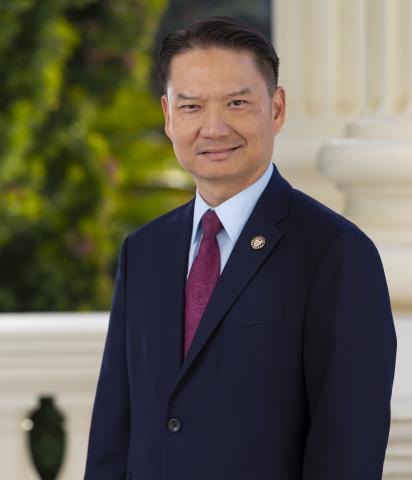
Existing law, the Medical Practice Act, establishes the Medical Board of California to license and regulate the practice of medicine. Former law, repealed as of January 1, 2025, established the Licensed Physicians and Dentists from Mexico Pilot Program, which allowed up to 30 licensed physicians and up to 30 licensed dentists from Mexico to practice medicine or dentistry in California for a period not to exceed 3 years, in accordance with certain requirements. Existing law, operative January 1, 2025, instead, establishes within the act the Licensed Physicians from Mexico Program, which authorizes the board to issue a limited number of nonrenewable 3-year physician's and surgeon's licenses to licensed physicians from Mexico who meet specified criteria. This bill would require the board to issue a full and unrestricted physician's and surgeon's license to a person who has completed 2 3-year terms of the Licensed Physicians from Mexico Program or the former Licensed Physicians and Dentists from Mexico Pilot Program in good standing upon satisfaction of specified requirements, including having an offer of continued employment from a health care facility or practice in California. This bill would establish the California Physician Expansion Act, which would require the board to issue a provisional license to an applicant who holds a full and unrestricted license to practice medicine in another country who meets specified requirements, including that the applicant has not committed any acts or crimes constituting grounds for denial of a certificate, as specified. In this regard, the bill would require the board to submit to the Department of Justice fingerprint images and related information required by the department of all applicants for a provisional license to determine whether the applicant has a criminal conviction record, as specified, and would require the department to provide a state- and federal-level response pursuant to specified provisions for the board to determine whether the applicant is subject to denial of licensure, as specified. The bill would make the provisional license valid for 3 years and would authorize the board to grant a one-time renewal for an additional period of up to 3 years, as specified. The bill would require a provisional licensee to, among other things, be employed by, and practice medicine only within, a sponsoring entity, as specified. The bill would authorize the board to revoke a provisional license or take any other disciplinary action deemed appropriate by the board, as specified. The bill would deem a provisional licensee applicant who meets specified requirements, including having completed at least 36 months of practice under the provisional license without any disciplinary actions, to meet the professional instruction, preliminary education, and postgraduate training requirements for a certificate under the Medical Practice Act. The bill would require the board to establish application, initial licensure, renewal, and conversion fees for the provisional license, as specified. The bill would make findings and declarations relating to its provisions.
Senate Resolution 108 formally recognizes May 5, 2026, as World Asthma Day in California. The measure highlights the disproportionate impact of asthma on vulnerable populations, including communities of color and farmworker families, who face higher risks due to poor air quality and limited healthcare access. While the resolution does not create new laws, it expresses the Senate's support for asthma education, improved air quality standards, and evidence-based management practices in schools and healthcare settings. Additionally, the bill honors the Central California Asthma Collaborative for its work in community health programs.
Existing law requires that, as a condition of parole, a prisoner who has a severe mental health disorder, as specified, be treated by the State Department of State Hospitals, if the prisoner meets certain requirements, including, among others, that the person in charge of treating the prisoner and a practicing psychiatrist or psychologist from the State Department of State Hospitals have evaluated the prisoner and that a chief psychiatrist of the Department of Corrections and Rehabilitation certify to the Board of Parole Hearings that by reason of the prisoner's severe mental health disorder, the prisoner represents a substantial danger of physical harm to others. This bill would require that certain factors be considered in determining whether an offender poses a substantial danger of physical harm to others, including, but not limited to, a history of violent behavior and prior history of state hospital commitment. Existing law allows a prisoner to request a hearing before the Board of Parole Hearings for the purpose of proving that the prisoner meets the criteria to be treated by the State Department of State Hospitals. Existing law allows a prisoner who disagrees with the determination of the Board of Parole Hearings to file a petition in court for a hearing on whether they met the criteria and, if the court reverses the determination of the Board of Parole Hearings, existing law authorizes the court to require the parties to return to court to ensure that the entities involved in the release of the prisoner have coordinated an exit plan for the prisoner. This bill would require that an exit plan include the submission of an application for Medi-Cal benefits and a recommendation, as appropriate, to the supervising county's behavioral health department by a licensed behavioral health professional, as specified, supervising the treatment of, or treating, the prisoner for a mental health disorder for certain resources and programs, including substance use disorder treatment, assisted outpatient treatment, and early psychosis intervention services. Existing law, the Mental Health Services Act (MHSA) , an initiative measure enacted by the voters as Proposition 63 at the November 2, 2004, statewide general election, funds a system of county mental health plans for the provision of mental health services, as specified. The MHSA establishes the Mental Health Services Fund, a continuously appropriated fund, which is administered by the State Department of Health Care Services (department) , to fund specified county mental health programs. Existing law, the Behavioral Health Services Act (BHSA) , a legislative act amending the MHSA that was approved by the voters as Proposition 1 at the March 5, 2024, statewide primary election, recast the MHSA by, among other things, renaming the fund to the Behavioral Health Services Fund and reallocating how moneys from that fund may be spent. The BHSA requires each county to establish and administer a full-service partnership program that includes, among other things, outpatient behavioral health services, as specified, and housing interventions. Existing law establishes criteria for an individual with a serious mental illness to be presumptively eligible for a full-service partnership, including, among other things, the person is transitioning to the community after 6 months or more in the state prison or county jail. This bill would add to the criteria for presumptively eligibility for a full-service partnership an individual transitioning to the community after 6 months or more in a state hospital. Existing law establishes the Medi-Cal program, which is administered by the State Department of Health Care Services and under which qualified low-income individuals receive health care services. The Medi-Cal program is, in part, governed and funded by federal Medicaid program provisions. Existing law, the California Advancing and Innovating Medi-Cal (CalAIM) Act, supports the stated goals of identifying and managing the risk and needs of Medi-Cal beneficiaries, transitioning and transforming the Medi-Cal program to a more consistent and seamless system, and improving quality outcomes. Existing law makes a qualifying inmate of a public institution eligible, commencing no sooner than January 1, 2023, to receive targeted Medi-Cal services, limited to those services approved in the CalAIM Terms and Conditions for 90 days, as specified. This bill would also make a qualifying inmate of a state hospital eligible to receive targeted Medi-Cal services, as described. By expanding the population receiving benefits under the BHSA and to the extent that the bill would create new duties for counties relating to Medi-Cal eligibility determinations, the bill would impose a state-mandated local program. The California Constitution requires the state to reimburse local agencies and school districts for certain costs mandated by the state. Statutory provisions establish procedures for making that reimbursement. This bill would provide that, if the Commission on State Mandates determines that the bill contains costs mandated by the state, reimbursement for those costs shall be made pursuant to the statutory provisions noted above.
Existing law, the Knox-Keene Health Care Service Plan Act of 1975, provides for the licensure and regulation of health care service plans by the Department of Managed Health Care and makes a willful violation of the act a crime. Existing law also provides for the regulation of health insurers by the Department of Insurance. Existing law, except as provided and under certain circumstances, prohibits a person who manufactures a prescription drug from offering a discount, repayment, product voucher, or other reduction in an individual's out-of-pocket expenses associated with their health insurance or health care service plan. Existing law generally imposes specified cost sharing limits on covered prescription drugs. This bill would require a health care service plan or health insurer, when calculating an enrollee's or insured's overall contribution to an out-of-pocket maximum or cost sharing requirement under the plan contract or insurance policy, to count any amount paid by the enrollee or insured or on behalf of the enrollee or insured for a covered drug toward the enrollee's or insured's cost sharing, except as provided. The bill would prescribe an administrative penalty for each violation by a health insurer that is enforceable by the Insurance Commissioner after appropriate notice and opportunity for hearing. Because a willful violation of these provisions by a health care service plan would be a crime, the bill would impose a state-mandated local program. The California Constitution requires the state to reimburse local agencies and school districts for certain costs mandated by the state. Statutory provisions establish procedures for making that reimbursement. This bill would provide that no reimbursement is required by this act for a specified reason.
Existing law, the Knox-Keene Health Care Service Plan Act of 1975, provides for the licensure and regulation of health care service plans by the Department of Managed Health Care, and makes a willful violation of the act a crime. Existing law provides for the regulation of health insurers by the Department of Insurance. Existing law requires a health care service plan contract or health insurance policy to provide coverage for all generally medically accepted cancer screening tests. This bill would require a health care service plan contract or health insurance policy, except as specified, that is issued, amended, or renewed on or after January 1, 2027, to provide coverage for followup screening or diagnostic services for lung cancer, as specified. The bill would prohibit a contract or policy from imposing a copayment, coinsurance, deductible, or any other form of cost sharing for this coverage. If a health care service plan contract or health insurance policy is a high deductible health plan, the bill would prohibit the contract or policy from imposing a deductible, coinsurance, or any other cost sharing on this coverage unless not imposing the deductible, coinsurance, or cost sharing would conflict with the federal requirements for high deductible health plans. Because a willful violation of these provisions by a health care service plan would be a crime, the bill would impose a state-mandated local program. The California Constitution requires the state to reimburse local agencies and school districts for certain costs mandated by the state. Statutory provisions establish procedures for making that reimbursement. This bill would provide that no reimbursement is required by this act for a specified reason.
Existing law, the Community Assistance, Recovery, and Empowerment (CARE) Act (CARE Act) , authorizes specified persons, including a person with whom the respondent resides, family members, and first responders, among others, to petition a civil court to create a voluntary CARE agreement or a court-ordered CARE plan and implement services, to be provided by county behavioral health agencies, to provide behavioral health care, including stabilization medication, housing, and other enumerated services, to adults who are currently experiencing a severe mental illness and have a diagnosis identified in the disorder class schizophrenia and other psychotic disorders, or bipolar I disorder with psychotic features, and who meet other specified criteria. Existing law requires the Judicial Council to develop a mandatory form for use to file a CARE process petition with the court and any other forms necessary for the CARE process, to be signed under the penalty of perjury, and requires the form to contain certain information, including either a specified affidavit of a licensed behavioral health professional or evidence the respondent was detained for a minimum of two intensive treatments pursuant to specified provisions of law. Existing law, the Lanterman-Petris-Short Act (LPS Act) , generally provides for the evaluation, treatment, and civil commitment of persons with mental health disorders and other specified persons. Existing law authorizes, under a superior court order, an evaluation of a person alleged, as a result of mental disorder, to be a danger to themselves or others or to be gravely disabled, and provides the forms to use for these evaluations. The CARE Act authorizes a court to terminate a respondent's participation in the CARE process if the court determines that the respondent is not participating in the CARE process or is not adhering to their CARE plan, as specified, and authorizes the court to order the court-ordered evaluation under the LPS Act. If the court finds the petitioner has made a prima facie showing that the respondent is, or may be, a person eligible for the CARE program, the court is required to order the county behavioral health agency, or their designee, as specified, to submit a written report to the court with specified information, including, but not limited to, a determination whether the respondent meets, or is likely to meet, the criteria for the CARE process and conclusions and recommendations about the respondent's ability to voluntarily engage in services. Existing law requires the court to, within 5 days of receiving the report, take one of several actions, including dismissing the petition if the court determines that voluntary engagement with the respondent is effective and the individual has enrolled, or is likely to enroll, in behavioral health treatment. This bill would require the written report to include conclusions about whether the respondent is likely to need a higher level of care than is available under the CARE Act and, if so, recommendations about the appropriate level of care and the necessary steps to obtain that level of care for the respondent and remove the authorization for a court to dismiss the petition if the respondent is only likely to enroll in behavioral health treatment. If the court intends to dismiss a petition because the respondent needs a higher level of services, the bill would authorize the court to order the county to conduct a prepetition screening and hold the CARE petition open until the screening is complete. The bill would also make other technical and conforming changes. By requiring a higher level of service on the county, this bill would impose a state-mandated local program. Existing law requires all hearings regarding these provisions to occur in person unless the court, in its discretion, allows a party or witness to appear remotely. This bill would require the court to allow the hearings to be held remotely, unless otherwise ordered by the court or demanded by the respondent. The California Constitution requires the state to reimburse local agencies and school districts for certain costs mandated by the state. Statutory provisions establish procedures for making that reimbursement. This bill would provide that with regard to certain mandates no reimbursement is required by this act for a specified reason. With regard to any other mandates, this bill would provide that, if the Commission on State Mandates determines that the bill contains costs so mandated by the state, reimbursement for those costs shall be made pursuant to the statutory provisions noted above.
Existing law establishes the Medi-Cal program, which is administered by the State Department of Health Care Services and under which qualified low-income individuals receive health care services. The Medi-Cal program is in part governed by, and funded pursuant to, federal Medicaid program provisions. Existing federal law, enacted on July 4, 2025, sets forth various changes to Medicaid eligibility with regard to community engagement reporting, redeterminations, retroactive coverage, and cost sharing, among other factors, for certain Medicaid populations pursuant to a specified implementation timeline. This bill would require the department to establish a data dashboard that provides data on applications, enrollment, redeterminations, disenrollments, and terminations, with certain objectives in consideration, related to the impact of the above-described federal law on Medi-Cal eligibility and enrollment, as specified. The bill would require the dashboard to track and report on the specific data for work or community engagement requirements and exemptions. The bill would require the department, commencing no later than January 1, 2028, to operationalize the dashboard and to post the information on a monthly basis in a downloadable format. The bill would require the department to undertake efforts to conduct outreach about work or community engagement requirements, more frequent redeterminations, and changes to retroactive eligibility to impacted Medi-Cal beneficiaries, and to conduct listening sessions, as specified. Under the bill, beneficiary outreach and education would be coordinated across public social services programs to help minimize barriers to administrative disenrollments. The bill would require a Medi-Cal managed care plan to establish and conduct an outreach and education plan for its enrollees about the work or community engagement guidelines set forth in federal law based on guidance provided by the department. The bill would require the outreach and education plan to address certain information on Medi-Cal eligibility, the right to appeal or reinstate Medi-Cal coverage, and resources, and to meet certain cultural and linguistic appropriateness standards. Existing law requires a county to undertake outreach efforts to beneficiaries receiving Medi-Cal benefits in order to, in part, facilitate the Medi-Cal redetermination process. Existing law authorizes a county to collaborate with community-based organizations in implementing this provision. This bill would incorporate the requirements of the above-described federal law into the Medi-Cal redetermination facilitation process. The bill would require a county to make a good faith effort to collaborate with community-based organizations, as specified. The bill would require the county outreach efforts to meet cultural and linguistic appropriateness standards. By creating new duties for counties relating to Medi-Cal outreach, the bill would impose a state-mandated local program. Existing law requires the department to encourage and facilitate efforts by managed care plans to report updated beneficiary contact information to counties. When a managed care plan obtains a beneficiary's updated contact information, existing law requires the plan to ask the beneficiary for approval to provide the beneficiary's updated contact information to the appropriate county. If the managed care plan does not obtain that approval, existing law requires the county to attempt to verify that the information that it receives from the plan is accurate, as specified, before updating the beneficiary's case file. This bill would remove the requirement for the managed care plan to ask the beneficiary for approval for purposes of providing the contact information to the county. The bill would remove the requirement for the county to make the verification attempt and would remove a related provision on the method of contact. The bill would require the department to share, or require each county to share, beneficiary redetermination data with applicable managed care plans to aid in managed care plans' efforts to assist beneficiaries with retaining Medi-Cal coverage, as specified. To the extent the bill creates new duties for counties relating to the sharing of Medi-Cal redetermination data, it would impose a state-mandated local program. The California Constitution requires the state to reimburse local agencies and school districts for certain costs mandated by the state. Statutory provisions establish procedures for making that reimbursement. This bill would provide that, if the Commission on State Mandates determines that the bill contains costs mandated by the state, reimbursement for those costs shall be made pursuant to the statutory provisions noted above.
Existing law authorizes a court to grant pretrial diversion to a defendant suffering from a mental disorder, on an accusatory pleading alleging the commission of a misdemeanor or felony offense, to allow the defendant to undergo mental health treatment. Existing law prescribes specified criteria for a defendant to be eligible for pretrial diversion and for a court to consider whether the defendant is suitable for pretrial diversion. Existing law authorizes a court to require the defendant to make a prima facie showing that they will meet the minimum requirements of eligibility for diversion and that the defendant and the offense are suitable for diversion and authorizes the court, if that showing is not made, to summarily deny diversion and grant alternate relief. This bill, if the court intends to summarily grant diversion or any other relief, would require the court to conduct an additional hearing if requested by either party. By increasing the duties on local prosecutors, this bill would impose a state-mandated local program. The California Constitution requires the state to reimburse local agencies and school districts for certain costs mandated by the state. Statutory provisions establish procedures for making that reimbursement. This bill would provide that, if the Commission on State Mandates determines that the bill contains costs mandated by the state, reimbursement for those costs shall be made pursuant to the statutory provisions noted above.
Existing law generally provides requirements for the licensing of business establishments. Existing law requires a business that provides services to minors, as defined, to provide written notice to the parent or guardian of a minor participating in the service offered by the business regarding the business' policies relating to criminal background checks for employees, as specified. Existing law requires the Department of Justice to maintain state summary criminal history information, as defined, and to furnish this information as required by statute to specified entities, including a human resource agency or an employer. Under existing law, the disclosure of state summary criminal history information to an unauthorized person is a crime. This bill would require a person who provides behavioral health treatment for a behavioral health center, facility, or program to undergo a background check, as specified. By expanding the scope of the crime of unlawful disclosure of state summary criminal history information, this bill would impose a state-mandated local program. The California Constitution requires the state to reimburse local agencies and school districts for certain costs mandated by the state. Statutory provisions establish procedures for making that reimbursement. This bill would provide that no reimbursement is required by this act for a specified reason.
Existing law allows a person who was arrested or convicted of a nonviolent offense while they were a victim of human trafficking, intimate partner violence, or sexual violence, to petition the court, under penalty of perjury, for vacatur relief. Existing law requires, to receive that relief, that the crime for which the person was arrested or convicted was a nonviolent offense and that the person establish, by clear and convincing evidence, that the arrest or conviction was the direct result of being a victim of human trafficking, intimate partner violence, or sexual violence. Existing law authorizes the court to vacate the conviction if it concludes that the petitioner was a victim of one of those crimes at the time of the alleged commission of the offense, the arrest was a direct result of being a victim of that offense, and the vacatur is in the best interest of justice. This bill would allow that relief for a person arrested or convicted of any offense, except murder, as specified. Because this bill would authorize more petitions to be filed under penalty of perjury, by expanding the scope of the crime of perjury, this bill would impose a state-mandated local program. If a court issues an order for a person who was arrested or convicted of an offense while they were a victim of intimate partner violence or sexual violence, existing law requires the court to order the law enforcement agency having jurisdiction over the offense, the Department of Justice, and any law enforcement agency that arrested the petitioner or participated in the arrest of the petitioner to seal their records of the arrest and the court order to seal and destroy the records within 3 years from the date of the arrest, or within one year after the court order is granted, whichever occurs later, and thereafter to destroy their records of the arrest and the court order to seal and destroy those records. This bill would require the court to also order any law enforcement agency that has taken action or maintains records related to or because of the offense, including, but not limited to, departments of probation, rehabilitation, corrections, and parole, to seal and destroy their records. The bill would require those agencies to seal their records of arrest, conviction, or adjudication and the court order to seal and destroy the records within one year from the date of arrest, or within 90 days after the court order is granted, whichever occurs later. The bill would require the agencies to destroy these records within one year of the date of the court order. By increasing duties on local law enforcement, this bill would impose a state-mandated local program. The bill would also require the Department of Justice to notify the petitioner and the petitioner's counsel that the department has complied with the order to seal the arrest records by the applicable deadline. Existing law creates an affirmative defense against a charge of a crime that the person was coerced to commit the offense as a direct result of being a victim of human trafficking, intimate partner violence, or sexual violence at the time of the offense and when the person had reasonable fear of harm. Existing law prohibits this defense from being used with respect to a violent felony, as defined. This bill would allow that defense to be used with respect to a violent felony, except for murder, as specified. The California Constitution requires the state to reimburse local agencies and school districts for certain costs mandated by the state. Statutory provisions establish procedures for making that reimbursement. This bill would provide that with regard to certain mandates no reimbursement is required by this act for a specified reason. With regard to any other mandates, this bill would provide that, if the Commission on State Mandates determines that the bill contains costs so mandated by the state, reimbursement for those costs shall be made pursuant to the statutory provisions noted above.