AB 1825 California Assembly · 2025-2026 Regular Session

Health care: state hospitals.

Summary
Existing law requires that, as a condition of parole, a prisoner who has a severe mental health disorder, as specified, be treated by the State Department of State Hospitals, if the prisoner meets certain requirements, including, among others, that the person in charge of treating the prisoner and a practicing psychiatrist or psychologist from the State Department of State Hospitals have evaluated the prisoner and that a chief psychiatrist of the Department of Corrections and Rehabilitation certify to the Board of Parole Hearings that by reason of the prisoner's severe mental health disorder, the prisoner represents a substantial danger of physical harm to others. This bill would require that certain factors be considered in determining whether an offender poses a substantial danger of physical harm to others, including, but not limited to, a history of violent behavior and prior history of state hospital commitment. Existing law allows a prisoner to request a hearing before the Board of Parole Hearings for the purpose of proving that the prisoner meets the criteria to be treated by the State Department of State Hospitals. Existing law allows a prisoner who disagrees with the determination of the Board of Parole Hearings to file a petition in court for a hearing on whether they met the criteria and, if the court reverses the determination of the Board of Parole Hearings, existing law authorizes the court to require the parties to return to court to ensure that the entities involved in the release of the prisoner have coordinated an exit plan for the prisoner. This bill would require that an exit plan include the submission of an application for Medi-Cal benefits and a recommendation, as appropriate, to the supervising county's behavioral health department by a licensed behavioral health professional, as specified, supervising the treatment of, or treating, the prisoner for a mental health disorder for certain resources and programs, including substance use disorder treatment, assisted outpatient treatment, and early psychosis intervention services. Existing law, the Mental Health Services Act (MHSA) , an initiative measure enacted by the voters as Proposition 63 at the November 2, 2004, statewide general election, funds a system of county mental health plans for the provision of mental health services, as specified. The MHSA establishes the Mental Health Services Fund, a continuously appropriated fund, which is administered by the State Department of Health Care Services (department) , to fund specified county mental health programs. Existing law, the Behavioral Health Services Act (BHSA) , a legislative act amending the MHSA that was approved by the voters as Proposition 1 at the March 5, 2024, statewide primary election, recast the MHSA by, among other things, renaming the fund to the Behavioral Health Services Fund and reallocating how moneys from that fund may be spent. The BHSA requires each county to establish and administer a full-service partnership program that includes, among other things, outpatient behavioral health services, as specified, and housing interventions. Existing law establishes criteria for an individual with a serious mental illness to be presumptively eligible for a full-service partnership, including, among other things, the person is transitioning to the community after 6 months or more in the state prison or county jail. This bill would add to the criteria for presumptively eligibility for a full-service partnership an individual transitioning to the community after 6 months or more in a state hospital. Existing law establishes the Medi-Cal program, which is administered by the State Department of Health Care Services and under which qualified low-income individuals receive health care services. The Medi-Cal program is, in part, governed and funded by federal Medicaid program provisions. Existing law, the California Advancing and Innovating Medi-Cal (CalAIM) Act, supports the stated goals of identifying and managing the risk and needs of Medi-Cal beneficiaries, transitioning and transforming the Medi-Cal program to a more consistent and seamless system, and improving quality outcomes. Existing law makes a qualifying inmate of a public institution eligible, commencing no sooner than January 1, 2023, to receive targeted Medi-Cal services, limited to those services approved in the CalAIM Terms and Conditions for 90 days, as specified. This bill would also make a qualifying inmate of a state hospital eligible to receive targeted Medi-Cal services, as described. By expanding the population receiving benefits under the BHSA and to the extent that the bill would create new duties for counties relating to Medi-Cal eligibility determinations, the bill would impose a state-mandated local program. The California Constitution requires the state to reimburse local agencies and school districts for certain costs mandated by the state. Statutory provisions establish procedures for making that reimbursement. This bill would provide that, if the Commission on State Mandates determines that the bill contains costs mandated by the state, reimbursement for those costs shall be made pursuant to the statutory provisions noted above.

Bill status passed 3 of 5 stages cleared
Introduction
Feb 2026
Committee Review
Aug 2026
Assembly Passage
May 2026
Senate Passage
Governor
Introduced Feb 11, 2026 Last action Aug 13, 2026
Maddy AI version diff · 3 comparisons

What changed between versions

04/16/26 - Amended Assembly AB1825 · 4 edits
MODERATE
AB 1825 was amended to narrow the 'substantial danger' factor from any prior state hospital commitment to specifically forensic commitments, significantly expand the exit plan requirements for prisoners released from state hospital treatment (replacing a simple appropriateness determination with a formal recommendation from a treating professional covering nine specific service areas), and broaden full-service partnership eligibility beyond state hospitals to include other secured treatment and residential settings.
Scope change
The bill's scope broadens in two directions: (1) the exit plan requirements now apply more prescriptively with a named professional making recommendations across nine service categories rather than a general appropriateness finding, and (2) full-service partnership eligibility extends beyond state hospitals to other secured treatment and residential settings. Simultaneously, the 'substantial danger' factor narrows to only forensic commitments.
ELIGIBILITY

Section 2962(h)(6) narrows the 'substantial danger' factor from any 'prior history of state hospital commitment' to specifically 'forensic state hospital commitment' under enumerated Welfare and Institutions Code sections (1026, 1370, 2684, 2962, 2972, and related provisions). This limits the factor to commitments made for forensic/justice purposes rather than all types of state hospital admissions.

Section 5887(d)(2)(A)(ii) expands presumptive eligibility for full-service partnership beyond individuals transitioning from a state hospital to also include those transitioning from 'a secured treatment or residential setting, including but not limited to a mental health rehabilitation center, institution for mental disease, or secured skilled nursing facility' after six months or more.

Section 5887(d)(2)(B) expands the exception allowing counties to decline enrollment from simply 'exceed full-service partnership funding' to also include situations where enrollment 'would conflict with contractual Medi-Cal obligations or court orders, or exceed full-service partnership capacity or funding pursuant to Section 5892.'

REQUIREMENT

Section 2966(d) replaces the exit plan's simple 'determination of appropriateness' for AOT, CARE Act, or FACT with a requirement that a licensed behavioral health professional (who has been treating or supervising treatment within the prior 30 days) submit a formal recommendation to the supervising county's behavioral health department covering up to nine service areas: suicide prevention, substance use disorder treatment, Medi-Cal enhanced care management, full-service partnership, assisted outpatient treatment, CARE Act, forensic assertive community treatment, gravely disabled status determination, and early psychosis intervention services.

Floor votes · Assembly May 21, 2026

How they voted

730
Passed · 6 other
Total votes 79
May 21, 2026
D Democratic59
55 Yea 4
93% Yea
R Republican20
18 Yea 2
90% Yea
Vote distribution
All Yea All Nay Mixed No data
Full legislative history

Actions timeline

Total actions
20
Key actions
8
Committee
12
Amendments
3
Aug 13, 2026
Upper · Passed
In committee: Held under submission.
upper
Aug 3, 2026
Committee
In committee: Referred to APPR. suspense file.
upper
Jul 2, 2026
Upper · Passed
From committee: Do pass and re-refer to Com. on APPR. (Ayes 10. Noes 0.) (July 1). Re-referred to Com. on APPR.
upper
Jun 16, 2026
Upper · Passed
From committee: Do pass and re-refer to Com. on HEALTH with recommendation: To Consent Calendar. (Ayes 6. Noes 0.) (June 16). Re-referred to Com. on HEALTH.
upper
Jun 3, 2026
Committee
Referred to Coms. on PUB. S. and HEALTH.
upper
May 21, 2026
Lower · Passed
Read third time. Passed. Ordered to the Senate. (Ayes 74. Noes 0. Page 5198.)
lower
May 14, 2026
Lower · Passed
From committee: Do pass. (Ayes 15. Noes 0.) (May 14).
lower
May 13, 2026
Committee
In committee: Set, first hearing. Referred to APPR. suspense file.
lower
Apr 20, 2026
Committee
Re-referred to Com. on APPR.
lower
Apr 16, 2026
Lower · Passed
Read second time and amended.
lower
Apr 15, 2026
Introduced
From committee: Amend, and do pass as amended and re-refer to Com. on APPR. (Ayes 16. Noes 0.) (April 14).
lower
Mar 18, 2026
Lower · Passed
From committee: Do pass and re-refer to Com. on HEALTH with recommendation: To Consent Calendar. (Ayes 9. Noes 0.) (March 17). Re-referred to Com. on HEALTH.
lower
Mar 10, 2026
Committee
Re-referred to Com. on PUB. S.
lower
Mar 9, 2026
Introduced
From committee chair, with author's amendments: Amend, and re-refer to Com. on PUB. S. Read second time and amended.
lower
Mar 9, 2026
Committee
Referred to Coms. on PUB. S. and HEALTH.
lower
Feb 12, 2026
Lower · Passed
From printer. May be heard in committee March 14.
lower
1 primary · 0 co-sponsors

Sponsors

Role
Legislator
Party
State
District
P
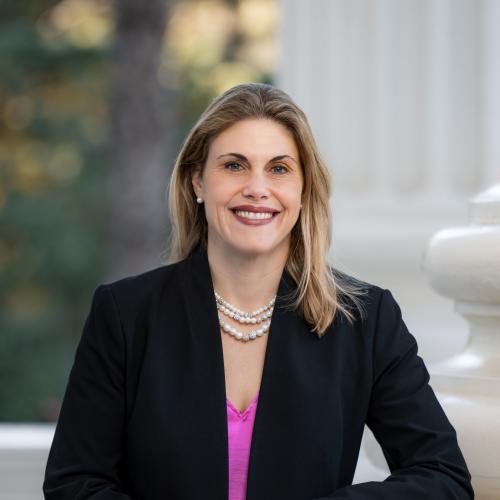
Photo of Maggy Krell
Maggy Krell
DDemocratic
CA
6