Issue · Criminal Justice

Criminal Justice

Every criminal justice bill, vote, and legislator stance in California, automatically classified by Maddy, our AI policy reader.

Total bills
310
2025-2026 Regular Session
Top supporter
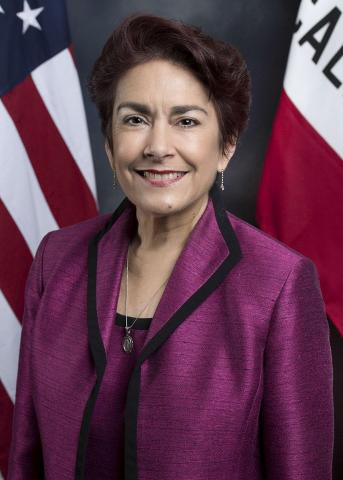
Anna Caballero
92% support rate
Top opponent
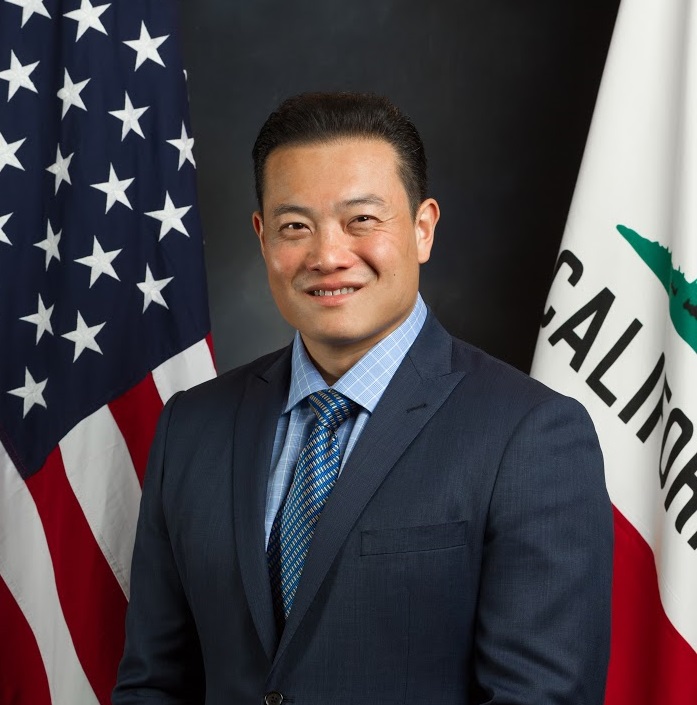
Phillip Chen
8% support rate
Ranked legislators
10
5 support · 5 oppose
Key legislators

Who's moving criminal justice in California

Legislators moving criminal justice in California
Legislator Party Stance Support rate Votes
Anna Caballero
Anna Caballero Senate · District 14
D
Strong +
92% 732
Joaquin Arambula
Joaquin Arambula House · District 31
D
Strong +
92% 528
Celeste Rodriguez
Celeste Rodriguez House · District 43
D
Strong +
91% 364
Rebecca Bauer-Kahan
Rebecca Bauer-Kahan House · District 16
D
Strong +
91% 467
Aisha Wahab
Aisha Wahab Senate · District 10
D
Strong +
90% 765
Phillip Chen
Phillip Chen House · District 59
R
Strong −
8% 316
Heath Flora
Heath Flora House · District 9
R
Strong −
11% 275
Brian Jones
Brian Jones Senate · District 40
R
Strong −
11% 398
Carl DeMaio
Carl DeMaio House · District 75
R
Strong −
12% 468
Ali Macedo
Ali Macedo House · District 33
R
Strong −
12% 532
Showing 101–110 of 310 bills

All criminal justice bills

passed both · California · Senate Aug 21, 2026

SB 1285: Juvenile court: procedure.

Existing law authorizes a judge of the juvenile court in which a petition was filed to dismiss the petition, or set aside the findings and dismiss the petition, if the court finds that the interests of justice and the welfare of the minor require that dismissal, or if the court finds that the minor is not in need of treatment or rehabilitation, regardless of whether the minor is, at the time of the order, a ward or dependent child of the court. This bill would clarify that an adjudication dismissed pursuant to that provision be deemed to have not occurred and prohibit a person from suffering any future adverse questions based on an adjudication dismissed pursuant to that provision. The bill would specify that a dismissal of a sustained petition pursuant to that provision is deemed to include both dismissal of a petition and a setting aside of any findings.
failed · California · Assembly Apr 27, 2026

AB 1747: Crimes involving vehicles.

Existing law defines vehicular manslaughter while intoxicated as the unlawful killing of a human being without malice aforethought, in the driving of a vehicle while intoxicated and the killing was either the proximate result of the commission of an unlawful act, not amounting to a felony, but without gross negligence, or the proximate result of the commission of a lawful act that might produce death, in an unlawful manner, but without gross negligence. Under existing law, a violation of this provision is punishable as a misdemeanor or felony. This bill would make a violation of the above provision punishable only as a felony. The California Constitution requires the state to reimburse local agencies and school districts for certain costs mandated by the state. Statutory provisions establish procedures for making that reimbursement. This bill would provide that no reimbursement is required by this act for a specified reason.
failed · California · Assembly Apr 20, 2026

AB 1701: Recall and resentencing: school shootings.

Existing law allows a person sentenced to life imprisonment without the possibility of parole who was under 18 years of age at the time of the offense to petition the court for recall of their sentence and resentencing, as specified. Existing law prohibits a person from seeking recall and resentencing pursuant to these provisions if it is pleaded and proved that the person committed certain offenses and the victim was a public safety official, including any law enforcement personnel. This bill would additionally prohibit a person from seeking recall and resentencing pursuant to these provisions for an offense that meets the definition of a school shooting, as defined.
passed both · California · Senate Aug 28, 2026

SB 989: Community Assistance, Recovery, and Empowerment (CARE) Court Program.

Existing law, the Community Assistance, Recovery, and Empowerment (CARE) Act, authorizes specified persons, including a person with whom the respondent resides, family members, and first responders, among others, to petition a civil court to create a voluntary CARE agreement or a court-ordered CARE plan and implement services, to be provided by county behavioral health agencies, to provide behavioral health care, including stabilization medication, housing, and other enumerated services, to adults who are currently experiencing a severe mental illness and have a diagnosis identified in the disorder class schizophrenia and other psychotic disorders, and who meet other specified criteria. This bill would authorize a first responder to contact the county behavioral health agency in the county in which the individual resides or is found to request the agency file a petition to commence the CARE process. The bill would require the agency to review the request and determine whether to file a petition within 30 business days. The bill would require the agency, upon completion of the review, to notify the first responder that made the referral of specified information, including whether or not a petition was filed. Because the bill would require a higher level of service from county agencies, this bill would create a state-mandated local program. This bill would require the department to create a referral form to be used by the first responders and would require the department to issue guidance on the procedure to request that the agency file a petition to commence the CARE process. The bill would also require the agency to include specified data in their annual report to the department. The California Constitution requires the state to reimburse local agencies and school districts for certain costs mandated by the state. Statutory provisions establish procedures for making that reimbursement. This bill would provide that, if the Commission on State Mandates determines that the bill contains costs mandated by the state, reimbursement for those costs shall be made pursuant to the statutory provisions noted above.
in committee · California · Assembly May 14, 2026

AB 2698: Juveniles: diversion.

Existing law creates the Office of Youth and Community Restoration within the California Health and Human Services Agency to promote trauma-responsive, culturally informed services for youth involved in the juvenile justice system, as specified. Existing law grants the office the responsibility and authority to report on youth outcomes, identify policy recommendations, identify and disseminate best practices, and provide technical assistance to develop and expand local youth diversion opportunities. Existing law subjects a minor between 12 and 17 years of age, inclusive, who violates any federal, state, or local law or ordinance, and a minor under 12 years of age who is alleged to have committed specified serious offenses, to the jurisdiction of the juvenile court, which may adjudge the minor to be a ward of the court. Under existing law, juvenile court proceedings to declare a minor a ward of the court are commenced by the filing of a petition, as specified. Existing law authorizes a probation officer who concludes that a minor is within the jurisdiction of the juvenile court or would come within the jurisdiction of the court if a petition was filed, in lieu of filing a petition to declare a minor a ward of the court or requesting that a petition be filed by the prosecuting attorney, to declare a minor a ward of the court, as specified, to refer the minor to services provided by a health agency, community-based organization, local educational agency, an appropriate nonlaw enforcement agency, or the probation department. This bill would authorize, until January 1, 2030, the Office of Youth and Community Restoration to establish a grant program to create a youth court diversion pilot program. The bill would authorize the office, upon appropriation by the Legislature, to award 6 one-time grants to 6 counties to establish a youth diversion program for first-time misdemeanor juvenile offenders. The bill would specify the criteria for a juvenile to participate in the pilot program, including, among other things, the types of offenses for which a juvenile may participate in the pilot program. The bill would require that juveniles participating in the program appear before a jury composed of high school student volunteers who have been trained and mentored by attorneys from the district attorney and public defender's offices. The bill would require the student volunteers to determine a disposition, as specified, and would prohibit the student jury from making a determination of guilt or innocence. The bill would specify the minimum requirements for youth court diversion proceedings pursuant to these provisions. The bill would also require participating counties to annually provide a report to the office regarding the juveniles who have completed the program.
Sub-Topics Courts Juvenile Justice Probation & Parole Tags Children
passed both · California · Assembly Aug 30, 2026

AB 2344: Animal abuse: forfeiture.

Existing law authorizes a peace officer, humane society officer, or animal control officer to take possession of a stray or abandoned animal in specified circumstances, including when the animal is kept without proper care and attention, as specified. Existing law provides that if an animal is seized pursuant to those provisions or pursuant to a warrant, the owner is personally liable to the seizing agency for the cost of the seizure and care of the animal. Existing law deems the animal to then be abandoned by the owner under specified circumstances, including if the owner, within 14 days of notice of availability of the animal to be returned, fails to pay charges and take possession of the animal. This bill would make those provisions apply to animals seized pursuant to any provision of California law.
Sub-Topics Courts
passed both · California · Assembly Aug 27, 2026

AB 1959: Juvenile justice.

Existing law, as amended by the Public Safety and Rehabilitation Act of 2016, enacted by Proposition 57 at the November 8, 2016, statewide general election, authorizes the district attorney to make a motion to transfer a minor from juvenile court to a court of criminal jurisdiction in a case in which a minor is alleged to have committed a felony when the minor was 16 years of age or older, or in a case in which a specified serious offense is alleged to have been committed by a minor when the minor was 14 or 15 years of age, but the minor was not apprehended prior to the end of juvenile court jurisdiction. This bill would, consistent with the intent of Proposition 57, authorize the district attorney to make a motion to transfer a minor from juvenile court to a court of criminal jurisdiction when the minor is alleged to have committed certain specified offenses when the minor was 14 or 15 years of age and was previously convicted in a court of criminal jurisdiction and is now subject to resentencing in juvenile court pursuant to specified provisions.
passed both · California · Assembly Aug 27, 2026

AB 2274: Crimes: plea deals.

Existing law prohibits human trafficking, defined as, among other things, violating the personal liberty of another person with the intent to engage in specified sex offenses. Existing law prohibits pimping, defined as deriving support from the earnings of another person's prostitution, and pandering, defined as procuring another for purposes of prostitution or persuading someone to become a prostitute. This bill would, in any prosecution for a violation of those crimes in which the victim was a minor, prohibit any plea agreement, nonprosecution agreement, immunity agreement, anonymity, or other disposition from granting immunity to any person other than the defendant unless that person is specifically named in the written agreement, and the agreement is approved by the court after a hearing in which victims are given notice and an opportunity to be heard. By increasing duties on local prosecutors, this bill would impose a state-mandated local program. The California Constitution requires the state to reimburse local agencies and school districts for certain costs mandated by the state. Statutory provisions establish procedures for making that reimbursement. This bill would provide that, if the Commission on State Mandates determines that the bill contains costs mandated by the state, reimbursement for those costs shall be made pursuant to the statutory provisions noted above.
passed both · California · Assembly Aug 30, 2026

AB 2434: Inmates: visitation.

Existing law requires the Department of Corrections and Rehabilitation, when amending or adopting regulations that may impact the visitation of inmates, to recognize and consider the value of visiting as a means to improve prison safety, the important role of inmate visitation in maintaining connection with family and community, and the role of inmate visitation in preparing for successful release. This bill would require each facility, as defined, to establish at least 3 days of visitation per week. The bill would require a facility, if it will not be open for visitation, to provide notice to the impacted population as soon as possible. The bill would authorize a facility to deny contact visits only for specified reasons, including, among others, possession of contraband or pending or sustained rules violations that result in a restricted housing unit term. The bill would require facility staff to take specified actions with regard to correctable issues with a visitation, including, among other things, allowing the visitor a reasonable opportunity to correct the issue and return to visiting up to one hour before the end of the visiting period. The bill would prohibit denial of visitation if a visitor has traveled more than 170 miles to attend a visit and has not visited within 30 days, unless there has been a finding of a credible and documented security threat. The bill would prohibit a facility from searching visitors without their voluntary, informed, and written consent. The bill would authorize a facility to respond to refusal of that search only with denial of contact visiting for that day, and would require the facility to offer a noncontact visit on the same day, if space is available. The bill would authorize other restrictions and procedures for searches of visitors, as specified.
Sub-Topics Corrections
passed · California · Assembly Aug 25, 2026

AB 2204: Prisons: organized sports programming.

Existing law establishes the Department of Corrections and Rehabilitation to administer the state prison system under the direction of the Secretary of the Department of Corrections and Rehabilitation. Existing California constitutional provisions grant the department the authority to award credits earned for good behavior and approved rehabilitative or educational achievements in order to enhance public safety, improve rehabilitation, and avoid the release of prisoners by federal court order. This bill, the Second Chance Sports Act, would, until January 1, 2036, require the department to formalize, in consultation with specified individuals and organizations, a policy on organized sports programming. The bill would authorize the department to solicit and accept proposals and negotiate and enter into agreements with specified entities for the purposes of expanding access to sports programming as described above. The bill would establish the Second Chance Sports Fund within the State Treasury. The bill would require the department to seek advisement from the Legislature on the priorities for utilizing the moneys in the fund. The bill would make funds available, upon appropriation by the Legislature in the annual Budget Act, for the above-described purposes. The bill would require the Controller, on or before January 1, 2029, and annually thereafter, to provide a report to the Legislature on the amounts deposited into the fund. The bill would make related findings and declarations.
Showing 101 to 110 of 310 bills
Previous 1 10 11 12 31 Next