

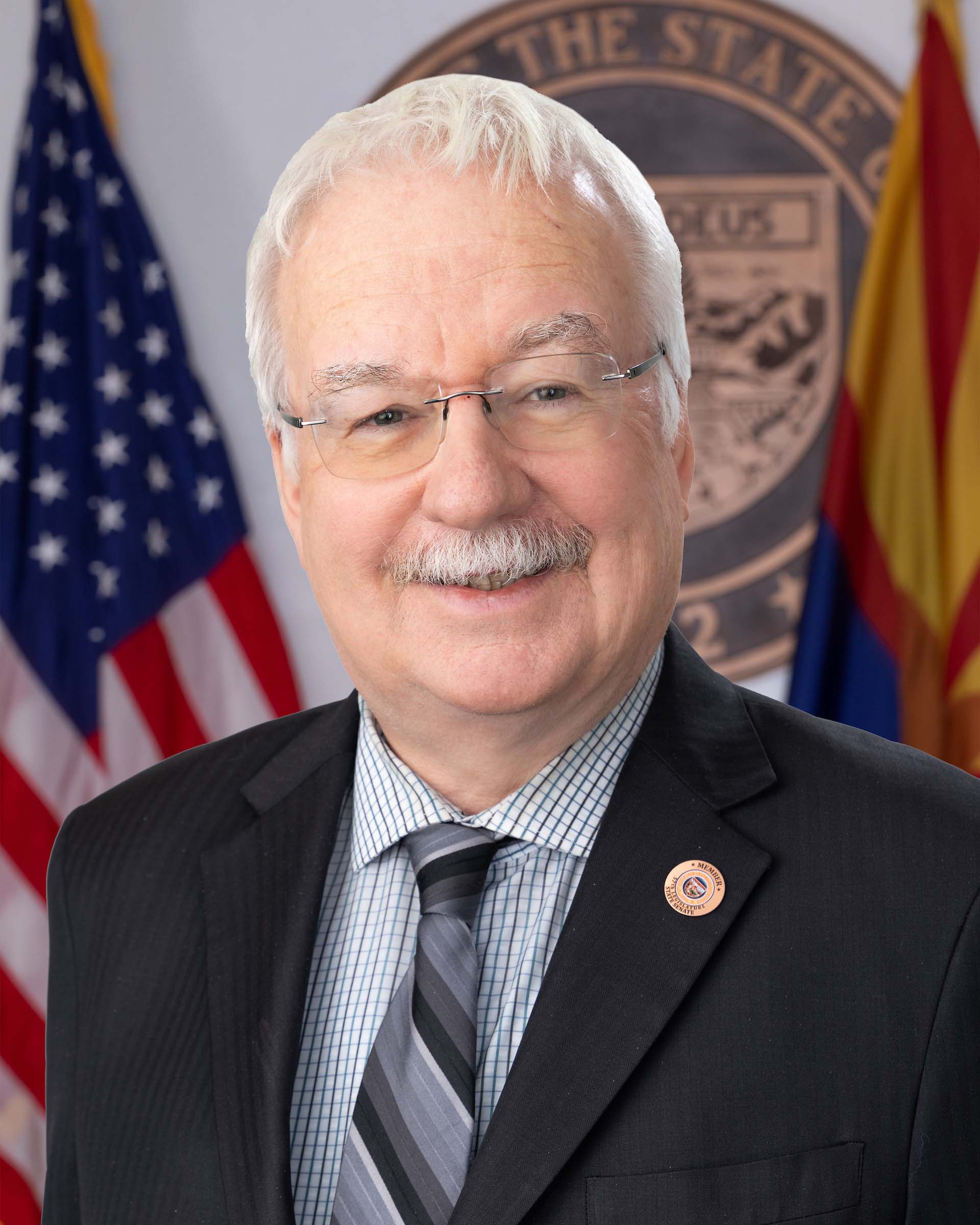
Photo of John Kavanagh
R Arizona Senate · District 3 On the 2026 ballot

Sen. John Kavanagh

Compare
Total votes
5,805
all sessions
Attendance
99%
79 missed
Higher than 83% of chamber peers
With party
97%
of cast votes
Higher than 86% of chamber peers
Bipartisan score
3%
crosses aisle rarely
Lower than 90% of chamber peers
Sponsored
880
bills & resolutions
Near the chamber average
Committees
7
assignments
880 bills and resolutions

Sponsored bills

Total
880
Primary
567
Co-sponsor
313
This page
880
matching current filters
Primary SB 1003
Failed · Arizona Senate · Lead sponsor
elections; canvass; certification; acknowledgment

Maddy summarySB 1003 amends Arizona election procedures to set specific deadlines for finalizing election results. It requires counties to complete primary election canvasses by the second Monday after the vote and general elections by the third Thursday, while cities/towns must do so within six to twenty days. The bill also mandates that official election records include detailed vote counts by precinct, candidate names, and ballot measure results, and requires counties to electronically submit standardized election data to the Secretary of State for statewide analysis. These changes directly affect county election officials, city/town clerks, and the Secretary of State’s office in managing election certification.

Failed Mar 25, 2026 0 co-sponsors
Primary SB 1672
Passed · Arizona Senate · Lead sponsor
AHCCCS; antipsychotic drugs; authorization

Maddy summaryThis bill (SB 1672) modifies Arizona's Medicaid program (AHCCCS) to change how coverage is provided for prescription antipsychotic drugs. It directly affects AHCCCS members aged 18+ with a serious mental illness diagnosis who need FDA-approved antipsychotic medications. The key provision prevents prior authorization delays for these drugs, except when a step therapy protocol requires documented failure to respond to two distinct antipsychotics. This protocol must be processed electronically in real-time and considers two paid claims for different preferred antipsychotics as meeting the step therapy requirement. The bill applies only to evidence-based antipsychotic drugs and does not affect generic drug use or necessary safety reviews.

Passed Mar 23, 2026 0 co-sponsors
Primary SB 1743
Passed · Arizona Senate · Lead sponsor
campaign finance; individual contributor information

Maddy summarySB 1743 requires campaign finance filing officers (like county clerks and the secretary of state) to redact individual donors' exact home addresses and employers from publicly available campaign finance reports. It directly affects political committees and donors by protecting this personal information from public disclosure. The bill mandates this redaction before reports are made public and imposes penalties: $1,000 per violation for filing officers who improperly disclose the redacted details, and class 1 misdemeanor charges for government employees who knowingly share this information. These changes aim to enhance privacy for campaign contributors without altering contribution limits or donation rules.

Passed Mar 17, 2026 0 co-sponsors
Primary SB 1391
Failed · Arizona Senate · Lead sponsor
stress management pilot program; appropriation

Maddy summarySB 1391 establishes a two-year pilot program to provide preventative mental wellness training for Arizona peace officers and their families. The Arizona Peace Officer Standards and Training Board will select a qualified nonprofit to deliver this program, focusing on stress resiliency, suicide prevention, and peer support - avoiding clinical treatment or generalized employee assistance. It appropriates $950,000 for fiscal year 2026-2027 to cover curriculum development, instructor compensation, training delivery, and program evaluation. The program must report on participation, outcomes, and recommendations by December 31, 2028, and expires June 30, 2029. This directly affects all Arizona peace officers, their families, and law enforcement agencies through mandated training on occupational stress impacts and wellness strategies.

Failed Mar 16, 2026 0 co-sponsors
Co-sponsor HB 2938
Signed into law · Arizona House · Co-sponsor
mandatory rounding method; cash transactions

Maddy summaryArizona's HB 2938 requires businesses to round cash transaction totals to the nearest five cents when one-cent coins are unavailable or not used. Specifically, amounts ending in 1-2 cents round down, 3-4 cents round up, 6-7 cents round down, and 8-9 cents round up. Businesses must display a visible notice about this rounding method at checkout and cannot use alternative rounding systems. The law applies only to cash payments (not credit/debit cards), and enforcement is handled by Arizona's Department of Agriculture's weights and measures division.

Signed into law Mar 12, 2026 1 co-sponsor
Primary SB 1005
Passed · Arizona Senate · Lead sponsor
cosmetics sales; animal testing; prohibitions

Maddy summarySB 1005 bans the sale of cosmetics in Arizona that were developed or manufactured using animal testing, affecting manufacturers and suppliers selling products in the state. The law prohibits selling cosmetics where animal testing was conducted by the manufacturer, their suppliers, or contracted testers during development. Key exceptions include testing required by foreign authorities (with no evidence used for Arizona sales), testing under federal regulations, or testing for non-cosmetic products with documented evidence. Cosmetics tested before January 1, 2027, may still be sold if no new animal testing occurs after December 31, 2026.

Passed Mar 11, 2026 0 co-sponsors
Co-sponsor SB 1295
Introduced · Arizona Senate · Co-sponsor
inmates; medical institution; release

Maddy summarySB 1295 creates a process for releasing Arizona inmates who are elderly or disabled to medical facilities. It requires inmates to first pass a preliminary eligibility check (based on age, disability, citizenship, and residency), then receive approval from Arizona's long-term care system. The bill mandates that victims of the inmate's crime be notified of the release and provides a mechanism for returning inmates to prison if they lose long-term care eligibility. This directly affects inmates qualifying for Arizona's long-term care system, which includes assisted living facilities or healthcare institutions contracted with the state.

Introduced Mar 10, 2026 1 co-sponsor
Co-sponsor HCR 2064
Passed · Arizona House · Co-sponsor
Barbara Leff; death resolution

Maddy summaryThis is a ceremonial resolution (HCR 2064) expressing the Arizona Legislature's condolences upon the passing of former state legislator Barbara Leff. It honors her 1996-2006 service representing Paradise Valley, her work on HMO reform and economic development, and her contributions to voter information systems. The resolution extends sympathy to her surviving family members (husband, children, grandchildren) and acknowledges her community leadership. It has no policy impact or legislative effect beyond this expression of respect.

Passed Mar 9, 2026 1 co-sponsor
Primary SCR 1006
Passed · Arizona Senate · Lead sponsor
schools; biological sex; requirements

Maddy summaryArizona's SCR 1006 would require public schools to provide written requests for "reasonable accommodations" regarding restrooms, changing facilities, and sleeping quarters based on a student's biological sex (defined as anatomy/physiology at birth). Schools must deny accommodations if they would allow access to facilities designated for the opposite sex while others are present, and students denied accommodations could sue the school. The bill also prohibits school staff from using pronouns or names differing from a student's biological sex without parental permission for students under 18, with exceptions for nicknames and religious objections. These provisions apply to all public schools and charter schools in Arizona, with specific evidence requirements (e.g., birth certificate) for accommodation requests.

Passed Mar 9, 2026 0 co-sponsors
Primary SB 1083
Passed · Arizona Senate · Lead sponsor
homeowner's associations; address lights

Maddy summarySB 1083 prohibits Arizona homeowner associations from banning lighted home address devices that display house numbers, flash for emergencies, are visible from the street, and include a low-light adjustment. It allows associations to set reasonable placement rules that don’t prevent installation, impair function, or increase costs, while requiring compliance with municipal lighting ordinances. The bill mandates courts to award reasonable attorney fees and costs to the winning party in disputes over violations. This applies to both condominiums and planned communities, directly affecting homeowners seeking to install such devices and associations managing community rules.

Passed Mar 5, 2026 0 co-sponsors
Showing 51 to 60 of 880 bills
Previous 1 5 6 7 88 Next