

Maddy summaryThis resolution honors the late Mark Brnovich, a former Arizona Attorney General who passed away in January 2026. It formally expresses the state legislature's regret over his death and extends condolences to his family and friends. The document does not create new laws or policies but serves as a ceremonial tribute to his public service career. It acknowledges his contributions as a prosecutor and government official without altering any legal provisions.
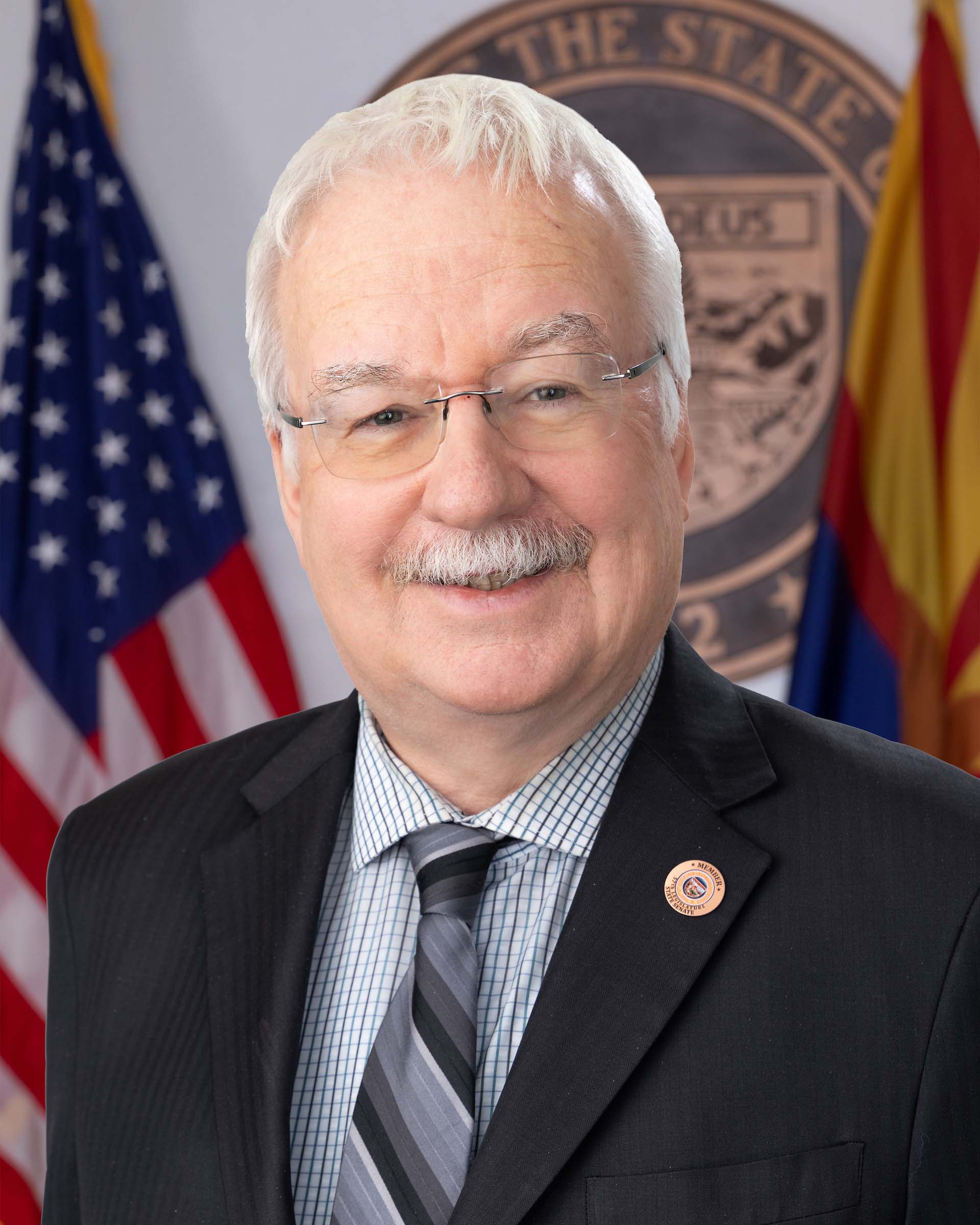
Sen. John Kavanagh
Sponsored bills
Maddy summarySB 1108 requires businesses in Arizona to round cash transaction totals to the nearest five cents when one-cent coins are unavailable or not used at checkout. This applies only to the final total after taxes and fees, not to individual items or non-cash payments like credit cards. Businesses must post a visible notice about the rounding rule and cannot use any method other than rounding down for totals ending in 1-2 or 6-7 cents, and up for 3-4 or 8-9 cents. The Arizona Department of Agriculture enforces the rule through warnings, orders, and civil penalties. The law explicitly states it does not override federal coinage laws or require acceptance of specific currency denominations.
Maddy summarySB 1331 requires Arizona's SNAP recipients who are able-bodied adults under 60 to join a state-approved employment and training program, unless they qualify for one of six specific exemptions. These exemptions include parents caring for young children, full-time students, individuals in substance abuse treatment, people working 30+ hours weekly, or those earning at least minimum wage. The bill implements existing federal SNAP work requirements (7 U.S. Code § 2015(d)) at the state level, directly affecting eligible SNAP participants who do not meet an exemption. It does not create new federal rules but mandates Arizona’s compliance with these federal provisions for its SNAP program.
Maddy summarySB 1334 prevents Arizona's Department of Economic Security from seeking or accepting federal waivers for SNAP work requirements (for able-bodied adults without dependents) unless required by federal law or specifically authorized by state law. It also blocks the state from using its option to exempt individuals from work requirements without prior state legislative approval. The bill directly affects SNAP recipients who would otherwise qualify for work requirement exemptions under federal rules. This policy change would require Arizona lawmakers to explicitly approve any waiver requests or exemptions, rather than allowing the state agency to act unilaterally.
Maddy summaryThis bill requires county election offices to grant governing bodies (like county boards) access to election materials and locations before certifying results. Specifically, it mandates access to headquarters, storage facilities, processing sites, and other designated election areas for observing procedures, examining records, and receiving assistance from officials. The bill includes strict limits: governing bodies cannot disrupt elections, violate voter privacy, or bypass security protocols, and must follow all confidentiality requirements. Violations are classified as class 2 misdemeanors, and denied access allows courts to compel compliance.
Maddy summarySB 1002 is a proposed Arizona bill that would require the Department of Economic Security to implement new verification processes for SNAP (Supplemental Nutrition Assistance Program) eligibility. It mandates monthly reviews of data on lottery/gambling winnings ($3,000+), unemployment changes, residency via out-of-state EBT transactions, and quarterly checks of tax records and corrections data to identify potential eligibility issues. The bill also requires posting aggregated fraud investigation data (like recovered funds and improper payments) on the department’s website and sets specific rules for EBT card replacements (third request triggers fraud investigation) and out-of-state spending (over 10% of balance in 6 months requires an interview). These changes would directly affect SNAP recipients and the state agency managing the program. The bill is currently prefiling and not yet law.
Maddy summaryHB 2725 prevents AHCCCS (Arizona's Medicaid program) from requiring patients to switch from non-opioid pain medications to opioids when a doctor prescribes a non-opioid for chronic or acute pain. It also prohibits stricter coverage rules - like more difficult prior authorization or step therapy - for non-opioid pain drugs compared to opioid alternatives. The bill directly affects AHCCCS members prescribed pain medication and their healthcare providers. Key provisions mandate equal treatment in coverage policies for clinically appropriate non-opioid and opioid pain drugs. This bill is pending in the Arizona legislature after its first reading in January 2026.
Maddy summarySB 1390 appropriates $700,000 from Arizona's health services lottery fund for fiscal year 2026-2027 to support mass casualty incident preparedness. The funds will be distributed to a nonprofit organization in Arizona that previously received federal hospital preparedness funding through the Department of Health Services and focuses on coordinating emergency readiness across all community sectors. This bill directly affects eligible nonprofits with existing federal support for hospital preparedness, enabling them to maintain statewide coordination for mass casualty incidents. It does not create new policies but allocates existing lottery funds to strengthen emergency response planning. The bill is currently in early Senate stages with no further actions recorded.
Maddy summarySB 1082 requires petting zoos and similar animal exhibits (both permanent and temporary) to implement specific health safety measures. Operators must provide handwashing stations or hand sanitizer immediately after animal contact, display clear signage about handwashing and food restrictions, enclose animals to prevent unsupervised contact, and maintain at least one adult supervisor in the animal area at all times. The bill exempts single-day private events at residences, though operators must still post signage and provide handwashing options. Violations can result in civil penalties of up to $100 per incident, enforced by the Arizona Department of Health Services. This directly affects businesses and event organizers operating public animal contact exhibits.
Maddy summarySB 1689 clarifies the definition of "home equity revolving loan" in Arizona law as a loan secured by a consumer's primary residence with a maximum credit limit of $10,000, allowing borrowers to access funds through checks, drafts, or similar methods. This definition directly affects lenders who offer these specific loans by establishing clear parameters for their structure and operation. The bill does not create new restrictions or requirements but ensures consistent application of existing regulations to this loan type.