

0 co-sponsors
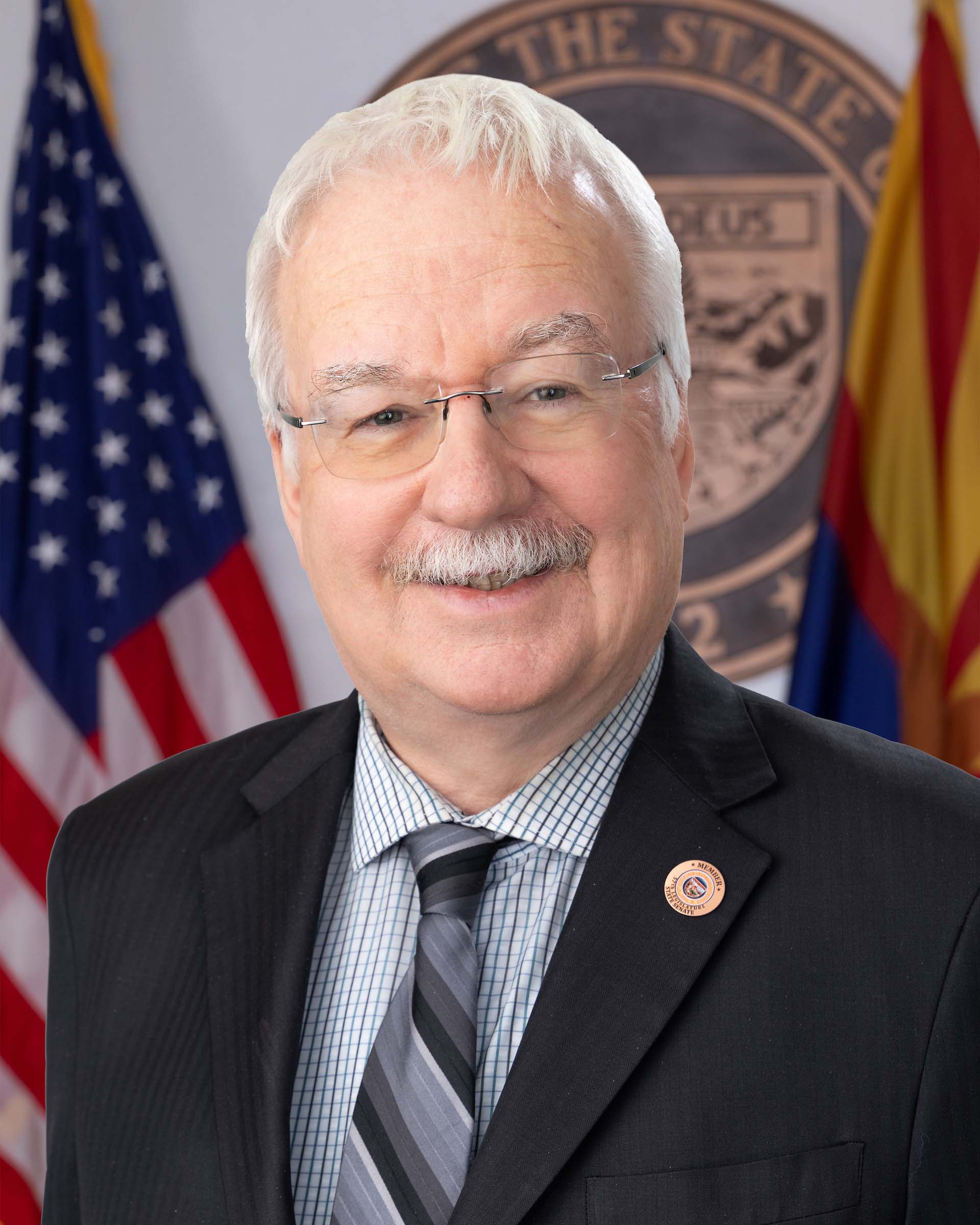
Sen. John Kavanagh
Total votes
5,805
all sessions
Attendance
99%
79 missed
Higher than 83% of chamber peers
With party
97%
of cast votes
Higher than 86% of chamber peers
Bipartisan score
3%
crosses aisle rarely
Lower than 90% of chamber peers
Sponsored
880
bills & resolutions
Near the chamber average
Committees
7
assignments
880 bills and resolutions
Sponsored bills
Total
880
Primary
567
Co-sponsor
313
This page
880
matching current filters
civil liability; gender reassignment surgery
Maddy summaryArizona's SB 1094 creates civil liability for physicians who perform irreversible gender reassignment surgery on minors in violation of existing law (Section 32-3230). It states that parental consent does not protect physicians from lawsuits, and allows minors to seek damages including mental anguish, punitive damages, and attorney fees. The bill sets a statute of limitations allowing lawsuits to be filed up to 25 years after the minor turns 18 or four years after detransition, whichever is later. This directly affects minors who undergo such surgery and the physicians performing it, establishing new legal recourse for those harmed.
Vetoed Jun 19, 2026
0 co-sponsors
motor vehicle booting; fees; regulation
Maddy summarySB 1205 regulates motor vehicle booting on private property in Arizona. It sets a fee range of $90 to $150 for booting services, requires property owners to post clear signage about parking rules and removal costs, and mandates that booting services release vehicles within 30 minutes of a request. The bill prohibits booting emergency vehicles, vehicles with occupants, tax-exempt vehicles, or vehicles parked less than 15 minutes past paid time. Violations of these rules are classified as a class 2 misdemeanor. The law directly affects property owners, booting service providers, and vehicle owners on private lots.
Signed into law Jun 19, 2026
0 co-sponsors
document retention; proposals; donations
Maddy summarySB 1186 requires companies bidding on state contracts or applying for state grants to disclose any "anything of value" (like donations or loans) they or their executives provided to the governor or related entities (such as campaign committees or political groups supporting the governor) within the past five years. It also mandates that state agencies retain all notes from proposal evaluations and prohibits destroying these notes; if notes are destroyed, related contracts may need to be re-bid. The bill directly affects businesses seeking state contracts or grants by adding transparency requirements about their political contributions. Key provisions include mandatory disclosure for both contract proposals (Section 1) and grant applications (Section 3), alongside new record retention rules for procurement evaluations (Section 2).
Vetoed Jun 19, 2026
1 co-sponsor
EMS reciprocity; compact.
Maddy summarySB 1235 establishes Arizona's participation in the Emergency Medical Services (EMS) Licensure Interstate Compact. It allows licensed EMTs, AEMTs, and paramedics from Arizona (the "home state") to practice in other participating states ("remote states") without obtaining new licenses, provided Arizona meets specific standards like requiring the national NREMT exam for initial licensure and sharing adverse actions. The compact requires member states to verify competency, share license-related disciplinary information, and maintain systems for cross-state recognition. This directly affects Arizona-licensed EMS personnel seeking to work temporarily in other member states and state EMS authorities managing licensure verification.
Signed into law Jun 19, 2026
0 co-sponsors
light rail expansion; participation; prohibition
Maddy summarySB 1332 prohibits Arizona from providing state funding or financial support for new light rail construction projects. It requires the state transportation department to conduct a feasibility study by December 2027, comparing light rail costs, environmental impact, ridership, and maintenance against alternatives like autonomous vehicles and bus systems in Maricopa County. The study must be submitted to state leaders and Phoenix officials, with findings informing future state involvement decisions. The bill expires on June 30, 2028, making it a temporary measure to evaluate transit options before potential future funding.
Budget & TaxesOpposes Budget & TaxesProhibits state funding for new light rail construction, restricting government spending on this specific project per bill's explicit language.
EnvironmentOpposes EnvironmentProhibits state funding for light rail (a low-emission transit option), delaying environmental benefits through defunding. Study requirement doesn't override the funding restriction.
TransportationOpposes TransportationProhibits state funding for new light rail construction, directly restricting financial support for transit expansion instead of advancing projects.
Vetoed Jun 19, 2026
0 co-sponsors
veterinarian visits; electronic means; prescriptions
Maddy summarySB 1286 allows Arizona veterinarians to establish a veterinarian-client-patient relationship through electronic means (like video calls) under specific conditions. It requires veterinarians to obtain informed consent, provide contact information, warn clients about limitations (such as federal restrictions on certain prescriptions), and document all electronic interactions for three years. The bill permits prescriptions based solely on electronic exams for up to 60 days initially, with one renewal for another 60 days, but prohibits renewing these prescriptions without an in-person exam or prescribing controlled substances without an in-person physical exam. This directly affects Arizona veterinarians and pet owners seeking telehealth veterinary services, setting clear rules for electronic care.
Signed into law Jun 19, 2026
0 co-sponsors
underground facilities; excavations; notification
Maddy summarySB 1137 updates Arizona's excavation notification rules to improve safety around underground utility lines. It requires excavators to notify a central "one-call" center before digging, with additional steps for "large projects" defined as excavations exceeding one mile in length, lasting over 90 days, or involving more than ten land parcels. The bill adds an "Interactive Positive Response System" (IPRS), an electronic platform managed by the one-call center, to enable excavators and utility operators to electronically exchange, verify, and track location status updates in real time. This law directly affects construction companies, utility providers, and property owners conducting excavation work in Arizona.
Signed into law Jun 19, 2026
0 co-sponsors
HOAs; uniformed services division flags
Maddy summarySB 1184 prohibits Arizona homeowners associations (HOAs) from banning the display of a "uniformed services of the United States division flag" (a military service flag) on owners' property, alongside existing protected flags like the American flag, POW/MIA flag, and Arizona state flag. The bill requires HOAs to allow these flags when displayed per federal flag code guidelines and sets reasonable size/location rules for flagpoles but cannot prohibit their installation. It directly affects all unit owners in Arizona condominiums and planned communities governed by HOA rules. The key provision expands protected flag displays to specifically include military service division flags, ensuring HOAs cannot restrict this form of expression.
Signed into law Jun 19, 2026
0 co-sponsors
campaigns; protected residential addresses
Maddy summarySB 1259 allows candidates for office and public officials to use an alternate mailing address instead of their home address in campaign finance filings and financial disclosures. This protects their residential address from public disclosure, as it is already shielded under Arizona law (section 16-153). The bill amends two statutes: ARS 16-906 (for campaign committees) and ARS 18-444 (for public officer financial disclosures), adding a provision for the alternate address option. To qualify, the person must attest that their home address is both required in the filing and protected from disclosure.
Signed into law Jun 19, 2026
0 co-sponsors
Ask Maddy
·
AI policy assistant
Ask Maddy about John Kavanagh
Scope: arizona
Hi! I can help you understand John Kavanagh's legislative record. What would you like to know?
Try one of these
i
Maddy answers using official bill text and legislative records. Always verify before sharing.
Sources cited inline