

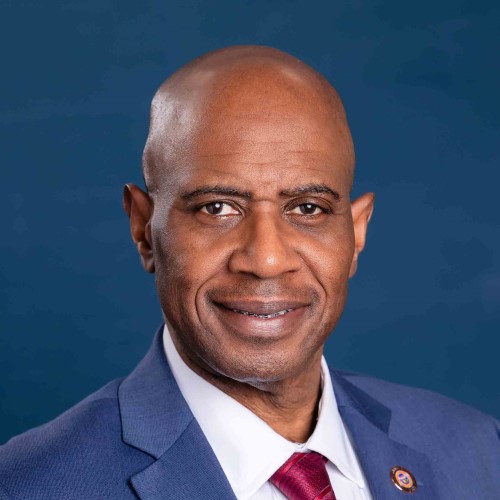
Photo of Walt Blackman
R Arizona House · District 7 On the 2026 ballot

Rep. Walt Blackman

Compare
Total votes
1,672
all sessions
Attendance
95%
91 missed
Near the chamber average
With party
95%
of cast votes
Near the chamber average
Bipartisan score
4%
crosses aisle rarely
Near the chamber average
Sponsored
190
bills & resolutions
Near the chamber average
Committees
3
assignments
190 bills and resolutions

Sponsored bills

Total
190
Primary
115
Co-sponsor
75
This page
190
matching current filters
Primary HB 2614
Introduced · Arizona House · Lead sponsor
homeowners' associations; assessments; liens; payments

Maddy summaryHB 2614 clarifies key definitions for homeowners' associations (HOAs) related to dues, liens, and payments under Arizona law. It specifically updates the definition of "common expense lien" to explicitly include late fees, reasonable collection costs, and court-awarded attorney fees when enforcing payment of assessments. This change affects all HOAs in Arizona that collect regular dues and use liens to recover unpaid amounts. The bill refines existing legal language to reduce ambiguity in how HOAs can legally pursue unpaid dues without creating new financial obligations. It directly impacts the administrative processes of HOAs and their members regarding debt collection procedures.

Introduced Jan 21, 2026 0 co-sponsors
Primary HB 2608
Introduced · Arizona House · Lead sponsor
transitional housing; grant program; appropriation

Maddy summaryHB 2608 establishes a $7 million grant program to fund temporary housing for veterans transitioning from military service. It provides grants exclusively to veteran-owned and veteran-operated nonprofits in Arizona for constructing or rehabilitating housing facilities and supporting services like medical care and wraparound assistance. The program targets homeless or at-risk veterans who are separating from the military or have recently separated, with funds prohibited from covering empty hotels or motels. The Arizona Department of Housing administers the program, requiring annual reports on funded projects and their impact.

Introduced Jan 21, 2026 0 co-sponsors
Primary HB 2612
Introduced · Arizona House · Lead sponsor
records requests; homeowners' associations

Maddy summaryHB 2612 clarifies and updates Arizona homeowners' associations' (HOAs) rules for handling member record requests. It requires HOAs to provide financial and operational records within 10 business days to any member or their designated representative, with no fee for review (though $0.15/page for copies is permitted). The bill explicitly allows HOAs to withhold sensitive information like attorney communications, pending litigation details, personal health/financial data of members or employees, and meeting minutes from non-open sessions. This applies to most Arizona HOAs, excluding timeshare associations, and aims to balance member access with privacy and legal protections.

Introduced Jan 21, 2026 0 co-sponsors
Primary HB 2613
Introduced · Arizona House · Lead sponsor
homeowners' association; virtual meetings; proxies

Maddy summaryHB 2613 requires homeowners' associations in Arizona to hold all board and unit owner meetings openly to members, with specific rules for virtual participation and recording. It mandates 48-hour notice for board meetings after declarant control ends, allows members to speak during discussions, and permits audiotaping/videotaping of open sessions without board restrictions. The bill specifies that meetings may only close for limited reasons like legal advice, pending litigation, or personal member information. This directly affects HOAs, board members, and unit owners by increasing transparency and accessibility to association governance. The law updates existing open meeting rules to clarify virtual attendance options and member recording rights.

Introduced Jan 21, 2026 0 co-sponsors
Primary HB 2064
In committee · Arizona House · Lead sponsor
vulnerable pedestrians

Maddy summaryHB 2064 creates new criminal offenses for drivers who recklessly cause injury or death to pedestrians defined as "vulnerable" (those using mobility aids, white canes, or service animals due to disabilities). For physical injury, it establishes a class 1 misdemeanor with penalties including a $2,000 minimum fine, 90-day license suspension, and 100 hours of community service at organizations serving blind/visually impaired individuals. For death or serious injury, it classifies the offense as a class 4 felony with a one-year license suspension and 200 hours of community service, plus mandatory traffic survival school. The bill also requires driver education programs to include vulnerable pedestrian awareness training and mandates restitution covering disability-related costs like mobility aid replacements or emotional distress.

In committee Jan 21, 2026 0 co-sponsors
Primary HCR 2011
Introduced · Arizona House · Lead sponsor
higher education; expenditures; appropriation; limits

Maddy summaryHCR 2011 proposes a constitutional amendment that would limit Arizona state spending to 7% of the state's estimated total personal income each fiscal year, calculated annually by a newly established economic estimates commission. This spending cap would apply to all state government appropriations except for community colleges and universities, which are exempt starting fiscal year 2027-2028. The amendment also creates mechanisms to adjust the spending limit when federal or local governments assume or transfer funding responsibilities for public services. The bill requires a two-thirds vote in both legislative chambers to exceed the 7% limit for specific appropriations.

Introduced Jan 20, 2026 0 co-sponsors
Primary HB 2241
Introduced · Arizona House · Lead sponsor
accommodation schools; building renewal grants

Maddy summaryThis bill creates a state fund to help Arizona school districts repair and maintain existing school buildings, requiring districts to demonstrate routine preventive maintenance to qualify. Funds cover major repairs for classrooms, system upgrades, and infrastructure but cannot be used for new construction, cosmetic changes, or routine upkeep. Accommodation schools may only access the fund if their buildings were constructed before 2014 using prior school facilities board funds. Projects directly impacting student safety or building closures receive priority over other requests.

Introduced Jan 20, 2026 0 co-sponsors
Primary HB 2232
Introduced · Arizona House · Lead sponsor
DIFI; cryptocurrency kiosk operator; license

Maddy summaryHB 2232 requires cryptocurrency kiosk operators in Arizona to obtain a state license by January 1, 2027, with strict requirements including criminal background checks, financial audits, and verification of ownership. Operators must implement mandatory identity checks (government ID, facial capture, two-factor authentication), display scam warnings in English and Spanish, and record all transactions via video, audio, and GPS logs. The bill prohibits anonymous transactions, limits daily customer transactions to $2,000, and mandates reporting of suspicious activity within 15 minutes. Violations can trigger civil fines up to $100,000 per incident or felony charges for serious breaches like failing to report fraud, with penalties funding a new Digital Asset Oversight Fund.

Introduced Jan 20, 2026 0 co-sponsors
Primary HB 2235
Introduced · Arizona House · Lead sponsor
juvenile detention centers; education programs

Maddy summaryHB 2235 requires Arizona counties operating juvenile detention centers to provide education programs for all school-age youth in custody, coordinated with school superintendents and juvenile courts. It also mandates similar education programs for youth under 21 without high school diplomas in county jails. Funding for these programs includes a fixed annual base amount (adjusted for inflation) plus a variable amount based on the number of instructional days provided, with additional support for students with disabilities. The bill ensures programs align with public school standards and facilitate reintegration into regular school districts upon release.

Introduced Jan 20, 2026 0 co-sponsors
Primary HB 2227
Introduced · Arizona House · Lead sponsor
chiropractic board; complaints; training; authority.

Maddy summaryHB 2227 amends Arizona's chiropractic licensing laws to clarify definitions and establish standards for professional conduct. It requires chiropractors to maintain detailed patient records - including health history, treatment plans, and examination findings - for at least six years and to provide these records within ten business days of a written request. The bill prohibits unprofessional actions like failing to disclose financial interests in referral facilities, making false statements to patients or insurers, or misrepresenting certifications. These requirements directly affect licensed chiropractors and their practices in Arizona.

Introduced Jan 20, 2026 0 co-sponsors
Showing 81 to 90 of 190 bills
Previous 1 … 8 9 10 … 19 Next