

Maddy summaryHB 2145 requires all state and local government sanitarians in Arizona to register with the newly established Sanitarians Council. To qualify, applicants must have three years of relevant work experience, military service in environmental health, or 30 college credits in related sciences. Registrants must complete 10 hours of approved continuing education annually, pay $25 for initial registration and $10 for renewal, and may not use the title "registered sanitarian" without certification. The bill directly affects environmental health professionals working for Arizona government entities.
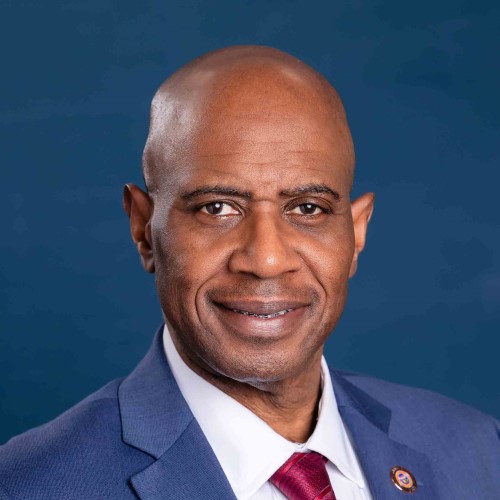
Rep. Walt Blackman
Sponsored bills
Maddy summaryThis is a symbolic resolution (not a law) passed by Arizona lawmakers expressing support for the Palo Verde Generating Station nuclear power plant and nuclear energy. It highlights Palo Verde's role as Arizona's largest clean energy source, economic contributor ($2.3 billion impact), and employer (3,000+ jobs), while noting public support for nuclear power. The resolution has no legal effect but formally endorses continued nuclear energy use and directs the Secretary of State to send copies to federal officials. It does not create new policies, funding, or regulations.
Maddy summaryHB 2855 declares that drug cartels operating in Arizona are terrorist organizations under state law. It defines "drug cartel" to include groups involved in human smuggling, drug trafficking, or terrorism, and requires the Arizona Department of Homeland Security to address the threat they pose. The bill explicitly states this definition does not affect individuals' claims for asylum under federal law. This legislation aims to empower state agencies to combat border-related criminal activity, based on voter-approved findings about public safety concerns linked to transnational cartels.
Maddy summaryHB 2384 requires Arizona insurers to use wildfire risk modeling for fire insurance policies in cities and towns with fewer than 150,000 residents. It mandates that insurers base premiums on community-level wildfire mitigation efforts, specifically rewarding properties in "Firewise USA Site" communities that have implemented proven safety measures. This policy change directly affects homeowners in smaller Arizona communities and insurers operating there, shifting how wildfire risk is assessed from individual properties to community-wide safety programs. The law aims to incentivize community-wide wildfire preparedness by offering lower insurance rates to areas with certified mitigation efforts.
Maddy summaryHB 2115 makes it illegal to observe a nude minor solely for the purpose of sexual gratification, classifying this as a class 2 felony. The law directly affects individuals who engage in this conduct, applying to all minors regardless of age. This amendment to Arizona law (Section 13-3553) specifically adds "observing a nude minor for sexual gratification" as a new prohibited act under sexual exploitation of a minor charges.
Maddy summaryThis Arizona legislative memorial (HCM 2009) requests Congress to divest the federal Bureau of Indian Affairs (BIA) of the San Carlos Irrigation Project (SCIP) electric system. It directly affects approximately 10,000 customers - primarily on tribal and non-tribal lands in Arizona - facing unreliable service, frequent outages, and 40% rate hikes due to the BIA's inability to secure stable power contracts. The memorial proposes transferring the system to neighboring nonprofit utilities (San Carlos Apache Tribe and Gila River Indian Community) to improve reliability and affordability, while also requesting federal funding for necessary system upgrades. The Arizona legislature passed this memorial on March 27, 2025, and transmitted it to Congress for action.
Maddy summaryHB 2696 prohibits Arizona critical infrastructure providers (including utilities, telecoms, emergency services, and water systems) from using software, equipment, or vendors owned or controlled by foreign adversaries - defined as countries designated under federal law (15 CFR §791.4). It requires replacing existing equipment from federally banned corporations with U.S.-made alternatives by 2025, mandates annual certification to the attorney general, and bans government contracts with prohibited vendors. The law applies to all critical infrastructure service providers and government entities purchasing equipment like routers, modems, or traffic enforcement systems. The attorney general must publish an annual list of banned vendors on their website, starting December 2025.
Maddy summaryArizona's HB 2663 requires school principals or designated administrators to provide teachers with written certification before allowing a temporarily removed student to return to class. This certification must state the authorization for readmission and describe any disciplinary action taken for the behavior that led to the removal. The bill applies to all public school classrooms where regular instruction occurs and clarifies that "rules governing student conduct" include district policies, school procedures, and teacher-developed classroom management plans. The law aims to ensure transparency in classroom management decisions and is currently awaiting the governor's action after passing both legislative chambers.
Maddy summaryHB 2594 continues Arizona's Governor's Regulatory Review Council (GRRC) to review and approve or reject state agency rules, impact statements, and rule packages. The council will operate until July 1, 2029, after which it terminates, with related sections of law fully repealed by January 1, 2030. This bill directly affects state agencies that submit new regulations, requiring them to seek GRRC approval before implementation. The changes apply retroactively from July 1, 2025, ensuring existing rule review processes remain consistent under the continuation.
Maddy summarySB 1102 prevents pharmacy benefit managers (PBMs) from suddenly removing a prescription drug from coverage for patients already taking it, unless the drug is discontinued. It requires PBMs to provide 60 days' notice before changing drug coverage and establishes a streamlined process for doctors to request continued access to excluded medications. Patients must obtain approval through this exception process to keep using a drug that was previously covered but is now excluded from the formulary. The law applies to all health insurers and PBMs in Arizona, ensuring continuity of care for those on established prescriptions.