

Maddy summaryHB 2220 allocates $6 million from Arizona's state general fund for fiscal year 2025-2026 to the Department of Transportation. This funding is specifically designated for the city of Show Low to advance its Woolford Road extension project. The bill directly affects Show Low residents and local infrastructure by providing state resources for road construction. It does not create new policy but authorizes a one-time financial allocation for a defined public works project.
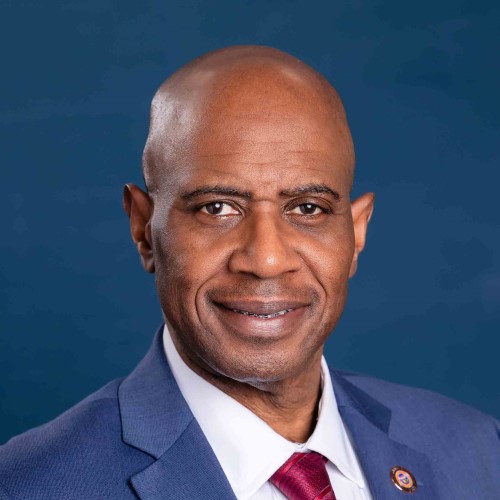
Rep. Walt Blackman
Sponsored bills
Maddy summaryHB 2725 requires Arizona public schools to display U.S. flags (made in the U.S.) and provide Constitution/Bill of Rights copies (also U.S.-made) in classrooms for grades 7-12, and to set aside time daily for students to recite the Pledge of Allegiance. Schools must notify parents if a student skips the Pledge during this designated time. The bill also mandates a 1-2 minute daily moment of silence at the start of each school day for all grades (K-12), with teachers encouraged to discuss its use with parents but not suggesting specific reflections. Private schools, parochial schools, and homeschools are exempt from these requirements.
Maddy summaryHB 2051 requires Arizona's governor to appear before the legislature monthly (starting January 2027) to answer questions from lawmakers. The governor must respond to two questions each from the majority and minority leaders, one question each from four randomly selected legislators, and follow-up questions if requested. This applies during legislative sessions on the third Wednesday of each month, alternating between the Senate and House of Representatives each year. The bill aims to increase public engagement with state government, as cited in the legislature's findings linking similar practices to higher voter turnout and political knowledge.
Maddy summaryArizona's HB 2681 establishes requirements for physicians prescribing medication abortions. It mandates in-person examinations, pregnancy verification, Rh blood testing, and disclosure of physical/psychological side effects (including bleeding and seeing pregnancy tissue) before providing abortion-inducing drugs. Physicians must also schedule a 7-14 day follow-up visit to confirm the abortion is complete, document efforts to ensure the visit occurs, and provide the patient with the contact information of an associated physician for complications. The bill prohibits mailing or delivering abortion drugs via courier and creates civil liability for violations, allowing patients to seek $5,000 statutory damages plus medical costs and attorney fees. It explicitly states this law does not create a right to abortion or make unlawful abortions legal.
Maddy summaryHB 2722, titled the "Taxpayer Protection Act," restricts Arizona state and local governments from spending public funds on private entities unless three conditions are met: (1) the spending serves a direct government function (not economic development subsidies), (2) it involves direct, proportional payment for services (not speculative benefits), and (3) the government maintains ongoing control over the expenditure. The bill defines key terms like "public purpose" (excluding private business aid) and "consideration" (requiring direct payment). It allows taxpayers or the attorney general to challenge non-compliant spending in court, requiring proof that the expenditure lacks public purpose, proper consideration, or government oversight. This directly affects all state agencies, cities, counties, and school districts managing public funds.
Maddy summaryHB 2672 modifies Arizona's property tax exemption rules to expand eligibility for veterans with disabilities, widows/widowers, and individuals with total permanent disabilities. It provides full property tax exemption for veterans with a 100% service-connected disability rating, while others with disabilities receive a partial exemption capped at $4,188 (adjusted annually for inflation), reduced by their disability percentage. To qualify, applicants must meet income limits ($34,901 or $41,870 depending on dependents) and file annual affidavits with county assessors. The bill also clarifies that unused exemption amounts can apply to personal property taxes and prohibits double exemptions across categories.
Maddy summaryHB 2223 creates "renewable energy incentive districts" in unincorporated Arizona counties to streamline wind farm development. Counties must designate these districts based on specific criteria (e.g., land suitability, compatibility with existing uses, and alignment with county plans) before approving projects. The bill requires counties to expedite permitting for wind farms within these districts while mandating strict public notice procedures (30-day newspaper ads, physical postings, certified mail to neighbors) and imposing a 90-day timeline for permit decisions. Wind farm developers must also provide a financial bond to cover property damage, environmental cleanup, and liability claims arising from their operations. This bill directly affects county governments, landowners, and renewable energy developers by altering zoning, permitting, and financial accountability processes.
Maddy summaryThis bill prohibits Arizona government entities and election vendors from using money or services from foreign governments or non-citizens for election administration. It also bans foreign entities from funding efforts to influence ballot measure outcomes. Vendors must provide annual written statements confirming they don’t receive foreign funds, with penalties for false statements (up to three times the contract value). The law explicitly excludes federally recognized tribal nations from the definition of "foreign government."
Maddy summaryHB 2635 amends Arizona's tax code to add new sales tax exemptions for specific items. It exempts sales of "cash equivalents" (like gift cards, stored-value cards, and prepaid digital payment tools) and "precious metal bullion" (refined gold, silver, etc.) from retail sales tax. The bill defines "cash equivalents" as pre-paid items denominated in money redeemable for goods/services, excluding telecom prepaids, and clarifies that "monetized bullion" (coins used as currency) is exempt. This directly affects retailers selling these items, removing tax liability on such transactions. The bill focuses solely on tax policy, with no provisions related to firearm storage devices as inaccurately suggested in the title.
Maddy summaryHB 2792 requires Arizona school districts to establish clear rules for student discipline, suspensions, and expulsions. It mandates parental written notification and consent for confining students in enclosed spaces (with exceptions for imminent harm), and annual reporting to the state education department on suspensions/expulsions involving illegal substances - without sharing personally identifiable information. The bill also standardizes hearing procedures for long-term suspensions (over 10 days), including written notice to parents, appeal processes, and rules for executive sessions. These changes directly affect school districts, administrators, teachers, and students' families by increasing transparency and procedural safeguards in disciplinary actions.