

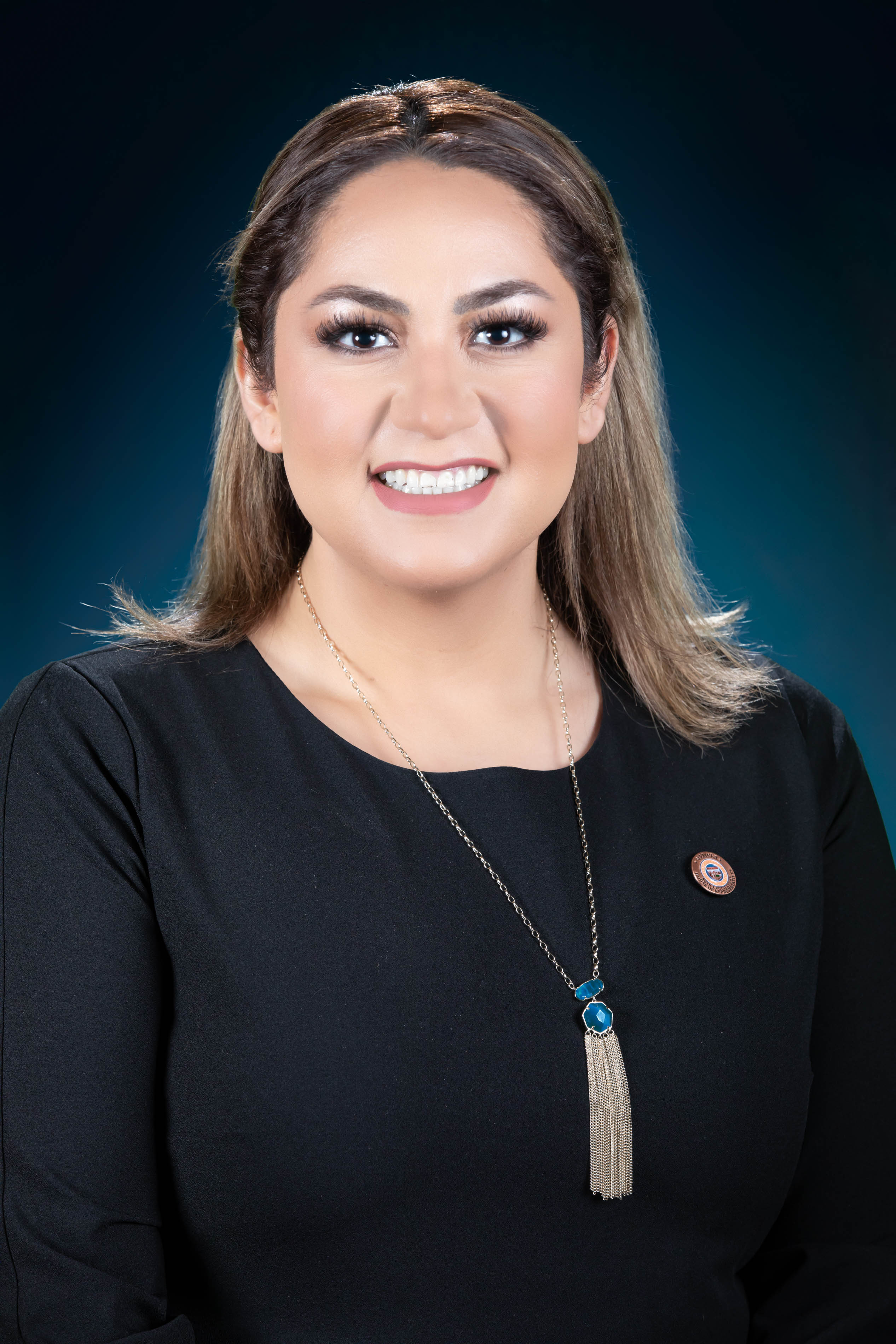
Photo of Consuelo Hernandez
D Arizona House · District 21 On the 2026 ballot

Rep. Consuelo Hernandez

Compare
Total votes
2,940
all sessions
Attendance
91%
279 missed
Lower than 86% of chamber peers
With party
86%
of cast votes
Lower than 92% of chamber peers
Bipartisan score
9%
crosses aisle rarely
Higher than 88% of chamber peers
Sponsored
284
bills & resolutions
Near the chamber average
Committees
4
assignments
284 bills and resolutions

Sponsored bills

Total
284
Primary
40
Co-sponsor
244
This page
284
matching current filters
Co-sponsor HB 2164
Signed into law · Arizona House · Co-sponsor
public schools; ultraprocessed foods

Maddy summaryHB 2164 prohibits Arizona public schools from serving or selling ultraprocessed foods during the school day, directly affecting school meal programs and cafeteria operations. The law defines "ultraprocessed food" as any item containing specific synthetic additives like certain dyes (e.g., Yellow #5, Red #40) or preservatives (e.g., potassium bromate), excluding foods parents provide to their own children. The Arizona Department of Education may create implementing rules but is not required to mandate specific alternatives. Signed into law on April 14, 2025, this policy aims to improve school meal nutrition by limiting low-nutrient processed foods.

Signed into law Apr 14, 2025 1 co-sponsor
Primary HB 2706
Passed · Arizona House · Lead sponsor
mental health; intensive treatment orders

Maddy summaryArizona's HB 2706 creates a legal framework for court-ordered intensive outpatient treatment for individuals with chronic mental health conditions who have repeatedly resisted standard treatment. The bill allows courts to issue such orders only after finding clear evidence of chronic treatment resistance, requiring a court-approved treatment plan that includes a dedicated case manager, stable housing, transportation, and specific clinical services. Patients cannot be forced to consent to this treatment if the court determines their mental disorder impairs their decision-making capacity. The plan is enforceable by the court, with regular compliance hearings to adjust the plan based on patient progress and safety needs.

Passed Apr 1, 2025 0 co-sponsors
Primary HB 2492
Passed · Arizona House · Lead sponsor
guardianship; court appointments; care placement

Maddy summaryHB 2492 modifies Arizona's guardianship laws to streamline court appointments for minors nearing adulthood. It allows petitions for guardianship to automatically take effect on a minor's 18th birthday if filed when they are 17 years and six months old, provided a recent medical evaluation (within six months of filing) supports the request. The bill updates petition requirements to include specific details about the minor's condition, existing legal documents (like health care powers of attorney), and alternatives considered, while ensuring the minor's right to representation and a hearing. This directly affects minors aged 17.5+ who may be deemed incapacitated and their families navigating legal guardianship transitions.

Passed Apr 1, 2025 0 co-sponsors
Co-sponsor HB 2720
Signed into law · Arizona House · Co-sponsor
hydrolyzed cocaine; threshold amount

Maddy summaryThis bill amends Arizona's definition of "dangerous drug" to include specific synthetic compounds under new categories, such as cannabimimetic substances (e.g., JWH-018, JWH-073) and other listed chemicals. It directly affects individuals possessing or using these substances, as it establishes legal thresholds for enforcement under Arizona law. The key provision redefines "dangerous drug" to explicitly cover these synthetic compounds, including their salts, isomers, and derivatives, without exception. This change clarifies legal boundaries for law enforcement and pharmacists (referencing the Arizona State Board of Pharmacy) regarding these substances. Note: The bill's title mentions "hydrolyzed cocaine," but the actual text focuses on defining dangerous drugs, not hydrolyzed cocaine.

Signed into law Mar 31, 2025 1 co-sponsor
Co-sponsor HB 2785
Failed · Arizona House · Co-sponsor
health care facilities; electronic monitoring

Maddy summaryHB 2785 prohibits assisted living facilities and nursing care institutions in Arizona from restricting residents' use of electronic monitoring devices in their private rooms. It specifically bans facilities from prohibiting installation, discriminating against residents who choose to use monitoring, or retaliating based on consent decisions. The law defines "electronic monitoring" as devices recording audio/video in a resident's room for their use or authorized parties, and allows civil penalties for violations. The bill passed the House in March 2025 but failed in the Senate on March 26, 2025.

Failed Mar 26, 2025 1 co-sponsor
Co-sponsor SB 1671
Passed · Arizona Senate · Co-sponsor
traditional healing services; AHCCCS

Maddy summarySB 1671 adds traditional healing services as a covered benefit under Arizona's Medicaid program (AHCCCS). This coverage applies only to AHCCCS members who qualify under federal regulations (42 CFR § 136.12) and receive services delivered by or through the Indian Health Service or a tribal facility. The bill explicitly requires federal approval for this coverage and is subject to available funding. It does not alter other existing covered services listed in the statute.

Passed Mar 20, 2025 1 co-sponsor
Co-sponsor HB 2786
Failed · Arizona House · Co-sponsor
excessive speed; speed inhibiting device

Maddy summaryHB 2786 requires courts to order drivers convicted of specific speeding offenses to install certified speed-limiting devices on their vehicles instead of imposing license suspensions. It directly affects drivers convicted of first-time excessive speeding (90 days), high-speed offenses (180 days), or repeat violations within 12-24 months (up to 1 year). The bill mandates device installation, regular calibration reports from manufacturers to the state, and prohibits tampering - violations are punishable as misdemeanors. Drivers must pay for installation/maintenance, and the state will not reinstate driving privileges until proof of compliance is submitted.

Failed Mar 11, 2025 1 co-sponsor
Primary HB 2259
In committee · Arizona House · Lead sponsor
railroad grade crossing; on-track equipment..

Maddy summaryHB 2259 amends Arizona's railroad crossing safety laws to clarify when drivers must stop and how they must proceed. It requires all drivers approaching a crossing to stop 15-50 feet from the tracks if signals are active, gates are down, trains are visible, or conditions are hazardous. Specific rules apply to commercial vehicles (must ensure space on the other side), school buses (must follow district policy), and heavy equipment (must notify railroads and confirm safety before crossing). The bill also prohibits U-turns on tracks, proceeding around gates, and pedestrians lingering in active crossing zones. These changes directly affect all drivers, commercial operators, and heavy equipment users at railroad grade crossings statewide.

In committee Mar 5, 2025 0 co-sponsors
Co-sponsor HB 2381
Introduced · Arizona House · Co-sponsor
wage claims; employment practices

Maddy summaryHB 2381 allows Arizona employees to file written claims with the Department of Economic Security for unpaid wages up to $15,000 within one year of when the wages were due. It gives the department authority to collect these wages through legal remedies like garnishment and deposit collected funds into a special state fund for direct payment to affected workers. The bill directly affects employees owed small amounts of unpaid wages by their employers, streamlining the process for recovery without requiring a court lawsuit. Key changes include setting a clear $15,000 cap on claims, shortening the filing deadline to one year, and establishing the department as the primary collector and distributor of unpaid wages.

Introduced Mar 4, 2025 1 co-sponsor
Primary HB 2263
In committee · Arizona House · Lead sponsor
fire protection systems, inspections

Maddy summaryHB 2263 standardizes inspections of smoke and fire dampers in building fire protection systems, requiring local inspections to follow nationally recognized standards. It authorizes the state fire marshal to provide certified inspectors and resources to local authorities upon request. The bill also clarifies county code adoption rules, prohibiting counties from banning fire sprinklers in single-family homes or small residential buildings (up to two units) and preventing fines for not installing them. Additionally, it prevents counties from requiring fire sprinklers as part of fire apparatus access road requirements for single-family properties.

In committee Mar 3, 2025 0 co-sponsors
Showing 81 to 90 of 284 bills
Previous 1 … 8 9 10 … 29 Next