

Maddy summaryHB 2881 creates a state grant program to fund ninth-grade support programs in Arizona public high schools. It provides $150 per ninth-grade student (adjusted for inflation after 2025-2026) to help schools implement data-driven interventions, such as real-time student progress tracking and teacher collaboration, to keep students on track for graduation. Schools must use funds to establish programs focused on academic credit completion and reducing failing grades, with priority given to schools serving economically eligible students. A student is deemed "on track" if they earn at least 25% of required graduation credits by year-end and have no more than one F grade in ninth grade.
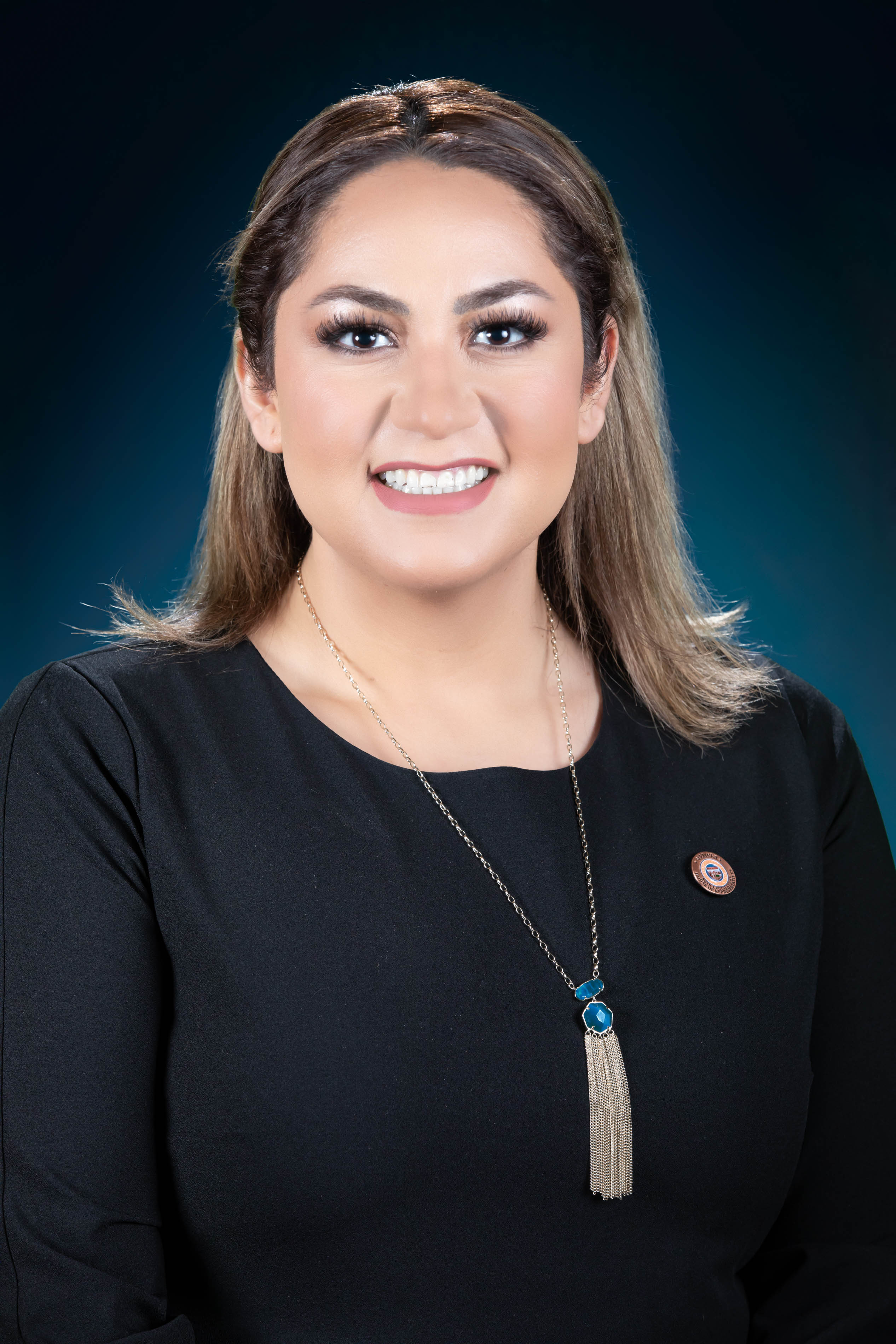
Rep. Consuelo Hernandez
Sponsored bills
Maddy summaryHB 2764 proposes to make "Howdy" the official state greeting of Arizona by adding it to the Arizona Revised Statutes. This symbolic bill would require state government communications, documents, or interactions to use "Howdy" as the designated greeting. It directly affects state agencies and official state communications but has no practical policy impact on residents or services. The bill is purely ceremonial and does not alter any laws, taxes, or regulations. (Procedural bill; summary limited to 2 sentences as requested.)
Maddy summaryThis bill prohibits Arizona cities and towns from reducing municipal fire department operating budgets below the previous year's level. If a city or town cuts funding, the state treasurer must withhold an equal amount of state shared funds until the budget is restored. The rule does not apply if a city lacks funds to maintain last year's budget level. It directly affects local fire departments and the distribution of state tax revenues to municipalities.
Maddy summaryHB 2705 amends Arizona election laws to require strict compliance with nomination petition rules for candidates. It specifies exact wording for partisan and nonpartisan petitions, clarifies that signatures from multiple counties are acceptable for district offices, and allows post office box addresses for candidates with protected residences. The bill directly affects candidates seeking public office who must gather signatures through these standardized petitions. It failed to advance in the legislature on February 19, 2025, so these changes did not become law.
Maddy summaryHB 2262 would limit the maximum length of trains operated by railroads on Arizona's main and branch rail lines to 8,500 feet. This bill directly affects railroad companies operating within Arizona, restricting their ability to run longer trains on specified tracks. The key provision establishes a clear, enforceable length limit without exceptions, requiring railroads to adjust their operations if trains exceed this measurement. The bill is a substantive safety and operational regulation, not a procedural measure.
Maddy summaryHB 2932 appropriates $100,000 and funds one full-time position within Arizona's Department of Economic Security for fiscal years 2025-2026 and 2026-2027 to hire an early childhood grant writer. This position will directly assist providers of early childhood care and education (for children birth through age five) by identifying grant opportunities, helping them apply, supporting licensure efforts, and guiding grant execution. The bill requires the department to report by September 1, 2027, on the number, total value, and recipients of successful grants assisted by the grant writer. This is a funding measure to support existing providers in accessing external grants, not a new program or policy change.
Maddy summaryHB 2882 establishes Arizona's Rental Assistance Program, providing up to three months of rental support to eligible tenants in low- and moderate-income households. The program covers upcoming or past rent payments (without requiring prior delinquency), with funds paid directly to landlords or tenants if landlords refuse, and includes eviction protection for covered months. Funding comes from 50% of designated monies in the Housing Trust Fund, administered by the state department, which must also offer free financial literacy classes to applicants. The bill requires landlords to verify rent balances for delinquent tenants and mandates annual reporting on program usage and housing fund expenditures.
Maddy summaryHB 2942 establishes a "Firefighters Bill of Rights" in Arizona, directly affecting all nonprobationary firefighters employed by the state or local governments, including those working through private contracts or emergency medical services. The bill requires that disciplinary actions (like dismissal or suspension) only occur for "just cause," defined as fair notice of misconduct, evidence supporting the claim, and proportionality to the offense. Key provisions include requiring employers to notify firefighters of complaints within seven days, allowing them to have a coworker (not an attorney) present during interviews, and permitting firefighters to record their own interviews. It also mandates that employers provide disciplinary history for similar cases before imposing penalties.
Maddy summaryHB 2890 requires Arizona employers with 15 or more employees to provide reasonable accommodations for pregnant workers, such as modified equipment, more frequent breaks, schedule changes for prenatal visits, or assistance with manual labor, unless it causes significant difficulty for the business. Employers cannot force pregnant employees to use vacation or sick leave when accommodations are possible and must post clear notices about these requirements in employee handbooks and provide written notice to new hires, current employees, and pregnant employees within 10 days of pregnancy notification. The bill directly affects pregnant employees and their employers across Arizona, ensuring they receive specific workplace adjustments without penalty. It takes effect after the law is enacted, with written notices required within 180 days of the effective date.
Maddy summaryHB 2941 would require Arizona marijuana cultivation businesses to file water conservation plans detailing their methods, monthly water usage, and cultivation canopy size. It sets a 30,000-square-foot limit on each licensee’s growing area (including shared facilities), with fees for exceeding this cap deposited into the state’s Water Conservation Grant Fund. The fund, which already supports water efficiency projects, would receive these fees to finance new conservation initiatives. The bill directly affects licensed marijuana growers by imposing new water usage limits and financial requirements for cultivation operations.