

Maddy summaryHB 2742 streamlines the process for requesting court-ordered mental health evaluations in Arizona. It requires standardized application forms with specific details about the person needing evaluation (including behavioral evidence, treatment history, and witness information), and mandates that screening agencies process applications within 48 hours. The bill explicitly protects individuals receiving treatment through recognized religious practices from involuntary evaluation unless a court determines they pose a danger to self or others. This affects individuals with serious mental health concerns who are unwilling or unable to seek voluntary care, as well as healthcare providers, law enforcement, and courts handling such cases.
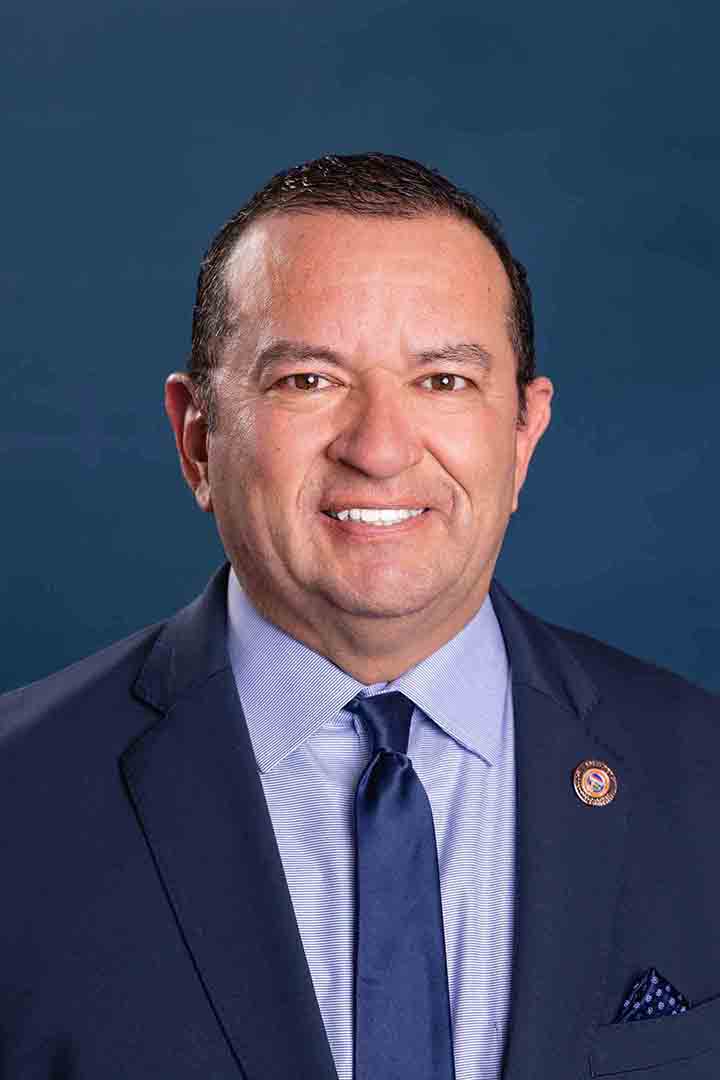
Rep. Chris Lopez
Sponsored bills
Maddy summaryHCR 2045 is a symbolic resolution honoring Arizona's law enforcement officers, firefighters, emergency responders, and volunteers - including the Arizona Rangers - for their service. It expresses the legislature's gratitude for their daily risks, historical contributions, and community support, recognizing both career and volunteer personnel. The resolution has no legal effect or policy changes; it merely acknowledges their role through formal recognition. This is a ceremonial gesture, not a bill creating new laws or altering existing ones.
Maddy summaryHCR 2046 is a non-binding resolution passed by the Arizona legislature, not a bill with legal effect. It identifies overgrown forests and invasive salt cedar (tamarisk) trees as significant causes of water loss in the Colorado River watershed, citing that salt cedar alone consumes approximately 672 acre-feet of water per acre annually. The resolution calls on state and federal leaders to acknowledge these issues and prioritize funding for salt cedar eradication and forest management to increase water availability. It urges Congress to allocate resources for these efforts, directing Arizona officials to send the resolution to federal authorities.
Maddy summaryHCR 2049 is a symbolic resolution passed by Arizona's legislature, not a binding law. It asserts Arizona's sovereignty under the Tenth Amendment by declaring the state will not use state personnel or funds to enforce federal laws or programs deemed unconstitutional by Arizona. The resolution demands the federal government cease "commandeering" state actions and prohibits Arizona from complying with federal mandates that courts have ruled unconstitutionally coercive. It serves as a formal statement sent to federal officials, emphasizing Arizona's position but having no legal effect on federal law or enforcement.
Maddy summaryHB 2099 requires Arizona cities, towns, and counties to enforce, administer, and cooperate with federal immigration enforcement actions. It also adds a similar duty for the governor to work with federal immigration authorities. The law would expire on January 19, 2029, and does not create new immigration enforcement powers but mandates state/local coordination with federal programs. The bill was passed by the legislature in April 2025 but vetoed by the governor on May 2, 2025.
Maddy summaryHB 2340 amends Arizona's first-degree murder statute to specifically classify killing a law enforcement officer "in the line of duty" during the commission of certain serious felonies as first-degree murder. This directly affects law enforcement officers and individuals who commit violent crimes like robbery, kidnapping, or drug offenses involving minors while causing officer deaths. The key provision (subsection A, paragraph 3) adds this scenario to existing first-degree murder classifications, mandating punishment of death or natural life imprisonment for offenders aged 18 or older. The bill does not change the definition of "law enforcement officer" but specifies this penalty applies when an officer dies during the commission of the enumerated crimes.
Maddy summarySB 1282 creates a new offense called "aggravated unlawful flight" for drivers who recklessly endanger others while fleeing police. It classifies this as a class 4 felony generally, but elevates it to a class 2 felony if the driver causes serious injury, transports a minor under 15, or was already violating specific traffic laws (like driving under suspension). Convicted individuals in the class 2 felony scenario must serve at least four months in prison before becoming eligible for probation or early release. The bill directly affects drivers who flee law enforcement in a reckless manner, with stricter penalties for certain aggravating circumstances.
Maddy summaryHB 2577 exempts wildfire prevention, management, and suppression activities by the Arizona Department of Forestry and Fire Management from standard requirements protecting native plants. Specifically, it removes the need for 60-day written notice, consultation on highly safeguarded plants, or permit processes when the state forester acts to prevent or suppress wildfires under Section 37-1303. The bill also exempts routine maintenance (like canal upkeep) from these plant protection rules. This change streamlines wildfire response without altering protections for native plants during non-emergency state agency activities.
Maddy summaryHB 2733 grants legal immunity to Arizona government agencies and employees (like law enforcement) who intercept, disable, or destroy unmanned aircraft (drones) within 30 miles of the state's international border. It protects them from liability for injuries caused during these actions unless they intentionally harmed someone or were grossly negligent. The law specifically applies to drone operators (defined as anyone controlling a drone, including owners or groups acting together) and covers contractors working for government entities. This bill directly affects border enforcement practices and drone operators operating near Arizona's international border.
Maddy summaryHB 2574 allows Arizona counties to create rules for small land subdivisions containing 6 to 10 lots, each at least 2 acres. It requires developers to submit a "small land subdivision public report" covering land surveys, road access (requiring widths for first responders but not highway standards), water sources (like wells or districts), easements, and utility services. The bill directly affects county governments (through their boards of supervisors) and land developers seeking to divide larger parcels into smaller lots. The report ensures basic infrastructure and access requirements are met before sales or leases can proceed.