

Maddy summaryHB 2960 establishes a grant program to fund specialized veterans' courts in Arizona counties and municipalities. It creates a "veterans' treatment court fund" using state appropriations, providing money to local governments to set up courts that address veterans' justice-involved behavior through individualized treatment plans for issues like PTSD, substance abuse, and traumatic brain injury. The program requires grantees to report annually on participant demographics, recidivism, treatment use, and program outcomes, with the Attorney General compiling statewide data and recommendations for improvement. This directly affects veterans involved in the criminal justice system by connecting them to targeted support services rather than standard court processing.
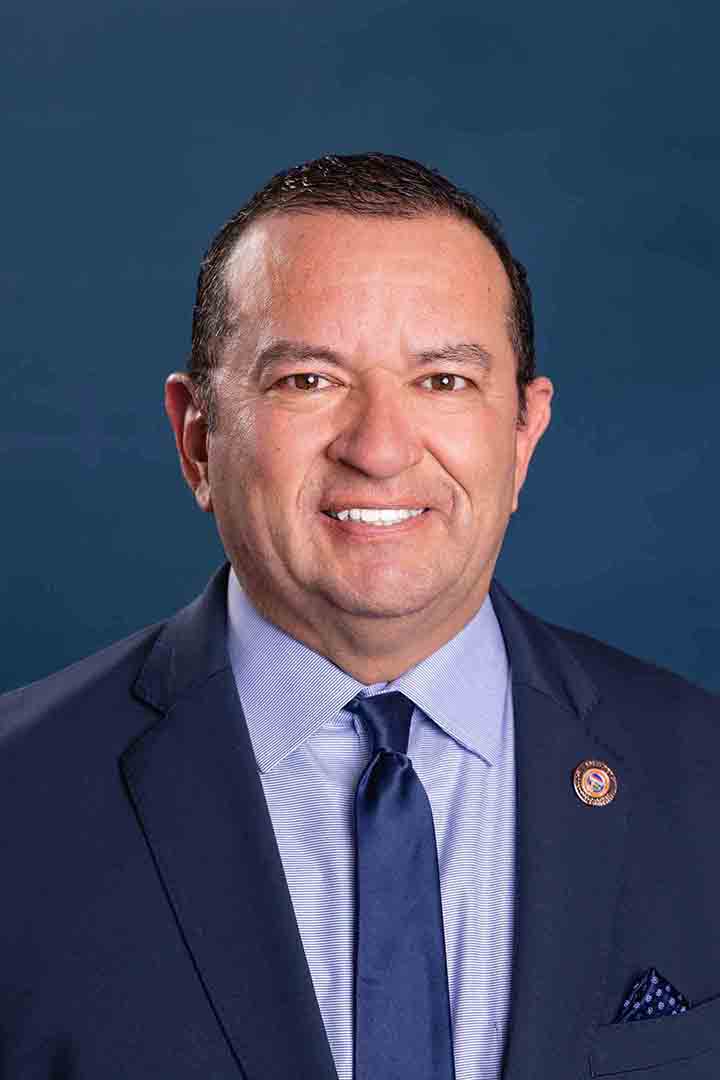
Rep. Chris Lopez
Sponsored bills
Maddy summaryHB 2113 amends Arizona law to strengthen the role of the Director of Residential Utility Consumers. It requires the Director to intervene in public utility rate cases when proposed increases would raise residential customers' bills by 100% or more. The bill also mandates that the Director record all consumer contacts about service quality to identify broader issues, and refers consumers to the Corporation Commission for further assistance. These changes directly affect Arizona residential utility customers by giving the Director greater authority to challenge significant rate hikes.
Maddy summaryThis is a commemorative resolution (HCR 2063), not a substantive bill. It honors Yvonne Glee Lime Fedderson, founder of Childhelp and a global humanitarian dedicated to child welfare, following her death on January 23, 2026. The resolution expresses the Arizona Legislature's sympathy to her family and admirers, and directs the Secretary of State to send copies of the resolution to her family and Childhelp. It has no policy provisions or impact on legislation.
Maddy summaryHB 2447 requires health insurers and healthcare organizations in Arizona to pay certified registered nurse anesthetists (CRNAs) the same reimbursement rate as physicians for similar services. It applies to hospital service corporations, health care services organizations, and disability insurers. The bill mandates equal payment rates for CRNAs authorized under Arizona law (Section 32-1634.04) compared to licensed physicians, while allowing insurers to adjust rates based on quality or performance measures. This directly affects CRNAs, healthcare providers, and insurers by eliminating rate disparities for these services.
Maddy summaryThis proposed constitutional amendment (HCR 2044) would prohibit Arizona state and local governments from granting preferential treatment or discrimination based on race, sex, color, ethnicity, or national origin in public employment, education, or contracting. It specifically bans requiring individuals to endorse race-based policies, spending public funds on offices promoting such policies, or implementing disciplinary actions based on race/ethnicity. The amendment directly affects public schools, universities, government agencies, and contractors operating under state authority. If approved by voters, it would become part of Arizona's Constitution, replacing existing antidiscrimination laws in these specific areas.
Maddy summaryHB 2601 directs Arizona's transportation department to request federal approval to divide the Interstate 11 project into segments between the Arizona-Nevada border and Casa Grande. If approved, the department must then conduct a required environmental and engineering study for the non-litigated segment. The bill aims to advance construction planning for most of the corridor while bypassing a federal lawsuit challenging the southern portion, which the legislature states has delayed progress statewide. This action affects the state's transportation planning process and the specific I-11 corridor segment not involved in the ongoing litigation.
Maddy summaryHB 2574 amends Arizona law to clarify the process for appealing traffic penalty judgments. It directly affects drivers who face traffic fines and wish to appeal court decisions. The bill requires courts to report stays (pauses) in enforcement to the state department, prevents the department from taking action during an appeal, and states that posting an appeal bond automatically pauses enforcement. It also allows superior court commissioners to handle these appeals, streamlining the process. The changes apply to all traffic penalty cases where a judgment is under appeal.
Maddy summaryThis bill is a resolution honoring Louis Gasper, a former public servant and academic who recently passed away. It expresses the legislature's sincere regret for his death and extends condolences to his family and friends. The document does not change any laws or policies but serves as a formal acknowledgment of his life and contributions.
Maddy summaryThis resolution expresses the Arizona Legislature's sincere regret and deepest condolences regarding the death of former Senate Majority Leader Alfredo Gutierrez. It formally acknowledges his life of public service, highlighting his advocacy for civil rights, education, and immigrant communities, as well as his significant legislative achievements such as establishing the Arizona Department of Transportation and expanding Medicaid. The bill does not enact new laws or policies but serves as a commemorative gesture to honor his legacy and offer support to his surviving family members.
Maddy summaryHCR 2047 is a symbolic Arizona legislative resolution recognizing the historical and biblical significance of "Judea and Samaria" as the ancestral homeland of the Jewish people. It formally rejects the term "West Bank" as a political construct and mandates that Arizona state government use "Judea and Samaria" in all official communications and documents regarding the territory. The resolution cites biblical references, historical claims, and legal arguments (including the San Remo Resolution and League of Nations Mandate) to support its position. As a concurrent resolution, it has no legal effect on international borders or U.S. policy but reflects Arizona's official stance on terminology. It does not alter any existing laws or policies related to the region.