

Maddy summaryHB 2704 redirects 82% of certain tax revenues to county stadium districts starting in 2026. Specifically, it directs the state treasurer to transfer these funds annually from tax revenues reported under Section 43-209, subsection D to the county stadium district fund established under Section 48-4231. This allocation applies to tax revenues collected under Title 42, Chapter 5 (transaction privilege tax) and runs from January 1, 2026, through December 31, 2056. The bill directly affects county stadium districts by creating a dedicated, long-term funding source for stadium-related projects and operations.
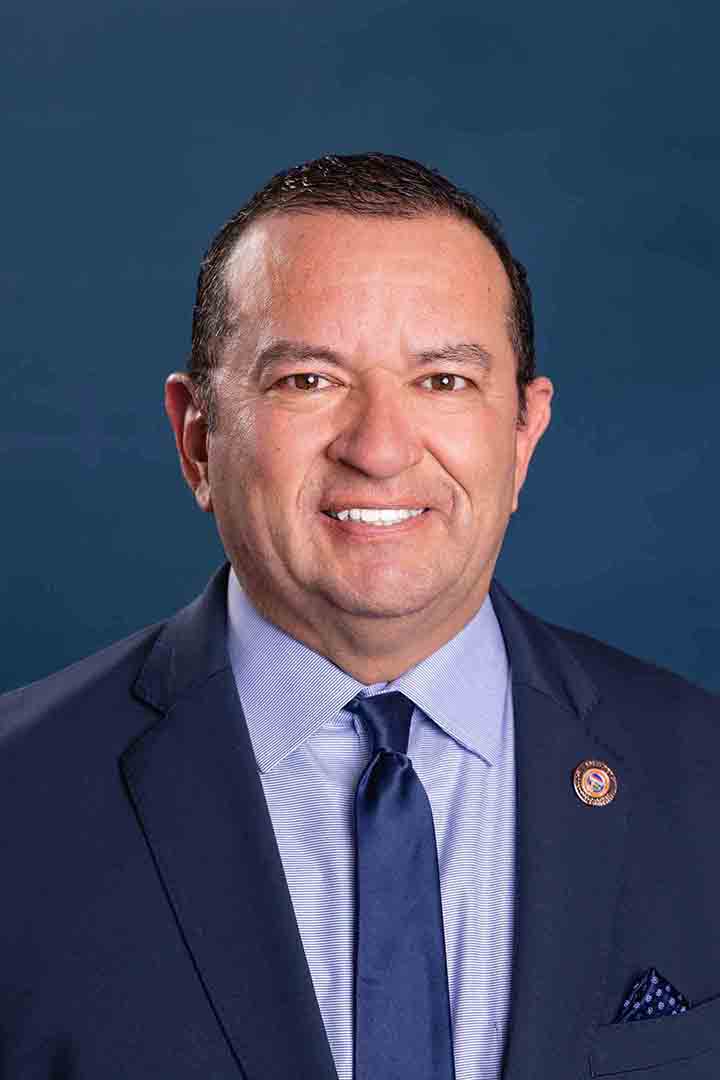
Rep. Chris Lopez
Sponsored bills
Maddy summaryHCR 2013 is a proposed law requiring Arizona counties to verify voters' addresses before mailing early ballots and restricting foreign funding in election administration. It mandates that large counties (500,000+ population) require voters to confirm their address each election cycle via mail, phone, or online portal before receiving an early ballot, while smaller counties must do so every four years. The measure also prohibits government election administration from using funds from foreign governments or non-U.S. individuals, requiring vendors to certify annually they receive no such funds and imposing misdemeanor penalties for violations. This referendum failed to pass in June 2025 and would require voter approval to become law.
Maddy summaryHB 2374 enhances sentencing for individuals convicted of stalking, harassment, or assault when acting as agents of foreign governments or terrorist organizations to coerce people into actions like leaving the U.S. or restricting protected activities (e.g., free speech, religious practice). It also criminalizes foreign agents conducting unauthorized law enforcement activities (like surveillance) within Arizona, classifying violations as a class 2 felony. The bill mandates an annual training program for Arizona law enforcement on identifying transnational repression tactics, including digital surveillance and community-targeted threats. These provisions directly affect foreign government/terrorist agents operating in Arizona, local law enforcement, and residents potentially targeted by such repression. The law, signed by the governor on June 25, 2025, focuses on strengthening legal responses to cross-border intimidation campaigns.
Maddy summaryHCR 2021 would require Arizona cities and towns to exempt most food for home or on-premises consumption from municipal sales taxes, prohibiting differential tax rates on specific food items. It sets a deadline of June 30, 2027, for cities to comply, limits tax increases to 2% without voter approval, and bans new food taxes or rate hikes in the 24 months before that date. This affects local governments (cities/towns), food retailers, restaurants, and residents purchasing food, as it standardizes food tax treatment and restricts local tax authority over food sales. The bill also exempts SNAP/food stamp purchases and food packaging from taxation. It requires voter approval for any new food tax or rate increase beyond 2% and applies retroactively to December 31, 2024.
Maddy summaryHR 2008 is a death resolution passed by the Arizona House of Representatives to express condolences for the passing of Alberto Gutier, a former Director of the Arizona Governor's Office of Highway Safety and longtime Republican Party leader. The resolution formally acknowledges his 20+ years of public service, including his work on highway safety initiatives and community safety programs, and extends sympathy to his family. As a symbolic gesture with no legal effect, it does not create new policies or affect any individuals or entities beyond the expression of remembrance.
Maddy summaryHB 2753 modifies groundwater replenishment rules for landowners in Pinal Active Management Area (AMA) served by municipal water providers. It allows municipal providers with an "assured water supply" designation to choose whether to retain or assume their member landowners' groundwater replenishment obligations. If they choose to assume the obligations, they must gradually take on 10% more each year over a decade, starting at 10% in year one, until all obligations are fully transferred. Once fully assumed (within 10 years), the water provider stops reporting to the district for those lands, and landowners no longer owe replenishment requirements.
Maddy summaryHB 2700 requires Arizona high school students to meet specific social studies standards for graduation, directly affecting all public high school students in the state. It mandates that geography instruction include "the gulf of America" and adds a civics test requirement: students must correctly answer at least 60 of 100 questions (for 2025 graduates) or 70 of 100 questions (for 2026+ graduates) on a test identical to the U.S. citizenship civics exam. Students in grades 7-8 may take the test early to satisfy the requirement without retaking it later in high school. The bill specifies that schools must document only "pass" or "fail" on transcripts for this test, with no other policy changes detailed in the provided text.
Maddy summaryHB 2679 establishes a new framework for Arizona public power entities (like municipal utilities) to finance infrastructure upgrades by issuing "Transition Bonds." These bonds are secured by future customer payments called "Financing Charges," which become nonbypassable fees added to all customers' utility bills until the costs are fully recovered. The bill creates specific definitions for terms like "Financing Charges," "Qualified Special Purpose Entity," and "Transition Bonds," ensuring these payments cannot be avoided regardless of the customer's service provider or asset ownership. This mechanism allows public power entities to shift financing costs to customers over time rather than relying solely on traditional rate increases.
Maddy summaryHB 2868 prohibits Arizona cities and counties from establishing diversity, equity, and inclusion (DEI) offices, requiring DEI statements or training, or giving preference based on race, sex, color, or ethnicity in employment or programs. The bill directly affects local government entities by banning specific DEI-related policies and mandating disciplinary action for violations. Key provisions define "diversity, equity and inclusion" broadly to include concepts like systemic oppression and gender theory, while allowing limited compliance training approved by legal counsel. This bill was passed by the Arizona legislature in May 2025 but was vetoed by the governor on May 13, 2025, preventing it from becoming law.
Maddy summaryHB 2895 requires cities, counties, school districts, and state agencies in Arizona to publicly post task order contracts (for ongoing services or supplies) on their websites. It mandates that contracts must include the total dollar amount, contractor name, service description, and contract length - these items cannot be redacted. Contractors may redact personal or proprietary information beyond these four required details. The bill was passed by the legislature in May 2025 but was vetoed by the Governor on May 13, 2025, preventing it from becoming law.