Issue · Healthcare

Healthcare

Every healthcare bill, vote, and legislator stance in Arizona, automatically classified by Maddy, our AI policy reader.

Total bills
298
57th Legislature - Second Regular Session
Top supporter
Kevin Payne
81% support rate
Top opponent
Michael Way
24% support rate
Ranked legislators
10
5 support · 5 oppose
Key legislators

Who's moving healthcare in Arizona

Legislators moving healthcare in Arizona
Legislator Party Stance Support rate Votes
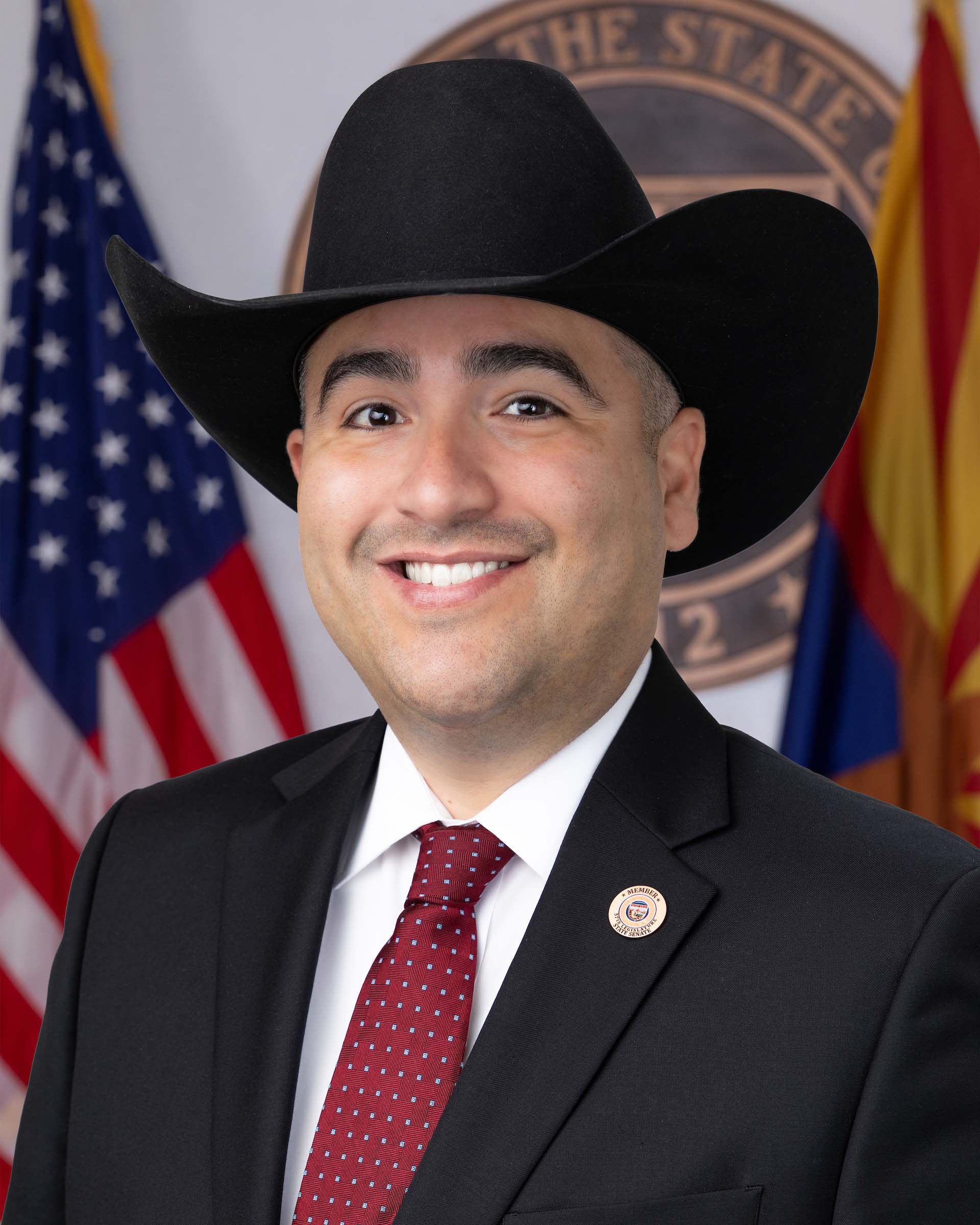
Kevin Payne
Kevin Payne Senate · District 27
R
Strong +
81% 164
Hildy Angius
Hildy Angius Senate · District 30
R
Support
79% 178
T.J. Shope
T.J. Shope Senate · District 16
R
Support
79% 179
Vince Leach
Vince Leach Senate · District 17
R
Support
79% 179
Tim Dunn
Tim Dunn Senate · District 25
R
Support
79% 179
Michael Way
Michael Way House · District 15
R
Oppose
24% 223
Justin Olson
Justin Olson House · District 10
R
Oppose
27% 241
Khyl Powell
Khyl Powell House · District 14
R
Oppose
27% 241
Rachel Keshel
Rachel Keshel House · District 17
R
Oppose
28% 235
Alex Kolodin
Alex Kolodin House · District 3
R
Oppose
30% 238
Showing 121–130 of 298 bills

All healthcare bills

introduced · Arizona · Senate Jan 21, 2026

SB 1227: prior authorization; gold card exemption

SB 1227 creates a "gold card exemption" for healthcare providers in Arizona who consistently meet prior authorization requirements. Specifically, providers submitting at least five prior authorization requests for a specific service in six months with a 90% approval rate qualify for exemption from future approvals for that service. The exemption lasts six months and requires renewal, with insurers allowed to review and rescind it after verifying eligibility through random claim samples. Insurers must provide 30 days' written notice and appeal options if rescinding, directly affecting healthcare providers and insurers managing patient care approvals starting January 1, 2027.
introduced · Arizona · House Jan 21, 2026

HB 2530: abortion; providers; waiting period; ultrasound

HB 2530 amends Arizona's nursing board statute to clarify that the board cannot regulate the scope of practice for abortion services (as defined in ARS §36-2151). The bill primarily updates the board's authority to adopt rules for nursing education, licensing, disciplinary actions, and administrative functions. It does not include any provisions requiring waiting periods or ultrasounds for abortion procedures. This bill focuses on defining the nursing board's regulatory boundaries, not on changing abortion access policies.
passed · Arizona · House Mar 26, 2026

HB 2364: abortion-inducing drugs; violations; classifications

This Arizona bill (HB 2364) bans mailing, shipping, or delivering abortion-inducing drugs via courier, delivery, or mail services. It makes selling such drugs through these methods a class 5 felony (or class 4 for healthcare workers acting in their job), and receiving them this way a class 1 misdemeanor. The law specifically excludes drugs prescribed for non-abortion medical purposes. It defines "abortion-inducing drug" as any substance used for medication abortion.
Sub-Topics Women's Health
passed · Arizona · Senate Mar 24, 2026

SB 1398: AHCCCS; redeterminations; eligibility verification; report

SB 1398 requires Arizona's AHCCCS (Medicaid) program to verify the eligibility of adults aged 21+ at least every six months starting January 1, 2027, using available data. It directly affects AHCCCS enrollees who must undergo these regular checks to maintain coverage. The bill mandates an annual report by December 1 each year to legislative committees, detailing four specific metrics: new applications received, completed eligibility verifications, applications requiring asset verification, and completed asset verifications from the prior contract year. These provisions aim to standardize eligibility checks and increase transparency in program administration.
Sub-Topics Medicaid
signed · Arizona · Senate Jun 19, 2026

SB 1400: public safety employees; counseling; wellness

This Arizona bill (SB 1400) allows law enforcement and public safety agencies (including police departments, sheriff's offices, and the state public safety department) to create wellness programs offering mental health counseling, crisis support, and related resources to their employees. Agencies must establish written policies for these programs, and nearly all communications within them remain confidential - protected like attorney-client privilege - except when a participant shares a suicide plan, threat of violence, child abuse, or criminal admission. It also establishes similar confidentiality rules for peer support programs where trained coworkers provide emotional assistance after traumatic incidents. The bill aims to encourage mental health support for public safety workers while maintaining legal obligations for reporting specific threats or harms.
Sub-Topics Mental Health
introduced · Arizona · House Jan 21, 2026

HB 2585: AHCCCS; reimbursement; noncontracting providers

HB 2585 requires Arizona's Medicaid managed care plans (contractors) to reimburse noncontracting healthcare providers for laboratory services when a member is referred by a contracted provider. It also prohibits contractors from requiring prior authorization for diagnostic services and bans retaliatory actions against contracted providers who refer members to noncontracted providers. The bill directly affects Medicaid enrollees, noncontracting healthcare providers (like independent labs), and managed care contractors. These changes aim to improve access to lab and diagnostic services while protecting provider referral choices.
Sub-Topics Medicaid
passed · Arizona · House Mar 31, 2026

HB 2940: AHCCCS; eligibility; verification; SNAP; contractors

HB 2940 updates Arizona's healthcare and food assistance programs by requiring strict eligibility verification for AHCCCS (Medicaid) and SNAP (food stamps). It mandates that the state verify income, residency, immigration status, and other factors using multiple databases (like tax records and correctional systems) before approving benefits, replacing self-verified applications. The bill also creates a unified system to cross-check eligibility across programs in real time and requires detailed audit logs for transparency. These changes directly affect applicants seeking healthcare or food assistance, as well as state agencies managing these programs.
in committee · Arizona · House Feb 2, 2026

HB 2727: appropriations; health innovation trust fund

HB 2727 appropriates $1.5 million from Arizona's general fund for the Arizona Health Innovation Trust Fund to fund a pilot program focused on health innovations for people living with chronic conditions. The program will be administered by an eligible entity, which must submit a report on outcomes, and directly affects individuals with conditions like diabetes, autoimmune diseases, cardiovascular issues, or neurodegenerative disorders. The bill specifies that funds are exempt from standard appropriation lapsing rules and aims to grow the trust fund to a $200 million endowment over time. This is a funding mechanism, not a policy change, designed to support pilot initiatives for chronic care.
vetoed · Arizona · House Feb 20, 2026

HB 2796: AHCCCS; enrollment verification; presumptive eligibility

HB 2796 strengthens eligibility verification for Arizona’s Medicaid program (AHCCCS) by requiring monthly and quarterly data checks with state agencies. It mandates verification of income, residency, employment, and other changes using state databases (like tax records and death certificates) instead of accepting self-reported information. The bill also restricts temporary "presumptive eligibility" coverage to children and pregnant women only, requiring federal waiver approval, and imposes training requirements for hospitals that fail to meet verification standards. These changes directly affect AHCCCS members and participating hospitals by tightening enrollment rules and reducing reliance on self-attestation.
Sub-Topics Medicaid
passed · Arizona · House Jun 10, 2026

HB 2251: midwives; medication administration; advisory committee

This bill expands the scope of practice for licensed midwives in Arizona by allowing them to administer specific medications related to pregnancy, labor, and postpartum care, provided they complete a required pharmacology course (8+ continuing education units). It details permitted medications (such as antibiotics for infections, antivirals for herpes, antifungals, and medications for postpartum hemorrhage) with strict conditions, including documentation, storage rules, and prohibitions on using certain drugs to induce labor. The bill also establishes an Arizona Midwifery Advisory Committee, composed of midwives, physicians, and consumers, to assist the health department with licensing and disciplinary matters. These changes directly affect licensed midwives and their patients, aiming to improve access to certain medical treatments during childbirth while maintaining safety standards.
Showing 121 to 130 of 298 bills
Previous 1 12 13 14 30 Next