

Maddy summaryWyoming's SF 172 requires state investment managers and trustees to consider **only financial factors** when managing state funds, such as retirement systems and government accounts. It prohibits considering social, political, or environmental goals (like climate action, diversity initiatives, or gun industry divestment) as part of investment decisions. The bill mandates that investment entities and their fiduciaries provide written commitments to follow this rule, restricts proxy voting to outside advisors who comply, and requires annual public reporting of voting records. This directly affects the Wyoming Retirement System, state treasurer, and all investment managers handling state funds.
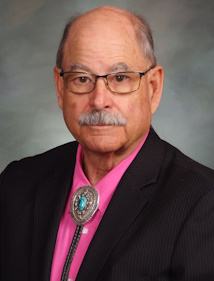
Sen. Ogden Driskill
Sponsored bills
Maddy summaryWyoming's HB 180 requires the state veterinarian to notify livestock owners within three days when an animal tests positive for brucellosis. It mandates the Wyoming Livestock Board to create a communication protocol sharing test results with affected livestock producers, veterinarians, and brand inspectors in the same county. The bill also specifies that adjacent landowners, local veterinarians, and owners of potentially exposed animals may receive limited information to manage disease outbreaks. These changes amend existing statutes to standardize reporting and notification procedures for brucellosis, directly affecting livestock owners and veterinarians in Wyoming.
Maddy summaryThis bill increases the dollar threshold requiring legislative approval for projects funded by Wyoming's wildlife and natural resource trust. It raises the "large project" definition from $200,000 to $400,000 for total grants sought or awarded under the trust. Projects under $400,000 no longer need specific legislative authorization, streamlining approvals for smaller initiatives. The trust board must still notify the legislature within 30 days for any additional grants exceeding $200,000 on a single project. The change applies to all projects approved on or after July 1, 2023.
Maddy summaryWyoming's SF 102, the Food Freedom Act, allows home producers to directly sell homemade eggs, dairy, and non-hazardous foods (like baked goods) without state inspection, provided they follow specific rules. It prohibits Wyoming from enforcing food inspection standards stricter than those set by the U.S. Department of Agriculture. Sellers must clearly label products as "not inspected" and avoid displaying them alongside commercially inspected foods in stores. The law applies to sales at farmers markets, farms, homes, or agreed-upon locations, with producers or designated agents (named in writing) facilitating transactions. It explicitly aligns state rules with federal requirements, preventing stricter state oversight for these home-based food sales.
Maddy summaryWyoming's SF 143, the Wyoming Freedom Scholarship Act, creates education savings accounts (ESAs) providing $6,000 annually per eligible student (adjusted for inflation) to cover qualifying education expenses. It directly affects Wyoming residents who are K-12 students not yet graduated, allowing parents or guardians to use ESA funds for private school tuition, online learning, tutoring, textbooks, technology, and other approved educational costs. The state treasurer administers the program, disbursements occur monthly, and funds come from a dedicated state account - not local taxes - with excess funds transferred to the school foundation program if balances exceed $30 million. Qualified schools (non-governmental, non-discriminatory) are explicitly not considered state or federal agents under this program.
Maddy summaryThis Wyoming joint resolution requests Congress to change federal policy by allowing the slaughter and processing of wild horses and burros for meat sale, both domestically and internationally. It specifically asks for legislation to remove the current funding ban that prevents USDA meat inspection for equine slaughter facilities, which has been in place since 2007. The resolution argues that current management is unsustainable, citing the Bureau of Land Management's $77.7 million annual cost for holding excess animals and the inability to control rapidly growing populations. The bill seeks to enable a new management tool - facilitating meat sales - to address overpopulation and reduce costs, as federal agencies struggle to maintain balanced wild horse and burro populations on public lands.
Maddy summaryWyoming's SF 134 requires sellers of vacant or subdivided land (under 140 acres) to provide written disclosure to prospective buyers about farm and ranch operations within one mile of the property. The disclosure notice explains that normal agricultural activities - like noise, odors, machinery use, and pesticide application - may occur at any time and are protected under Wyoming's Right to Farm law (11-44-101-104). It clarifies buyers cannot seek legal remedies for these standard practices if conducted properly. The bill directly affects rural homebuyers and sellers in areas near active farms, with the requirement taking effect July 1, 2023.
Maddy summaryThis bill reduces Wyoming's maximum unemployment benefit period from 26 weeks to 13 weeks for claims filed on or after July 1, 2023. It directly affects workers who file for unemployment benefits after that date, limiting their total benefit duration. Key provisions amend sections of the unemployment law to change the maximum payment calculation (from 26 to 13 weeks) and update the commission name to "unemployment re-employment insurance commission." The law takes effect July 1, 2023, with no retroactive application.
Maddy summaryHB 104 allows Wyoming hunters to use artificial light technologies - including thermal or infrared imaging - for night hunting of predatory animals (like coyotes or wolves) on both private and public land. It directly affects landowners (with written permission), residents managing property, and hunters on public land. The bill requires the Game and Fish Commission to create specific rules governing the permitted technology and hunting methods. The changes take effect July 1, 2023, with rulemaking provisions active immediately upon enactment.
Maddy summaryThis bill (HB 134) changes Wyoming's rules for how alcohol retailers and distillers can purchase alcohol. It allows retail liquor license holders to buy up to nine liters per week of alcohol directly from other retail licensees or from distillers (federally licensed manufacturers), removing previous restrictions. The change directly affects licensed liquor stores and distillers by expanding their options for sourcing inventory. The bill takes effect July 1, 2023, and does not alter tax collection or licensing fees.