

Maddy summaryWyoming's HB 151 prohibits financial institutions from discriminating against firearm retailers by using or requiring special payment codes (like those for firearm sales) to distinguish them from other businesses. It bans financial institutions from keeping records of firearm purchases or owners, or disclosing payment information tied to these codes unless required by law. The bill also prevents banks from refusing payment transactions solely based on a firearm merchant code. Violations could lead to civil penalties up to $10,000 per incident, enforced through the Attorney General's office. The law takes effect July 1, 2024.
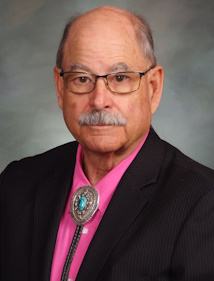
Sen. Ogden Driskill
Sponsored bills
Maddy summaryWyoming's SJ 4 is a joint resolution requesting Congress to call a constitutional convention under Article V of the U.S. Constitution to propose amendments focused on fiscal restraint, limiting federal power, and setting term limits for federal officials. The resolution specifies that the convention must not consider changes to the Bill of Rights and must operate with each state having one vote. The bill failed to pass during introduction in the Wyoming Senate on February 15, 2024, with 17 votes in favor and 14 against. This procedural resolution does not directly change laws but seeks to initiate a state-driven process for potential constitutional amendments.
Maddy summaryHB 51 amends Wyoming's public indecency law to specifically prohibit exposing intimate parts in public places with the intent to intimidate or harass others, in addition to the existing prohibition for sexual arousal. This directly affects individuals who expose intimate parts in view of others intending to cause fear or distress. The key change adds "intimidate or harass" as a separate prohibited intent under the law, expanding the circumstances where such exposure becomes a criminal offense. The bill would take effect July 1, 2024, if enacted. The bill failed committee passage in February 2024.
Maddy summaryWyoming's SF 120 restores civil rights for certain individuals convicted of nonviolent offenses. It automatically restores voting rights for nonviolent felony offenders after they complete their sentence or serve five years (whichever is shorter), and requires a written application to the Department of Corrections for domestic violence misdemeanor offenders to regain firearm rights. The bill also specifies that other rights (like firearm possession) are restored only after voting rights are reinstated. This applies to people convicted of nonviolent felonies or domestic violence misdemeanors under Wyoming law, following specific procedural steps outlined in the bill.
Maddy summaryWyoming's SF 174 creates a new Wyoming Charter School Authorizing Board to oversee public charter schools statewide. The board, consisting of five members (including the state superintendent and appointees from the governor, Senate, and House), will approve, renew, and oversee charter schools under specific quality standards. The bill modifies how charter schools are authorized (replacing school district oversight with the state board), adjusts funding rules, and requires transparency in decision-making. This directly affects public charter schools, their governing boards, and the state education department as the local education agency.
Maddy summarySF 97 repeals the Wyoming Education Trust Fund and related provisions. It requires the state treasurer to transfer all remaining unencumbered and unobligated funds from the trust fund and a separate account to the common school account within the permanent land fund by July 1, 2023. Any future funds that would have reverted to the trust fund will instead revert to the common school account. This bill changes the administrative handling of these funds but does not alter how education funding is allocated or spent.
Maddy summaryHB 103 modifies Wyoming election rules for voters changing political party affiliation. It clarifies that voters can submit a written request to change or cancel their party affiliation at any time except during the prohibited period before primary elections. The bill specifies deadlines for submitting applications (filed with county clerks before primary nomination deadlines for primaries, or 14 days before general elections), and states that requesting a partisan primary ballot automatically declares current party affiliation. This affects all Wyoming voters who wish to change their party registration for upcoming elections.
Maddy summarySF 116 (Wyoming) protects firearm manufacturers, sellers, and trade associations from most civil lawsuits related to their products. The bill grants immunity from liability in "qualified civil liability actions" (claims about criminal misuse of firearms), unless specific exceptions apply. Key exceptions include cases involving criminal convictions for illegal transfers, negligent sales, knowing violations of firearm laws, product defects causing injury when used as intended, or gross negligence. It directly affects manufacturers, sellers, and trade associations by limiting their civil liability for firearm-related incidents. The law takes effect July 1, 2023.
Maddy summaryWyoming's SJ 11 is a joint resolution requesting Congress to call a state-led convention to propose constitutional amendments. It specifically seeks changes to restrain federal spending, limit federal government power, and impose term limits on federal officials and Congress. The resolution includes specific rules for the convention, such as prohibiting consideration of changes to the Bill of Rights and requiring one state, one vote. This is a procedural request (not a law) from Wyoming's legislature to Congress, aiming to build state support for a constitutional convention under Article V.
Maddy summaryWyoming's SF 159 requires companies seeking state contracts to certify they do not engage in "economic boycotts" as defined by the bill. This directly affects businesses bidding on state government contracts (e.g., for goods or services) by mandating written verification that they avoid specific actions, such as refusing to work with fossil fuel, agriculture, or firearms companies, or opposing certain environmental standards. Key provisions include defining "economic boycott" broadly to cover actions targeting industries or policies related to energy, firearms, environmental goals, or abortion access, and requiring contractors to certify compliance annually. The law would apply to all state agencies, universities, and local governments entering contracts, with limited exceptions. If enacted, it would alter how Wyoming selects vendors for state-funded projects.