

Maddy summaryThis bill removes federal oversight from Wyoming's State Guard, granting the governor full authority to organize and maintain it without federal approval. It specifies that state funds - not federal resources - will cover guard members' pay and equipment, aligning with existing state budget processes. The changes directly affect Wyoming State Guard members and the governor's operational control over the force. The bill takes effect July 1, 2024.
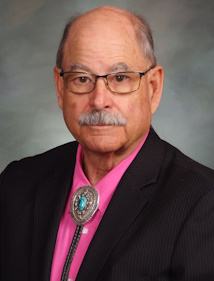
Sen. Ogden Driskill
Sponsored bills
Maddy summaryThis bill (SF 85) removes the sales tax on electricity sales to public utilities and providers for domestic, industrial, or commercial use in Wyoming. It directly affects electricity providers and consumers by eliminating this tax, but only if Wyoming imposes a 3.5% tax on the annual gross energy earnings from electricity produced in the state. The key provision requires an equivalent alternative tax on electricity production to take effect alongside the sales tax repeal. The bill would take effect on July 1, 2024, if passed.
Maddy summaryHB 170 requires Wyoming state agencies to prepare detailed statements estimating the economic impact of new rules before implementation. These statements must analyze whether a rule could cause over $100,000 in aggregate costs within five years for economic growth, business competitiveness, or regulatory expenses, and specifically assess impacts on small businesses, counties, cities, and towns. Agencies must also consider lower-cost regulatory alternatives submitted by the public within 45 days of rule notice and provide written reasons if rejecting them. If a rule exceeds the $100,000 cost threshold, it cannot be enforced until approved by the legislature in the next session.
Maddy summaryHB 180 amends Wyoming's Controlled Substances Act to clarify and streamline property forfeiture procedures related to drug violations. It specifies that property subject to forfeiture includes controlled substances, equipment used in drug manufacturing, vehicles transporting drugs, buildings used for drug activity, and money traceable to drug offenses. The bill requires courts to issue notices to potential owners or lienholders before final forfeiture, giving them 30-60 days to contest the seizure, and mandates that property used without the owner's knowledge cannot be forfeited. This directly affects property owners involved in drug-related cases by altering the legal process for government seizure of assets.
Maddy summaryThis Wyoming joint resolution (HJ 5) expresses the state legislature's support for Israel following the October 7, 2023, Hamas attacks. It condemns the attacks, mourns victims, and calls for Hamas to cease hostilities and release hostages, while urging the U.S. to lead efforts to cut Hamas funding and reaffirm support for Israel's security. The resolution includes six specific calls to action for the U.S. government and directs Wyoming's Secretary of State to send copies to U.S. officials and Wyoming's congressional delegation. As a symbolic gesture, it does not create new laws or policies and has not yet been considered for introduction.
Maddy summaryHB 189 requires electric utilities (excluding cooperatives) to purchase electricity from natural gas power plants that would otherwise close, provided the plant owner offers to sell power. It establishes "avoided cost" pricing - what the utility would pay to generate or buy equivalent power - as the basis for these sales, and allows the utility commission to set this price in advance. Large commercial customers (over 1 megawatt demand) in the utility’s service area may receive power from these plants, but must also continue buying partial service from the utility to prevent rate increases for other customers. The bill aims to extend the operational life of retiring natural gas facilities by creating a market for their electricity, directly affecting utilities, plant owners, and eligible commercial customers.
Maddy summaryWyoming's HB 196 requires the federal government to exchange equivalent federal-owned lands whenever it acquires additional property in the state after July 1, 2024 (excluding specific military, infrastructure, or reclamation projects). The bill mandates that federal land acquisitions must be paired with transfers of federal lands to Wyoming to prevent a net increase in federal ownership. If an exchange isn't possible, the federal government must provide 90 days' notice to Wyoming's land board before finalizing the acquisition. Additionally, any land transferred to Wyoming under this policy must be disposed of through a public process prioritizing adjacent landowners and local uses if it would cause a net increase in state-owned lands beyond July 1, 2024.
Maddy summaryHB 172 designates Wyoming State Highway 24 in Crook County as the "Purple Heart Memorial Trail." The bill requires the Wyoming Department of Transportation to install appropriate signage identifying this highway segment, in compliance with federal and state laws. This ceremonial bill has no policy changes or financial impact - it simply establishes a named route for commemorative purposes and takes effect immediately upon enactment.
Maddy summaryHB 200 imposes a new excise tax on electricity generation within Wyoming, collected by electric utilities from customers based on the "purchaser sales price" (the full price paid for electricity, including fees and taxes). It specifically repeals existing taxes on wind and nuclear energy generation while creating new tax rules for all other electricity sources. The bill requires utilities to collect and remit the tax, with detailed provisions for tax calculation points (e.g., at transmission interconnection or customer meters) and strict confidentiality protections for tax data. This directly affects Wyoming's electric public utilities and their customers who pay for electricity.
Maddy summaryWyoming's HJ 6 is a joint resolution requesting Congress to call a convention under Article V of the U.S. Constitution to propose constitutional amendments. The convention would be limited to addressing federal fiscal issues (like debt and spending), restricting federal power over states, and setting term limits for federal officials and Congress. The resolution includes specific safeguards, such as requiring two-thirds of states to agree on the same purpose before Congress acts, ensuring states vote one state, one vote, and explicitly excluding any changes to the Bill of Rights. This resolution serves as Wyoming's continuing application until two-thirds of states support identical proposals.