

Maddy summaryHB 127 requires Wyoming health care facilities to allow in-person visits from clergy members (like priests, ministers, or religious counselors) during public health emergencies, at the request of patients or their authorized family members. It prohibits facilities from blocking these visits unless clergy refuse to follow safety rules set by health authorities (such as CDC or state health officer guidelines). The law applies to all patients/residents in facilities defined under state health codes, including hospitals and nursing homes. It takes effect July 1, 2023.
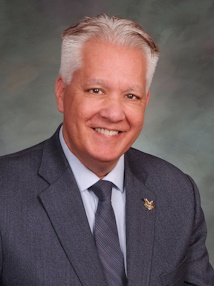
Rep. Chris Knapp
Sponsored bills
Maddy summaryHB 175 modifies Wyoming's student attendance rules to explicitly include participation in the state fair as an excused absence. It requires school districts to define absences for students exhibiting at or participating in events connected to Wyoming's annual state fair (under W.S. 11-10-101) as excused, similar to other school activities. The bill does not change verification requirements - schools may still request proof of the absence. This directly affects public school students in Wyoming who compete or exhibit at the state fair, ensuring their absence is treated as excused under district attendance policies. The law took effect July 1, 2023.
Maddy summaryHB 57 updates Wyoming's legal definitions to align with federal standards for "armed forces" and "uniformed services." It explicitly includes the Space Force, Coast Guard, National Guard components, and federal health service corps in these definitions across multiple state laws. This change ensures state employees who are members of uniformed services (like National Guard members or military reservists) continue to qualify for existing benefits and protections under state programs, without altering those benefits themselves. The bill focuses solely on standardizing terminology to match federal law.
Maddy summaryThis bill appropriates $1.2 million from Wyoming's general fund to fund lawsuits defending the state's coal export operations and coal-fired power plants. The funds, available from 2021 through June 2030, specifically cover legal costs to challenge federal or state laws that impede coal exports or cause early closures of Wyoming coal-fired facilities. The governor's office must deposit these funds into a dedicated account and report annually on litigation expenses and case status to state committees. It directly affects Wyoming's coal industry by providing financial resources to legally defend coal export and power generation operations against regulatory actions.
Maddy summaryHB 70 modifies Wyoming's legal definition of a "home-based educational program" under W.S. 21-4-101(a)(v). It specifies that such a program must be provided by a parent, legal guardian, or their designated person to a single child, and explicitly excludes programs serving more than one family unit. The bill takes effect July 1, 2023, and does not create new requirements or funding but clarifies what qualifies as a home-based program for regulatory purposes. This directly affects parents or guardians providing home education to their own child, excluding multi-family educational arrangements from this definition.
Maddy summarySF 124, a proposed Wyoming bill, restricts foreign governments and businesses from purchasing or owning agricultural land in the state. It prohibits new foreign ownership after July 1, 2023, requires existing foreign-owned land to be registered with the secretary of state, and mandates selling or converting the land within two years if ownership becomes foreign. Violations could trigger daily civil penalties up to $5,000. The bill directly affects foreign-owned companies, governments, or their agents seeking to hold Wyoming farmland, with exceptions for land owned as of July 1, 2023.
Maddy summaryWyoming's HB 210 creates a "restricted financial institution list" for banks that discriminate against energy companies without a valid business reason. It requires the state treasurer to maintain this list after board approval, providing 45 days' notice to institutions before listing them and allowing removal if they stop discriminatory practices. The state must then refuse to enter into banking contracts with institutions on the list, affecting state and local government financial relationships. This bill directly impacts financial institutions that target fossil fuel companies, with definitions clarifying "discrimination" includes refusing service based on energy sector activities. The policy change focuses on state contracting practices, not altering banking regulations for institutions.
Maddy summaryWyoming's HB 253, the "Credit Card Defense Act," requires merchants selling firearms or ammunition in the state to use a "sporting goods" merchant category code for all transactions, instead of codes specifying firearms. Financial institutions, credit cards, and payment processors must not collect or generate personally identifying information beyond this category code for such purchases. The law directly affects firearm retailers, banks, and payment processors handling these transactions in Wyoming. It mandates that all relevant financial institutions adopt this coding standard by July 1, 2023, to limit transaction data collection related to firearm purchases.
Maddy summaryHB 282 created Wyoming's Critical Infrastructure Resiliency Initiative and a new board to strengthen the state's critical systems against prolonged disruptions like extended power outages. The bill targeted infrastructure including water, transportation, electrical grids, oil/gas facilities, and telecommunications, requiring systems to remain functional during "grid-down events" (months-long outages). The appointed board - comprising Homeland Security, utilities, oil/gas, telecom, and defense representatives - would coordinate with federal programs (like the Infrastructure Investment and Jobs Act) to adopt defense technologies, ensure water/wastewater systems operate without power, and leverage federal funding for resilience upgrades. The bill died in committee in February 2023 and never became law.
Maddy summaryHB 283 amends Wyoming's obscenity law to create a specific exception for educational and library activities. It allows schools, colleges, universities, museums, and public libraries to produce, possess, or share obscene material as part of their educational work, provided the activity follows policies approved by the organization's elected governing body. The bill requires that these policies align with community standards and are formally adopted by the governing body. This exception applies to the offense of "promoting obscenity" but does not change the definition of obscenity itself. The bill was introduced in January 2023 but died in committee in February 2023 without becoming law.