

Maddy summaryHB 194, the Wyoming Freedom Scholarship Act, creates education savings accounts (ESAs) providing eligible Wyoming students with $6,000 annually (adjusted for inflation) to cover approved educational expenses. It directly affects K-12 students who are Wyoming residents and not yet graduated, allowing parents to use funds for tuition at qualified schools, online programs, tutoring, textbooks, technology, and other approved educational services. The state treasurer administers the program, prohibits using local tax revenues for funding, and requires parents to sign agreements outlining permitted uses. The bill died in committee in February 2023 and was never enacted.
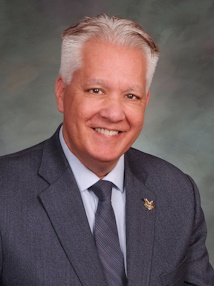
Rep. Chris Knapp
Sponsored bills
Maddy summaryWyoming's SF 171, the "Second Amendment Financial Privacy Act," prohibits financial institutions from using or disclosing payment card transaction data to identify lawful firearm or ammunition purchases. It bans assigning "firearms codes" (like special merchant category codes) that would allow banks or payment networks to track gun-related transactions, preventing such data from being shared with government entities. The law defines "protected financial information" as payment records linked to firearm codes and allows civil lawsuits if the ban is violated. It directly affects banks, payment processors, and gun retailers by restricting how they handle transaction data related to firearm sales within Wyoming.
Maddy summaryHB 219 (Voter identification-ballot requests) requires voters to provide acceptable identification when requesting absentee ballots in Wyoming. It mandates that voters show ID in person or submit a copy of ID via secure electronic methods (email, mail, fax) when applying by mail or phone. County clerks must record the ID type and number in absentee ballot records. This bill, effective July 1, 2023, replaces prior requirements for absentee ballot requests and directly affects voters seeking absentee ballots.
Maddy summaryHB 105 repeals restrictions on carrying concealed weapons in certain public spaces, allowing permit holders to carry in government meetings, legislative sessions, and most public schools (excluding specific areas under existing school district rules). It clarifies that only the Wyoming state legislature can regulate firearms, precluding local governments from enacting their own gun laws. The bill also establishes penalties for barring entry to someone lawfully carrying a concealed weapon in permitted locations. This changes prior "gun-free zone" policies by expanding where concealed carry is allowed while maintaining state-level control over firearm regulation.
Maddy summaryHB 189 prevents homeowners associations (HOAs) in Wyoming from banning political campaign signs on members' property. It directly affects HOA members and associations by requiring them to allow such signs indoors or outdoors, with specific exceptions. Key provisions allow HOAs to set reasonable rules for sign size (max 4x6 feet), placement (ground-mounted only), timing (90 days before primaries to 30 days after general elections), and to prohibit signs attached to vehicles or that threaten safety. The law takes effect July 1, 2023, and violations could result in misdemeanor penalties.
Maddy summaryThis Wyoming bill grants the state a "right of first refusal" for property owners selling to the federal government. Property owners must notify the state (via the Director of State Lands) 45 days before selling to the U.S. or federal agencies, including the sale price. The state has 30 days to decide whether to purchase the property at the same price offered by the federal government, using existing funds. If purchased, the land becomes state property managed by the Board of Land Commissioners.
Maddy summaryWyoming's HB 272 amends state law to expand the definitions of prostitution and soliciting prostitution to explicitly include "sexual contact" and "sexual intrusion" as defined in other statutes. This change directly affects individuals engaging in or offering money for sexual acts, as these activities would now fall under the existing misdemeanor penalties (up to 6 months in jail or a $750 fine). The bill does not alter penalties or create new enforcement mechanisms - it simply updates the legal language to cover additional sexual acts. The amendment is set to take effect July 1, 2023.
Maddy summaryHB 205 prohibits K-12 public school educators and state employees from using public funds to teach or require training on specific concepts related to race, ethnicity, or national origin. It bans instruction claiming any group is inherently superior/inferior, that individuals should be discriminated against based on identity, or that people are inherently racist due to their background. Exceptions allow teaching historical oppression or using primary sources in approved curricula. Violations may trigger civil penalties up to $5,000 per incident, private lawsuits for damages, or disciplinary action against educators. The bill is pending in Wyoming's legislature (introduced January 2023, not yet considered for debate).
Maddy summaryHB 107 would change Wyoming's attorney general from an appointed position to an elected statewide office, starting with the 2026 general election. Currently appointed by the governor, the attorney general would then be elected for a four-year term with requirements including at least four years of legal practice experience and state residency. The bill updates election procedures to include the attorney general on ballots alongside other statewide elected officials like governor and secretary of state, and subjects the office to the same ethics and disclosure laws as other elected state positions.
Maddy summaryHB 66 prohibits businesses and organizations from refusing service, goods, or facilities to the public based on a person's vaccination status, use of face coverings (masks), or medical testing results related to infectious diseases like COVID-19. It also bans advertisements or communications requiring masks, vaccines, or testing as a condition for public services. Violations are punishable by a misdemeanor fine of up to $5,000 or one year in jail. The law applies to all public-facing businesses and services, such as restaurants, stores, and venues. It repeals prior immunization requirement laws and takes effect immediately.