

Maddy summaryHB 103 modifies Wyoming election rules for voters changing political party affiliation. It clarifies that voters can submit a written request to change or cancel their party affiliation at any time except during the prohibited period before primary elections. The bill specifies deadlines for submitting applications (filed with county clerks before primary nomination deadlines for primaries, or 14 days before general elections), and states that requesting a partisan primary ballot automatically declares current party affiliation. This affects all Wyoming voters who wish to change their party registration for upcoming elections.
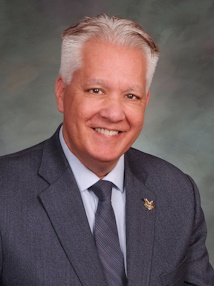
Rep. Chris Knapp
Sponsored bills
Maddy summarySF 72 prohibits Wyoming employers from requiring or pressuring employees to get microchips implanted in their bodies, including during hiring, and bans punishing employees who refuse. It also bans employers from creating hostile work environments or denying promotions, raises, or job security based on refusal to consent to voluntary implants. For voluntary microchips, employers must obtain written consent, cover all costs (including removal), disclose data usage, and remove chips within 30 days of termination. The law takes effect July 1, 2023, and applies to all employers and employees in Wyoming.
Maddy summaryHB 229 allows Wyoming's Department of Revenue and county treasurers to collect sales and use taxes electronically. It updates tax filing rules to explicitly permit vendors (businesses selling taxable goods/services) and taxpayers to submit returns and pay taxes online or via electronic methods, rather than only by mail or in person. The bill specifically clarifies that county treasurers may accept electronic payments for vehicle registration taxes during initial registration. It does not change tax rates or obligations, only modernizing the payment process for existing requirements. This affects all businesses collecting sales tax and individuals purchasing taxable items in Wyoming.
Maddy summaryHB 100 requires Wyoming's Department of Revenue to hire a consultant to study converting the state's residential property tax system from current assessed value to one based on a property's original purchase price (acquisition value). The study must analyze revenue impacts across Wyoming, develop at least three implementation options - including one using 2017 values with annual 2% inflation - and address technical details like agricultural properties, new construction, and sales exclusions. The consultant must report findings to the Joint Revenue Committee by September 1, 2023, with the committee then determining if legislative action is needed. The bill appropriates $10,000 for this study, which is a preliminary step toward potential future tax system changes, not an immediate policy shift. This study directly affects how Wyoming might eventually calculate property taxes for homeowners.
Maddy summaryWyoming's SF 143, the Wyoming Freedom Scholarship Act, creates education savings accounts (ESAs) providing $6,000 annually per eligible student (adjusted for inflation) to cover qualifying education expenses. It directly affects Wyoming residents who are K-12 students not yet graduated, allowing parents or guardians to use ESA funds for private school tuition, online learning, tutoring, textbooks, technology, and other approved educational costs. The state treasurer administers the program, disbursements occur monthly, and funds come from a dedicated state account - not local taxes - with excess funds transferred to the school foundation program if balances exceed $30 million. Qualified schools (non-governmental, non-discriminatory) are explicitly not considered state or federal agents under this program.
Maddy summaryHB 161 requires financial institutions to provide a separate written disclosure to guarantors or co-signers when a loan involves property as collateral. This disclosure must clearly state that agreeing to guarantee or co-sign a loan does not grant any ownership rights or interest in the property securing the loan. The bill directly affects individuals who co-sign or guarantee loans for property purchases or collateralized loans, ensuring they understand their limited legal position. It does not change existing property rights but mandates transparency about the lack of ownership interests from co-signing. The law takes effect July 1, 2023.
Maddy summaryHB 90 amends Wyoming's sex offender registration law to prohibit certain offenders from petitioning for relief from registration requirements. It removes the ability for individuals convicted of specific offenses (including those under W.S. 6-2-302, 6-2-303, 6-2-314, or 6-2-315) to petition for relief after 10 years of registration. For other offenders, it increases the required registration period from 10 to 25 years before petitioning is allowed. The bill directly affects sex offenders who previously could seek relief after a decade of compliance but now face permanent registration requirements for certain offenses.
Maddy summaryHB 174 removes the $20,000 value limit on homestead exemptions for Wyoming homeowners. This bill directly affects residents who claim homestead exemptions, allowing properties of any value to be protected from creditors. The key provision amends Wyoming's civil procedure code (W.S. 1-20-101) to eliminate the previous cap, meaning homeowners can now shield the full value of their primary residence. The change takes effect July 1, 2023. This is a straightforward policy update to the homestead exemption law, with no additional provisions or complex mechanisms.
Maddy summaryHB 104 allows Wyoming hunters to use artificial light technologies - including thermal or infrared imaging - for night hunting of predatory animals (like coyotes or wolves) on both private and public land. It directly affects landowners (with written permission), residents managing property, and hunters on public land. The bill requires the Game and Fish Commission to create specific rules governing the permitted technology and hunting methods. The changes take effect July 1, 2023, with rulemaking provisions active immediately upon enactment.
Maddy summaryHB 279 requires voters to present acceptable identification when applying for an absentee ballot in person at a county election office. It directly affects voters seeking absentee ballots through in-person applications, not mail-in or election-day voting. The bill amends election laws to specify that voters must provide ID meeting the definition in Wyoming Statute 22-1-102(a)(xxxix)(B) for this process. The requirement became effective July 1, 2023. This change modifies the application procedure but does not alter requirements for mail-in ballots or in-person voting at polling places.