

Maddy summarySF 104 amends Wyoming law to change how wind and solar energy facilities on state lands are permitted. It requires county commissioners to obtain written consent from grazing and agricultural leaseholders before approving such facilities, especially when projects are near residential structures (within specific distance limits). The bill mandates that leaseholders be notified about proposed projects and allows them to participate as formal parties in the permitting process. Additionally, it updates definitions to include leaseholders as "affected landowners" and sets clear setback requirements for facilities near homes.
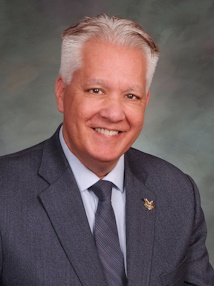
Rep. Chris Knapp
Sponsored bills
Maddy summaryThis bill would repeal Wyoming's existing low-carbon energy standards for public utilities. It requires utilities to refund customers for rates collected under those repealed standards (with an exception for costs already spent on carbon capture technology before the bill's effective date). The Public Service Commission would establish rules to implement these changes. The bill directly affects all public utilities operating in Wyoming and their customers who paid the now-repealed rates.
Maddy summaryHB 109 would repeal a three-year tax exemption for wind energy production in Wyoming. It directly affects wind energy producers who currently benefit from this exemption, ending the tax break for new projects after the bill's effective date. The bill specifies that the existing exemption would still apply to wind turbines that began generating electricity for sale before the bill takes effect. The bill failed its House introduction on February 15, 2024, with a vote of 36-25-1.
Maddy summaryHB 152 prohibits registered sex offenders (18+ years) from being on child care facility premises when children under 18 are present, loitering within 1,000 feet of such facilities, or residing within 1,000 feet of them. It directly affects adult sex offenders required to register under Wyoming law. Key exceptions include parents dropping off/picking up children, attending facility events with permission, making deliveries, working in multipurpose buildings, voting, and residing in approved shelters or licensed facilities within the 1,000-foot zone. The bill defines "child care facility" to cover licensed centers, group homes, and government-run programs providing child care or residential care, and was scheduled to take effect July 1, 2024.
Maddy summaryHB 208 proposes a severance tax on hydrogen production in Wyoming, directly affecting companies extracting hydrogen from groundwater. The bill imposes a 3% tax on hydrogen from by-product water (as defined in existing law) and a 6% tax on all other hydrogen production, collected annually based on fair market value. It incorporates existing natural gas tax administration procedures for collection, enforcement, and distribution of revenues. The tax would apply to all hydrogen production in Wyoming starting July 1, 2024, if enacted. Note: The bill failed introduction on February 14, 2024, and did not advance.
Maddy summaryHB 102 would allow school employees with valid concealed carry permits to carry firearms on school property if their district board adopts specific rules. School boards that choose not to adopt such rules must submit a written explanation to the state education department. The bill appropriates $100,000 for a statewide marketing campaign to promote this authority, with funds restricted to use from July 2024 through June 2026. The bill failed its introduction in the Wyoming House on February 14, 2024, with a vote of 35-26.
Maddy summaryWyoming's HB 152, the "Life is a Human Right Act," prohibits most abortions by defining "abortion" as the intentional termination of an unborn baby's life from conception. It directly affects pregnant individuals and medical providers in Wyoming by banning abortion except when a physician uses reasonable medical judgment to prevent the death of the pregnant woman, address a serious risk to her life or a life-sustaining organ, or treat an ectopic pregnancy. The bill explicitly excludes contraception from the prohibition and defines "unborn baby" as a living human from fertilization through birth. This law creates criminal penalties for violations and amends existing abortion-related statutes.
Maddy summaryWyoming's SF 109 prohibits the use of specific abortion drugs (like mifepristone and misoprostol) for terminating pregnancies, affecting doctors, pharmacists, and anyone distributing or prescribing these drugs. Exceptions include contraceptive use before pregnancy confirmation, treatment of natural miscarriages under medical guidelines, and cases where a patient faces an immediate physical danger to life or health (excluding psychological conditions), or pregnancy from incest/sexual assault. Violations carry misdemeanor penalties of up to six months in jail or a $9,000 fine. Women seeking abortions using these drugs are explicitly exempt from criminal prosecution under this law.
Maddy summaryWyoming's SF 174 creates a new Wyoming Charter School Authorizing Board to oversee public charter schools statewide. The board, consisting of five members (including the state superintendent and appointees from the governor, Senate, and House), will approve, renew, and oversee charter schools under specific quality standards. The bill modifies how charter schools are authorized (replacing school district oversight with the state board), adjusts funding rules, and requires transparency in decision-making. This directly affects public charter schools, their governing boards, and the state education department as the local education agency.
Maddy summaryWyoming's SF 147 prohibits state and local governments from requiring contractors or bidders to join or follow labor union agreements in construction-related contracts or grants for facilities they own or lease. The law, effective July 1, 2023, removes terms that favor or block union agreements, aiming to promote fair competition for projects like building construction, road repairs, or infrastructure work. Government entities may exempt specific contracts only if an imminent threat to public health or safety requires it. This affects all government agencies awarding construction contracts, including schools, counties, and state departments, by eliminating union membership requirements as a contract condition.