

Maddy summarySB 958 creates a dedicated "Water Fund for Our Future" with $250 million transferred from the general fund for state water infrastructure and emergency response. It establishes a rapid response account within the fund to cover costs for natural disasters and public health emergencies, including remediation, relocation, and assistance for affected individuals. A joint legislative committee oversees fund spending, ensuring money is only used for clean water activities and requiring written recommendations for funding requests. The fund also includes provisions for transferring unspent balances to the budget stabilization fund during fiscal shortages.
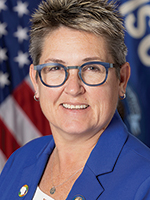
Sen. Kristin Dassler-Alfheim
Sponsored bills
Maddy summaryThis bill requires health insurance plans to cover vaccines recommended by the U.S. Centers for Disease Control and Prevention (CDC) for children under 6 years old. If the CDC withdraws its recommendations, insurers must instead cover vaccines recommended by the American Academy of Pediatrics or American Academy of Family Physicians. It applies to all health insurance plans, including self-insured state/local government plans, covering dependent children. The law ensures continuous vaccine coverage regardless of changes to CDC guidelines.
Maddy summarySB 1050 requires school boards to pay teachers for time spent on nonclassroom duties, such as staff meetings, grading, or administrative tasks outside regular teaching hours. It directly affects public school teachers in Wisconsin school districts covered by collective bargaining agreements or employment contracts. The law prohibits school boards from mandating such nonclassroom work without providing compensation. This policy change applies to teachers when their current contracts expire or are renewed, starting from the effective date specified in the bill. The legislation aims to ensure fair payment for work outside standard classroom instruction.
Maddy summarySB 1052 requires Wisconsin school districts to include at least 45 minutes of daily self-directed preparation time in teachers' schedules, or one full class period if longer. This applies to teachers in 1st class city school districts under collective bargaining agreements or employment contracts. The requirement takes effect when current contracts expire or are renewed, whichever comes first. The bill establishes this as a new statutory standard (120.12(30)) without specifying funding or enforcement details.
Maddy summarySB 1051 establishes minimum annual salaries for full-time public school teachers based on experience. It requires school boards to pay teachers at least the state legislator's annual salary (as defined in the bill), plus $15,000 for those with 10+ years of service, and a flat $100,000 for those with 20+ years. These salary requirements cannot be altered by collective bargaining agreements. The bill applies when current teacher contracts expire or are renewed.
Maddy summarySB 1053 requires common and union high school districts to add a non-voting teacher representative to their school boards. This representative, selected annually by secret ballot among teaching staff in the district, attends all school board meetings (including closed sessions) but cannot vote. The bill creates new procedures (Section 120.065) for selecting the representative, who serves a 3-year term starting April 4th. The change applies only to school boards in common/union high school districts, not all school districts.
Maddy summarySB 1048 modifies property tax exemption rules for nonprofit organizations (501(c)(3) status) that sell properties to low-income households. It requires nonprofits to hold property for rehabilitation, redevelopment, or new construction specifically for sale to buyers with income below 120% of the area median income (using federal standards). The bill removes a previous requirement for nonprofits to offer interest-free loans to buyers and updates the income threshold for eligibility. This exemption applies to property tax assessments starting January 1, 2026, directly affecting nonprofits developing affordable housing for qualifying buyers.
Maddy summarySB 942 amends state tax statutes to clarify how the low-income housing tax credit is claimed by entities and their members. It specifies that partnerships, limited liability companies, and tax-option corporations cannot claim the credit directly, but their individual partners, members, or shareholders may claim it based on the entity’s eligible costs. The bill requires entities to calculate and distribute credit amounts to members and mandates that individuals claiming credit under written agreements must submit those agreements with tax returns. It also adds a specific provision allowing insurers (as shareholders) to claim the credit based on costs incurred by the entity they are part of. This bill directly affects housing developers, investors, and insurers involved in low-income housing projects financed with tax-exempt bonds.
Maddy summarySB 1068 requires full-service pharmacies and major grocery stores (defined as stores over 15,000 sq ft selling fresh produce, meats, and dairy) to provide employees with 60 days' written notice before a permanent closure (over 90 days, excluding health emergencies or renovations). Employers must notify affected employees, union representatives, local officials, and county boards, including contact information for local workforce resources. If notice is not given on time, employees can recover up to 60 days' pay and lost benefits through the state department, with enforcement handled by the department of justice if needed. The bill directly affects workers at these specific retail businesses and aims to provide advance notice and support during job loss.
Maddy summarySB 1070 creates a public financing system for judicial candidates running for supreme court justice, court of appeals judge, or circuit court judge. To qualify, candidates must collect 1,000 separate contributions of $5-$100 each (totaling $5,000-$50,000) during a defined period, with written receipts required. The bill limits anonymous contributions to $5 for candidates using public funds and requires unspent campaign funds to transfer to replacement candidates if a vacancy occurs. It establishes a "Democracy Trust Fund" to administer these public financing benefits and sets strict reporting requirements for contributions. This system aims to reduce reliance on large private donations in judicial elections.