

Maddy summaryThis bill exempts minor league baseball players covered by collective bargaining agreements from Wisconsin's minimum wage, overtime pay, and recordkeeping requirements. Specifically, it creates new statute 103.023 and amends statutes 104.01(2)(b)6 and 104.09 to remove these labor protections for players whose contracts are governed by a collective bargaining agreement that already specifies wages and working conditions. The exemption applies only to players under such agreements and does not affect other workers. Employers are no longer required to track hours or pay overtime for these exempt players. This change directly affects minor league baseball players in Wisconsin whose contracts include collective bargaining terms.
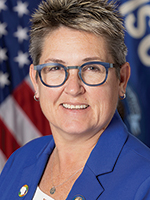
Sen. Kristin Dassler-Alfheim
Sponsored bills
Maddy summarySB 264 requires health insurance plans and the Medical Assistance program to cover specific breast cancer screenings without out-of-pocket costs for enrollees. It defines two key types of screenings: "diagnostic breast examinations" (used to evaluate symptoms or abnormalities, like mammograms) and "supplemental breast screening examinations" (for high-risk individuals without symptoms, using MRI or ultrasound). The bill prohibits cost-sharing (such as copays) for all diagnostic screenings and for the first supplemental screening per year, while allowing limited cost-sharing for additional supplemental screenings in the same year. This directly affects individuals with health insurance or Medical Assistance who require these screenings, particularly those at higher risk for breast cancer.
Maddy summarySB 23 extends Medicaid eligibility for postpartum women from 60 days to 365 days (one year) after pregnancy, directly affecting pregnant and postpartum women enrolled in the Medical Assistance program. The bill modifies eligibility rules to ensure coverage continues without regard to income changes during this extended period. It also adds a provision allowing women with family income above 300% of the poverty line to qualify if medical expenses for family members are covered, extending this eligibility to all family members. The bill requires federal approval for the 365-day extension to take effect.
Maddy summarySB 466 raises the age threshold for issuing a Missing Child Alert from under 10 to under 12 years. It directly affects minors aged 10 or 11 who go missing and are deemed unable to return home without assistance due to a disability or condition. The bill amends statute 175.51(1m)(a)2 to change the age requirement from "not attained the age of 10 years" to "not attained the age of 12 years." This adjustment ensures children in this age group qualify for alerts when their safety is at risk. The change applies to alerts issued when a minor's location is unknown and other alert criteria aren't met.
Maddy summarySB 413 provides legal immunity for individuals who assist sexual assault victims by calling 911, reporting the assault, or seeking help at a medical facility. It extends the statute of limitations for second-degree sexual assault prosecutions from 10 to 20 years for specific offenses under state law. The bill also allows tenants who are sexual assault victims to immediately terminate their lease by providing an injunction order, without liability for future rent, and requires landlords to change locks upon request. Additionally, it mandates 20-year storage of sexual assault kits to give victims more time to report incidents. These changes directly affect sexual assault victims, tenants in rental housing, and individuals seeking to assist victims without fear of drug-related charges.
Maddy summarySJR 34 is a ceremonial resolution honoring Wisconsin's child support program on its 50th anniversary, specifically commemorating January 4, 2025 - the date President Ford signed the 1975 federal law establishing the program. It recognizes the program's role in serving 341,000 children and collecting $841 million in support during fiscal year 2023, while highlighting its anti-poverty impact and collaboration between county, state, and tribal agencies. The resolution does not create new laws or alter funding; it solely expresses legislative commendation for program staff and the program's national leadership in child support collection. This is a symbolic gesture with no direct policy changes or new obligations for affected parties.
Maddy summarySB 172 prohibits filing or recording contracts for services or materials that do not improve real estate, such as non-physical services (e.g., consulting) or materials not attached to property. It directly affects contractors, property owners, and businesses that submit such contracts for official recording. The bill establishes penalties for violating this prohibition, though specific penalty amounts are not detailed in the provided text. This law aims to prevent the official recording of agreements that do not enhance property value through physical improvements. The bill was enacted as 2025 Wisconsin Act 32 after receiving gubernatorial approval in August 2025.
Maddy summarySB 152 removes financial eligibility requirements for Wisconsin’s Alzheimer’s family and caregiver support program. It repeals section 46.87 (5m), which previously set income-based criteria, and amends related sections to no longer reference those financial limits. This change directly affects caregivers and family members of Alzheimer’s patients who previously faced income restrictions to access support services. The bill simplifies eligibility by eliminating income thresholds, allowing more individuals to qualify for program services regardless of household income. The law became effective after Governor approval on August 11, 2025 (Wisconsin Act 21).
Maddy summarySJR 27 is a joint resolution that formally proclaims April 24, 2025, as Holocaust Remembrance Day and April 27, 2025, to May 4, 2025, as Holocaust Days of Remembrance in Wisconsin. This resolution aims to raise public awareness about the Holocaust and its impact on world history and shared humanity.