

Maddy summarySB 623 imposes a moratorium on issuing new permits for mining sulfide ore bodies (mining operations that extract minerals mixed with sulfide minerals) until specific environmental safety conditions are met. It requires the Department of Natural Resources to verify that similar mining operations in the U.S. or Canada have operated for at least 10 years without polluting water from acid drainage or heavy metals, or that such operations have closed safely for 10 years. This applies to all permit applications, regardless of when they were submitted, directly affecting mining companies seeking new sulfide ore permits in the state. The bill creates a new statute (293.50) to enforce this requirement while allowing permits to proceed once the conditions are satisfied.
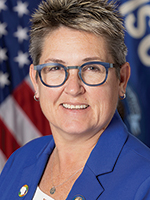
Sen. Kristin Dassler-Alfheim
Sponsored bills
Maddy summarySB 568 changes how leftover scholarship funds are handled when students leave private school choice programs or charter schools. If a student withdraws mid-year from a Parental Choice Program, Special Needs Scholarship Program, or independent charter school and enrolls in a public school district, the state must pay the remaining scholarship amount to that public district instead of the original private school or charter operator. This applies to all covered programs and ensures public school districts receive funds for students who switch during the school year. The bill takes effect July 1, 2026.
Maddy summarySJR 109 is a symbolic resolution recognizing October 26, 2025, and 2026, as Intersex Awareness Day in Wisconsin. It commemorates the first public demonstration by intersex people in the U.S. on October 26, 1996, and aims to raise awareness about intersex individuals - those born with variations in sex characteristics - and the challenges they face, including stigma and unnecessary medical procedures. The resolution does not create new laws or policies; it is purely a formal acknowledgment by the Wisconsin Legislature to honor the intersex community. This recognition aligns with national observances but has no direct legal effect on residents or government actions.
Maddy summarySB 500 amends Wisconsin's unemployment insurance law to make it easier for workers who quit jobs to qualify for benefits. It extends the timeframe for employees to voluntarily terminate work without losing benefits from 30 days to 10 weeks after starting a job. The bill also revises the definition of "suitable work" for weeks 7-11 of unemployment, requiring wages to be above the lowest quartile for similar jobs in the area, rather than requiring relevant experience or training. These changes directly affect unemployed workers who leave jobs due to unsuitable work conditions.
Maddy summarySB 634 eliminates a legal exception that previously allowed spouses to avoid prosecution for sexual crimes against minor spouses. It amends statutes (948.09 and 948.093) to remove language stating that sexual assault laws do not apply when the victim is the defendant’s spouse, making it a crime for a spouse to engage in sexual activity with a minor regardless of marriage age. This change directly affects minors who married as children and their spouses, ensuring such acts can now be prosecuted under standard sexual assault laws. The bill also adds a new provision (767.185) allowing minors under 18 to file for divorce.
Maddy summarySJR 110 is a non-binding resolution introduced by Wisconsin legislators calling for the federal government to immediately resolve the U.S.-China trade war. It specifically aims to address how the ongoing trade conflict harms Wisconsin's $1.3 billion soybean industry, which employs 16,000 farmers, by preventing U.S. soybean exports to China while China purchases soybeans from Argentina instead. The resolution cites a $20 billion U.S. bailout for Argentina (including a currency swap) as an example of prioritizing foreign interests over Wisconsin farmers during a federal budget shutdown. It urges the federal government to end the trade war to protect Wisconsin's agricultural economy. The resolution has been referred to a committee but has no legal force.
Maddy summarySB 618 allows renters who are veterans or surviving spouses to claim the property tax credit based on their rent payments instead of property taxes. The bill amends tax statutes to define "rent constituting property taxes" and permits eligible renters to file for this credit against their income taxes, with unused portions paid via state funds. It specifically applies to renters in veterans' principal dwellings, and couples filing separately can claim 50% of total rent paid. The law takes effect for taxable years beginning January 1, 2026. This expands an existing homeowner-focused credit to include qualifying renters without creating new funding.
Maddy summarySB 598 would require the state health department to seek a federal Medicaid waiver enabling coverage for incarcerated individuals in the Medical Assistance program (state Medicaid) up to 90 days before release. It specifically covers case management, medication-assisted treatment for substance use disorders, and a 30-day supply of prescription medications for those already eligible for Medical Assistance. If approved, the federal government would fund the program’s share of these services, with the state covering its portion. This bill directly affects incarcerated individuals transitioning to community care, aiming to improve continuity of health services upon release.
Maddy summarySB 664 lowers the disability rating requirement for veterans and surviving spouses to qualify for the state property tax credit. Previously, claimants needed a 100% service-connected disability rating; this bill reduces that threshold to 70% or higher. It also creates a new provision allowing the credit amount to be calculated as a percentage of the full credit based on the veteran's actual disability rating (e.g., a 70% rating would yield 70% of the full credit). The bill directly affects veterans and surviving spouses with service-connected disabilities rated between 70% and 99%, who now qualify for a proportional tax credit. The change applies to taxable years beginning in the year the bill takes effect.
Maddy summarySB 574 creates a state funding mechanism to maintain Wisconsin's WIC (Women, Infants, and Children) program benefits during federal government shutdowns. It requires the Department of Health Services to continue providing WIC benefits at pre-shutdown levels if federal funding lapses, specifically referencing the October 1, 2025 funding gap. The bill ensures uninterrupted access to nutrition support for low-income pregnant women, new mothers, infants, and young children who rely on WIC. This temporary provision expires on October 1, 2026, and is repealed upon federal funding restoration. The measure directly affects WIC participants and state budgeting during federal funding interruptions.