

Maddy summarySB 1074 makes Wisconsin's additional child and dependent care tax credit fully refundable starting in 2026. For tax years beginning after December 31, 2025, taxpayers can claim the full credit amount against their state taxes, and if the credit exceeds their tax liability, the state will pay the difference directly. This affects Wisconsin residents who qualify for the federal child and dependent care tax credit and claim it on their state return, primarily low-to-moderate income families with childcare expenses. The bill creates a new state appropriation to fund these payments, ensuring the credit is refundable without interest on unused amounts.
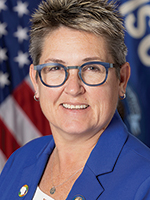
Sen. Kristin Dassler-Alfheim
Sponsored bills
Maddy summarySB 1071 requires election officials to verify a candidate's constitutional eligibility before placing their name on the ballot for federal office, such as president or vice president. The bill mandates that candidates must meet U.S. Constitution requirements (like age, citizenship, and residency) to be listed on ballots or have their votes counted by presidential electors. It directly affects candidates running for national office and election officials responsible for ballot preparation. The law creates new statutory requirements for verifying eligibility through nomination documents, candidate admission, or other conclusive evidence.
Maddy summarySB 1079 establishes income-based limits on out-of-pocket costs for families using Wisconsin Shares child care subsidies. It prevents families from paying more than 7% of their gross income in copayments and exempts those with incomes below 150% of the federal poverty line from any copayment. The bill also increases annual funding for the program by $22.93 million for fiscal years 2025-26 and 2026-27 to cover these changes. These provisions directly affect low-income families receiving child care assistance under Wisconsin Shares.
Maddy summarySB 1078 designates "manoomin" (Ojibwe for wild rice) as Wisconsin's state native grain. The bill adds this designation to Wisconsin statutes and requires the Wisconsin Blue Book to list "native grain" among other state symbols like the state song and tree. This is a symbolic, non-regulatory change that recognizes wild rice's cultural significance to Native American communities in Wisconsin.
Maddy summarySB 1043 requires state legislators to annually verify their residency in their elected district through sworn statements and proof of address, with updates needed within 10 days of moving. It mandates that legislators file these documents with legislative offices at the start of each session and annually while in office. Failure to comply triggers an investigation and potential quo warranto legal action to vacate the seat, initiated by the attorney general or a district elector. The bill also requires all residency records to remain confidential under state privacy laws.
Maddy summarySB 1046 updates Wisconsin's firearm laws by requiring courts to notify the Department of Justice when ordering someone not to possess firearms, ensuring accurate background checks and restrictions. It creates a new permit requirement for firearm dealers (20.455 (2) (gs)) and mandates law enforcement agencies to submit recovered firearms to the eTrace system within 48 hours for ballistics analysis. The bill also revises court notification procedures across multiple statutes to limit disclosure of court records to only necessary firearm restriction information. These changes directly affect courts, law enforcement, firearm dealers, and individuals subject to firearm restrictions.
Maddy summarySB 1049 requires commercial trampoline parks to obtain an annual license and maintain $1 million in liability insurance. It mandates safety standards including first aid/CPR-certified staff on-site with an AED, proper signage, injury reporting systems, and compliance with industry guidelines for equipment, staff training, and participant behavior. The bill exempts schools operating incidental playgrounds, training facilities (like gymnastics studios) with specific revenue or ratio requirements, and inflatable equipment used exclusively for exercise. These requirements directly affect trampoline park operators, while participants must follow posted safety rules regarding conduct and health conditions.
Maddy summarySB 925 creates a system for automatic voter registration by requiring the election commission to match driver's license and ID data from the Department of Transportation with existing voter registration lists. It directs the commission to obtain names, addresses, birth dates, license numbers, and verified citizenship proof from the DMV to identify eligible voters not yet registered. The bill mandates that the commission contact voters to resolve discrepancies, add eligible unregistered individuals to the list, and send multilingual notices informing them of their registration and providing opt-out instructions. Voters can request removal from the list, and the commission must send notices for any removals (except for duplicates or deceased individuals). This law directly affects all state residents who interact with the DMV and meet voter eligibility requirements.
Maddy summarySB 934 requires municipalities to obtain governing body approval after a public hearing before discontinuing a polling place location. It also mandates that municipal clerks or election boards send written notice to all affected residents at least 30 days before an election if a polling place is discontinued after the previous election. This bill directly affects local election officials and municipalities managing polling locations. The key changes are: 1) requiring public hearings for proposed discontinuations, and 2) enforcing advance mail notifications to voters. These provisions aim to improve transparency and voter awareness about polling place changes.
Maddy summarySB 927 clarifies the difference between pet insurance and wellness programs, directly affecting pet insurance companies, their sales agents, and pet owners. The bill prohibits marketing wellness programs as insurance or bundling them with insurance sales, requiring separate pricing, terms, and clear disclosures that wellness programs are not insurance. It mandates training for sellers on topics like preexisting conditions and the distinction between insurance and wellness services, and requires insurers to disclose policy details like exclusions, waiting periods, and coverage limits. These rules aim to prevent consumer confusion and ensure transparent, accurate information about pet insurance products.