

Maddy summarySB 483 requires property tax bills sent to homeowners to include specific information about reductions in state aid to their local school district. It mandates details on the dollar amount and percentage change of any aid reduction from the previous year and current year, and if the reduction stems from state choice programs (like Milwaukee or Racine Choice) or scholarship payments, it requires a clear statement about that cause. The bill also notes that school districts could choose to offset such aid cuts by raising local property taxes. This applies only in years when a state aid reduction actually occurs. The summary focuses solely on the mandated disclosure in property tax bills, not on policy impacts or advocacy.
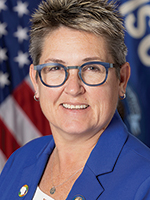
Sen. Kristin Dassler-Alfheim
Sponsored bills
Maddy summaryWisconsin would designate the last full week of September as Frontotemporal Dementia (FTD) Awareness Week through this symbolic resolution. It aims to raise public awareness about FTD - a misdiagnosed condition affecting behavior, language, and emotional expression in people aged 45-64 - with no new policies or funding attached. The resolution references FTD’s $120,000 annual economic burden per family and its lack of cure, aligning with global awareness efforts. As a procedural resolution, it has no direct policy impact but seeks to highlight the condition’s challenges.
Maddy summarySB 543 updates Wisconsin's appraiser licensing rules by raising the maximum transaction value for residential appraisals from $250,000 to $500,000, allowing appraisers to handle more expensive properties without additional certification. It revises reciprocity agreements to streamline certification for out-of-state appraisers, requiring mutual agreements between Wisconsin and other states' regulatory bodies. The bill also clarifies the title appraisers must display on reports, permitting "Wisconsin certified residential appraiser" for commercial properties up to $500,000 or residential properties. These changes primarily affect residential appraisers, appraisal management companies, and the process for obtaining or renewing credentials.
Maddy summarySB 540 bans employers from asking job applicants about their past pay or using that information in hiring decisions. It also protects employees’ right to discuss, share, or ask about their own or coworkers’ pay without employer interference. Violations can be reported to the labor department or pursued in court, with remedies including back pay, reinstatement, and capped damages up to $300,000 based on employer size. The law directly affects all employers and employees in the state, aiming to reduce pay discrimination by promoting transparency.
Maddy summaryThis is a ceremonial resolution (SJR 91) that declares October 2025 and October 2026 as "Breast Cancer Awareness Months" in Wisconsin. It does not create new laws or allocate funds - it is a symbolic gesture to promote public awareness, early detection, and treatment of breast cancer. The resolution cites Wisconsin-specific statistics on breast cancer incidence and mortality to highlight the issue. It directly affects Wisconsin residents by encouraging community-focused awareness efforts during those months.
Maddy summarySJR 78 is a ceremonial resolution honoring Chief Justice Ann Walsh Bradley upon her retirement from the Wisconsin Supreme Court. The resolution formally expresses the Wisconsin Legislature's appreciation for her decades of service, including her historic role as the first woman elected to the Wisconsin Supreme Court (1995) and her leadership as Chief Justice (2025). It recognizes her career milestones, community involvement, and global work advancing gender and human rights through judicial organizations. As a non-binding resolution, it does not create new laws or policies but serves as a symbolic tribute to her service.
Maddy summarySB 433 creates a new $60 million annual grant program for local governments to fund traffic calming infrastructure projects. It directly affects counties, cities, villages, towns, and federally recognized tribes by providing funding for projects designed to slow vehicle speeds, such as speed bumps or road redesigns. Projects must align with the federal transportation alternatives program and be administered by the state Department of Transportation. The bill establishes a formal grant process with application requirements and evaluation criteria, but does not change existing traffic laws or require local matching funds.
Maddy summarySB 429 prohibits most people from possessing a firearm on the grounds of a university or college, including buildings and land owned or leased by the institution. It designates this as a Class A misdemeanor, with specific exceptions for law enforcement officers, military personnel on duty, individuals leasing residential or business space on campus, and those using firearms for approved programs. The bill creates the first dedicated prohibition for campus firearm possession, replacing a previous exemption under unrelated statutes. This change directly affects students, staff, and visitors on campus who are not exempt, with violations treated as serious offenses under criminal law.
Maddy summarySB 12 creates a sales and use tax exemption for gun safes and firearm safety devices. The bill defines qualifying items as locked containers (using combinations, keys, or biometrics) designed solely for secure storage - not display cases - and safety devices preventing unauthorized firearm access. It clarifies that firearms sold with safety devices already installed are taxed as firearms, not as safety devices. This exemption applies directly to consumers purchasing these specific storage or safety products.
Maddy summarySB 565 amends Wisconsin law to explicitly prohibit private schools participating in parental choice or scholarship programs (like the Special Needs Scholarship Program) from discriminating against students based on gender identity or gender expression. It specifically requires these schools, which may limit admission by sex, to admit students whose gender identity aligns with the sex they limit to. The bill adds a $1,000 penalty for school officials who intentionally violate these anti-discrimination rules and updates reporting requirements for school compliance. This directly affects students seeking enrollment in participating private schools and mandates new policies for school boards and governing bodies.