

Maddy summarySB 407 creates a grant program to fund Rogers Behavioral Health's new integrated mental health facility in the Chippewa Valley. The bill requires Rogers to submit detailed certification plans for all service levels (inpatient, residential, partial hospitalization, intensive outpatient, and outpatient care) to meet state licensing requirements before receiving funds. It also mandates that the facility accept Medical Assistance recipients (Wisconsin's Medicaid program), admit involuntary patients within two years, and provide annual reports to the Department of Health Services for five years. This bill directly affects Rogers Behavioral Health and mental health patients in the Chippewa Valley region seeking comprehensive care.
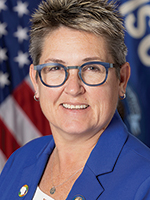
Sen. Kristin Dassler-Alfheim
Sponsored bills
Maddy summarySJR 86 is a ceremonial resolution that commemorates the U.S. Navy's 250th anniversary on October 13, 2025, marking the date the Continental Congress authorized the first naval vessels in 1775. The resolution recognizes the Navy's historical service and legacy, with specific acknowledgment of Wisconsin's naval contributions, including shipbuilding history and vessels named after the state. It does not create new laws or affect any policies or groups - it is purely symbolic. The Wisconsin Legislature formally resolves to celebrate this milestone.
Maddy summarySB 221 clarifies that all-terrain vehicles (ATVs) and utility terrain vehicles (UTVs) registered outside the state must be treated as ATVs/UTVs if their manufacturer's certificate designates them as such, regardless of their out-of-state registration type. This directly affects out-of-state ATV/UTV owners seeking to operate these vehicles within the state. The bill requires such vehicles to meet the state's ATV/UTV definition to qualify for nonresident trail passes; if they don't meet this definition, they cannot be operated on highways, ATV routes, or trails. The law overrides reciprocal agreements and ensures out-of-state vehicles comply with state-specific ATV/UTV regulations.
Maddy summarySB 511 (2026 Legislature) amends Wisconsin statute 6.87(9) to clarify that municipal clerks must return absentee ballots with incomplete or missing voter certification to the voter. The bill requires clerks to return the ballot (inside its sealed envelope, if applicable) with a new envelope, allowing voters time to correct the error and resubmit before the deadline. This directly affects absentee voters who make mistakes on their ballot certificates and municipal clerks handling ballot processing. The change aims to reduce ballot disqualification due to minor administrative errors.
Maddy summarySB 509 would allow 17-year-olds to vote in primary elections if they will turn 18 by the date of the general election. The bill updates voting eligibility rules to include this group, requiring them to meet standard residency and registration requirements like other voters. However, the law requires a referendum for implementation, meaning voters must approve it before it takes effect. This change would directly affect eligible 17-year-old residents who are otherwise qualified to vote in primaries.
Maddy summarySJR 20 is a ceremonial resolution honoring the late Representative Jim Soletski, who served Wisconsin's 88th Assembly District as a Democrat from 2006-2010. It commemorates his career as a legislator (including committee leadership roles on Energy, Clean Energy Jobs, and Tribal Relations), his work in the energy industry, and his community service. The resolution formally recognizes his life, public service, and passing on August 20, 2024, and extends condolences to his family. It has no policy impact or direct effect on constituents, as it is purely symbolic.
Maddy summarySB 510 requires state elected officials (including governors, legislators, and statewide officeholders) to serve as election officials during elections. Specifically, they must serve for at least 8 hours on election day during their first full term and every three years thereafter, unless medically unable (with physician certification). Officials must complete required training but cannot be paid for this service, and their appointment does not count toward municipal staffing limits. The bill applies to all nonjudicial elected state officials holding office, excluding elections where they are candidates. This mandate aims to involve elected leaders directly in election administration.
Maddy summarySB 523 requires election boards to mark the poll list number of each absentee voter on the back of their ballot after verifying eligibility and ballot endorsement. This procedural change directly affects local election boards handling absentee ballots and ensures consistent tracking of voter participation. The bill specifies that boards must mark the number without unfolding or examining the ballot, following verification steps outlined in existing election statutes. It does not alter voting eligibility or ballot content, only the administrative process for recording absentee votes. The requirement applies to all absentee ballots except those cast under specific circumstances noted in statute.
Maddy summarySB 506 modifies state civil service rules to clarify and streamline veteran hiring preferences. It removes age restrictions for veterans applying for civil service positions and updates how preference points are applied to veterans and their spouses during hiring processes. Key changes include revising sections to ensure veterans and spouses receive preference points without adding them to certification lists prematurely, while maintaining that their grades plus points must equal or exceed the lowest grade on the list. The bill directly affects veterans seeking state civil service jobs and state hiring boards managing eligibility lists. These revisions aim to simplify compliance with existing veteran preference laws under statutes like 230.16 (7).
Maddy summarySB 458 would eliminate the state's right-to-work law, removing a provision that allowed employees to work without joining a union. The bill requires employers to obtain majority worker approval before implementing union security agreements (where union membership is mandatory for all employees in a workplace). It also mandates that employees personally authorize dues deductions, rather than automatic withholding. These changes directly affect private-sector employees, employers, and labor organizations across the state.