

Maddy summaryAB 629 prohibits operating drones over correctional facilities without authorization from facility leaders (e.g., secretary of corrections or sheriff). It imposes a $5,000 fine for unauthorized drone flights and criminalizes using weaponized drones (equipped with tasers, firearms, etc.) near prisons, classifying it as a Class H felony. The bill grants police officers authority to disable or destroy drones they reasonably believe pose an imminent threat to public safety, including through jamming or hacking, without financial liability for property damage. These provisions directly affect drone operators near prisons, facility staff, and law enforcement agencies, with specific focus on preventing security threats at correctional institutions.
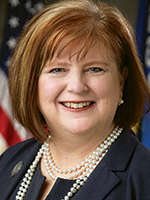
Rep. Barbara Dittrich
Sponsored bills
Maddy summaryAB 105 requires business entities (like websites or platforms) distributing material harmful to minors to verify users' ages using approved methods before granting access. It applies specifically to sites containing a "substantial portion" (over one-third) of such material, defined as content with sexual depictions, prurient appeal, or lacking literary/artistic value for minors. The bill exempts bona fide news organizations and internet service providers from these requirements. Violations could result in civil lawsuits seeking damages, while the bill also bans publishing obscene material involving children or obscene content online.
Maddy summaryAB 415 restricts state and local government employees from using electronic devices owned by their agencies to access social media, apps, or AI tools owned by entities located in "foreign countries of concern" (as defined by federal regulations). The bill directly affects government employees and contractors who use official devices for non-law enforcement work, banning access to specific foreign-owned technology. Exceptions allow written waivers from the secretary of administration for limited job-related purposes. This policy change aims to limit government use of technology linked to designated foreign adversaries, with no impact on law enforcement activities. The bill does not create new funding or require agency budget changes.
Maddy summaryAB 663 prohibits University of Wisconsin System institutions from accepting foreign grants, entering academic partnerships, or engaging in research collaborations with entities from countries designated as security threats (like China or Russia) without board approval. Exceptions require security reviews, approval that benefits students, and confirmation the partnership won’t compromise U.S. security or academic freedom. The bill also bans accepting gifts or cultural exchange payments from such entities. Institutions must submit annual reports detailing all foreign partnerships to state officials.
Maddy summaryAB 165 defines "guaranteed income program" in Wisconsin law as a program providing regular, unearned cash payments to individuals that can be used for any purpose, with no work or training requirements. It applies specifically to "political subdivisions" (cities, villages, towns, or counties), enabling them to use their own funds - including shared revenue, tax money, or fees - to implement such programs. The bill does not create new funding or mandate local governments to establish these programs; it only provides a legal definition for future local initiatives. This definition allows local governments to structure cash assistance programs under clear statutory guidance.
Maddy summaryAB 662 prohibits Wisconsin state agencies from contracting with business entities primarily based in designated "foreign countries of concern" (like China), controlled by Chinese government entities, or subsidiaries of such entities. Contractors must certify they are not prohibited entities and ensure goods/services aren’t sourced from them. Violations trigger significant penalties, including fines up to twice the contract value or $250,000, plus a 5-year contracting ban. An exemption exists if the goods/services are unavailable elsewhere and approved by the Department of Administration.
Maddy summaryAB 673 bans medical and research facilities receiving state or federal funds from using genetic software or sequencers developed by foreign adversaries (as defined by federal regulations). It also prohibits storing human genome data of state residents in foreign adversary countries, with exceptions for certain clinical trials. The law applies to facilities, companies, and nonprofits handling genetic data, requiring them to keep such data inaccessible to foreign adversaries. Violations carry a $10,000 penalty per offense, enforced by the state Attorney General.
Maddy summaryAB 308 prohibits Wisconsin state and local government funds from being used to pay for health services for individuals without legal immigration status. The bill directly affects undocumented residents by blocking state/local funding for their healthcare. Key provisions ban state/local funds for such services (except where federal law requires payment or where applying the ban would cause loss of federal funds). The law does not restrict federal healthcare programs or funding. This is a policy change affecting state budget allocations, not a procedural measure.
Maddy summaryAB 166 requires Wisconsin colleges and universities to collect and report specific data about student outcomes and costs starting in 2027. Institutions must report graduates' average salaries (6 months and 5 years post-graduation by major), average debt, graduation rates, cost of attendance, and popular degree programs. The state board will also create and publish a list of the 50 most in-demand jobs in Wisconsin with required education levels and average salaries. This data will be provided to high schools for students in grades 10-12 as part of required academic and career planning services. The bill directly affects higher education institutions and students seeking career guidance.
Maddy summaryAB 602 requires the state department to annually submit a list of qualifying scholarship granting organizations (SGOs) to the U.S. Treasury and certify the state's authority to participate in the federal tax credit program for donations to these organizations. It mandates that the governor must decide by July 1, 2026, whether to join this federal program, which would allow residents to claim tax credits for contributions to SGOs starting in 2027. The bill directly affects state administrative processes, scholarship organizations, and donors who may qualify for federal tax benefits. It does not create new tax credits but establishes the state's procedural framework for eligibility under existing federal law (26 USC 25F).