

Maddy summaryAB 169 amends Wisconsin's unemployment insurance law to strengthen work search requirements for claimants. It requires individuals receiving benefits to document at least four weekly job search actions (such as interviews or job offers) and provide verification to the department, including records of all offers received. The bill also creates new employer reporting obligations, allowing employers to notify the department if claimants decline interviews, fail to respond, or cancel interviews without rescheduling. However, the bill was vetoed by the governor on October 31, 2025, and did not become law.
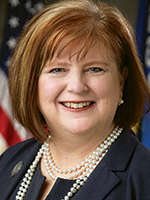
Rep. Barbara Dittrich
Sponsored bills
Maddy summaryAB 582 creates a Council on Dual Enrollment to oversee credit transfer policies, with members representing universities, technical colleges, school districts, tribal colleges, and state education leaders. It requires public colleges to make 72 core general education credits transferable between institutions by September 1, 2026, and private colleges to make 36 such credits transferable starting in 2027-28. The bill mandates agreements ensuring high school students’ dual enrollment credits for core courses (e.g., math, English) satisfy college requirements at participating institutions. This directly affects high school students in dual enrollment programs, public and private colleges, and tribal colleges across Wisconsin.
Maddy summaryAB 168 would have updated Wisconsin's unemployment insurance law with several key changes. It required stronger identity verification for claimants filing benefits and operating a dedicated call center with extended hours during emergencies or high call volumes. The bill also mandated training materials for employers and required the unemployment department to notify lawmakers and the governor before changing fraud detection methods. This bill was vetoed by the governor on October 31, 2025, so these provisions did not become law.
Maddy summaryAB 385 requires political committees and parties to collect a credit card's verification code and a U.S. billing address when accepting online credit card donations. It allows exceptions for U.S. citizens living abroad, who must instead provide their U.S. voter registration address. Financial institutions processing such payments without these verifications face fines equal to the total amount of the unverified contributions. The bill directly affects political groups and payment processors handling campaign donations.
Maddy summaryAB 918 amends Wisconsin statute 118.019(2m)(e) to require public schools to include specific topics in human growth and development curriculum. The bill mandates instruction on adoption, parental responsibility, and the socioeconomic benefits of marriage for adults and children. This directly affects K-12 schools developing or updating their human growth curriculum. The change adds these three subjects to the existing required content without altering other curriculum elements. The bill was introduced in January 2026 and referred to the Children and Families committee.
Maddy summaryAB 923 creates a civil legal pathway for victims of sexual extortion (defined under statute 942.095) to sue for physical injury, emotional distress, or property loss. It allows victims, their parents/guardians (if minors), or estate representatives (in cases involving suicide linked to the extortion) to file lawsuits regardless of any criminal case outcome. The bill includes strong privacy protections, permitting plaintiffs to use initials instead of full names in court documents and allowing courts to issue orders shielding victims from public disclosure or unnecessary examinations. If successful, plaintiffs can recover damages for emotional distress, punitive damages, attorney fees, and other litigation costs.
Maddy summaryAB 966 requires the Department of Justice to create and run a public awareness campaign focused on children's online safety. The campaign must use digital platforms (like the department’s website and social media) and print materials to educate families about internet risks and prevention steps for children. It specifically mandates that the Department provide free educational materials to schools (as defined in statute 118.257(1)(d)) upon request. The bill directly affects children and schools by promoting accessible resources to help prevent exposure to harmful online content.
Maddy summaryAB 957 increases funding by $400,000 for each of the 2025-26 and 2026-27 fiscal years to support internet crimes against children law enforcement within the Department of Justice. This is a budget adjustment that directly affects the Department of Justice's resources for investigating and prosecuting online crimes targeting minors. The bill does not create new laws or change existing legal standards - it solely allocates additional state funds for enforcement efforts.
Maddy summaryAB 958 authorizes the Department of Justice to add three new positions specifically for its Internet Crimes Against Children (ICAC) unit: two criminal analyst roles, one outreach specialist, and one digital evidence examiner. These positions are funded through existing appropriations under section 20.455(2)(a). The bill directly affects the ICAC unit’s staffing capacity to investigate and respond to online crimes involving children. It does not create new laws or policies but adjusts personnel authorizations to support existing law enforcement efforts. The bill was introduced in the 2026 Legislature and referred to the Criminal Justice and Public Safety Committee.
Maddy summaryAB 968 would require virtual currency kiosks (machines exchanging cash for digital currency or vice versa) to obtain state licenses, display mandatory fraud warnings, and verify customer identities using government ID and photos. It sets a $500 daily transaction limit, caps fees at 3% or $5 per transaction, and mandates detailed receipts showing all transaction details. The bill directly affects kiosk operators and customers, aiming to prevent fraud through identity checks and clear transaction records. Currently under review in the Financial Institutions committee.