

Maddy summaryAB 974 establishes a permanent "public affairs network fund" to provide annual grants to WisconsinEye, the public affairs network broadcasting state government proceedings. The bill creates a new trust fund using state appropriations, donations, and interest earnings, which will fund WisconsinEye’s operating costs for live broadcasts, civic events, and free online archives of unedited government proceedings. WisconsinEye must meet specific requirements, including appointing legislative designees to its board, focusing coverage on official government business, and providing continuous free public access to broadcasts and archives. If WisconsinEye ceases operations, it must repay all grant funds to the state and transfer its archives to the state historical society.
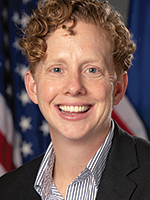
Rep. Angela Stroud
Sponsored bills
Maddy summaryAB 987 amends a state statute to update the purpose statement that local governments must follow when creating zoning regulations. The bill adds specific goals including promoting solar/wind energy access, protecting groundwater, encouraging diverse housing types, advancing "complete streets" for all users, and preserving burial sites. These changes require cities to consider these factors when developing zoning rules that affect land use, housing, transportation, and environmental protection. The bill directly impacts local zoning authorities and the communities they serve by shaping how land development is regulated.
Maddy summaryAB 985 adjusts how cities and towns calculate property tax increases when redeveloping parking lots into commercial or residential buildings. It specifically applies to political subdivisions (like cities) that convert at least 40% of a parcel's paved parking area into new construction, such as buildings. The key change adds a 50% boost (multiplying by 1.5) to the property tax value increase from these parking lot redevelopments when calculating annual tax growth limits. This adjustment applies to all qualifying projects, with separate rules for certain tax increment districts (TIDs) created after 2024.
Maddy summaryAB 986 modifies property tax valuation rules for local governments (like cities and towns) that build qualifying infill housing projects. It defines "qualifying infill housing" as projects adding 2-6 new homes on older residential parcels (with 90% of the area developed for 10+ years), using existing infrastructure, and increasing total units. The bill changes how new construction value affects annual tax levy limits by including 90% of new property value in tax incremental districts (TIDs) and excluding removed improvements from these calculations. This adjustment aims to ease tax levy constraints for municipalities developing such housing without altering tax rates themselves.
Maddy summaryAB 976 clarifies how tax credits for low-income housing projects are claimed by business entities. It modifies rules so partnerships, limited liability companies, and tax-option corporations cannot claim the credit directly; instead, their members or shareholders (including insurers who are part of such entities) may claim it based on the entity's eligible costs. The bill requires entities to calculate and distribute credit amounts to members/shareholders, with specific allocation rules for ownership interests or written agreements. It directly affects housing developers, investors, and insurers involved in low-income housing projects financed through tax-exempt bonds in the state. The changes standardize credit allocation across multiple tax code sections without altering eligibility or credit amounts.
Maddy summaryAB 738 requires the decertification (removal of professional certification) of law enforcement, jail, juvenile detention, and tactical emergency medical services officers within 30 days for specific actions, including resigning to avoid termination for cause or violating training rules. It also mandates that officers terminated while under investigation for misconduct cannot be recertified without a waiver from a police commission or local governing body. The bill directs the licensing board to develop and update biennially model "best practices" use-of-force policies, emphasizing de-escalation, limiting force against vulnerable populations (like those with disabilities or mental health conditions), and requiring officers to use the least force necessary. This applies directly to certified officers in law enforcement, jail, and juvenile detention roles across the state.
Maddy summaryAB 730 mandates that inmates in state correctional facilities and county jails must be allowed at least two in-person visiting periods per week, with limited exceptions for lockdowns (up to 10 days). It requires facilities to allow inmates to designate up to 25 visitors, permits physical embraces for 20 seconds at the start and end of visits, and provides visitors with paper and writing supplies upon request. Inmates may keep original artwork or notes created during visits using facility-provided materials. The bill directly affects incarcerated individuals and their visitors, while setting clear operational requirements for correctional departments and sheriffs.
Maddy summaryAB 705 modifies alcohol licensing laws to explicitly include "painting art studios" as eligible for retail alcohol licenses. The bill defines a painting art studio as an establishment primarily offering painting instruction where customers can also purchase food and beverages to consume while painting. It adds these studios to lists of businesses permitted to serve alcohol under existing license categories, such as in hotels, restaurants, and entertainment venues. This change directly affects art studios that teach painting and serve food or drinks on-site, allowing them to legally sell alcohol during their regular hours. The bill does not alter alcohol sales hours or create new licensing requirements for these businesses.
Maddy summaryAB 740 limits solitary confinement to a maximum of 10 days per instance and requires a 60-day waiting period between solitary periods for inmates in state prisons and county jails. It mandates that prison and jail staff provide inmates in solitary with specific items (like books, hygiene products, and paper), access to prenatal care for pregnant individuals, three weekly 25-minute video visitation sessions, and at least 15 hours per week of structured programming - including in-person visits from case managers and department staff (like health or education). The bill directly affects all inmates placed in solitary confinement under current rules, ensuring minimum standards for their well-being during confinement. The legislation is pending in the Corrections Committee after being introduced on December 3, 2025.
Maddy summaryAB 727 requires state prison leaders and county jail officials to provide inmates with 3 hours of outdoor access weekly, starting after specific waiting periods. For state prisons, this applies to most inmates after 91 days (except those in certain facilities under Section 302.01(1)(i)), while county jails must provide access after 31 days. Exceptions include inmates in lockdowns or solitary confinement. The law takes effect for the Milwaukee Secure Detention Facility on January 1, 2028, with broader implementation following. This policy directly affects incarcerated individuals in state and county correctional facilities across the state.