

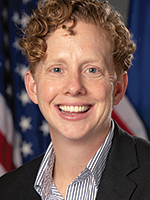
Photo of Angela Stroud
D Wisconsin Assembly · District 73 On the 2026 ballot

Rep. Angela Stroud

Compare
Total votes
232
all sessions
Attendance
95%
13 missed
Near the chamber average
With party
96%
of cast votes
Near the chamber average
Bipartisan score
2%
crosses aisle rarely
Near the chamber average
Sponsored
367
bills & resolutions
Near the chamber average
Committees
2
assignments
367 bills and resolutions

Sponsored bills

Total
367
Primary
367
Co-sponsor
0
This page
367
matching current filters
Primary AB 863
Failed · Wisconsin Assembly · Lead sponsor
Relating to: authorized activities under a no-sale event venue permit issued by the Division of Alcohol Beverages in the Department of Revenue.

Maddy summaryAB 863 modifies Wisconsin's rules for "no-sale event venue permits," which allow venues to host events where alcohol is consumed without sales. The bill sets clear limits: venues can host up to 36 events per year (max one day monthly, each event ≤36 hours), and permits require applicants to surrender existing retail alcohol licenses. Key provisions permit guests to bring their own beer and wine for free, allow caterers with specific licenses to provide alcohol without charge, and restrict service to licensed personnel. These changes clarify how venues can operate under existing alcohol laws without issuing sales permits. The bill takes effect January 1, 2026.

Failed Mar 23, 2026 0 co-sponsors
Primary AB 941
Failed · Wisconsin Assembly · Lead sponsor
Relating to: student identification used for voting. (FE)

Maddy summaryAB 941 allows Wisconsin college and university student identification cards to be used as valid voter identification. It specifically applies to students at state-accredited universities (including the University of Wisconsin System) and technical colleges in the state. The bill requires these IDs to include the issuance date, student signature, and an expiration date no later than two years after issuance. If an ID is expired, voters must prove current enrollment at the institution on the day they vote. The law takes effect for institutions by August 1, 2026.

Failed Mar 23, 2026 0 co-sponsors
Primary AJR 132
Failed · Wisconsin Assembly · Lead sponsor
Relating to: the life and public service of George Meyer.

Maddy summaryAJR 132 is a commemorative resolution honoring George Meyer, former Wisconsin Secretary of the Department of Natural Resources (DNR), recognizing his decades of service to conservation and public policy. It details his work on wetland protections, tribal rights negotiations, land acquisitions, and environmental advocacy during his 1993-2001 DNR leadership, without creating new laws or affecting any policies. The resolution expresses the Wisconsin Legislature's gratitude for his legacy and extends condolences to his family. As a purely ceremonial measure, it has no direct policy impact or effect on citizens or programs.

Failed Mar 23, 2026 0 co-sponsors
Primary AB 942
Failed · Wisconsin Assembly · Lead sponsor
Relating to: notice of change in polling place location. (FE)

Maddy summaryAB 942 requires municipalities to mail notice to all residents in an area if a polling place is discontinued after an election. Specifically, the municipal clerk must send this notice by mail at least 30 days before the next election. The bill directly affects voters in communities that change polling locations and ensures they receive timely notification. It modifies existing election procedures to add this mandatory notice requirement after a public hearing process for discontinuing polling places. This is a procedural change focused on improving voter communication, not altering voting rights or eligibility.

Failed Mar 23, 2026 0 co-sponsors
Primary AB 945
Failed · Wisconsin Assembly · Lead sponsor
Relating to: residency requirement for purposes of voting.

Maddy summaryAB 945 reduces the residency requirement for voting in Wisconsin from 28 consecutive days to 10 days before an election. It directly affects voters who move within the state, allowing those who meet the 10-day residency at a new address to vote there instead of their previous location. Key provisions include amending statutes to reflect the shorter residency period for general voting, presidential elections (where voters with less than 10 days' residency can still vote for president only), and military voter extensions. The bill also updates registration forms and affidavits for voters meeting the revised residency threshold.

Failed Mar 23, 2026 0 co-sponsors
Primary AB 920
Failed · Wisconsin Assembly · Lead sponsor
Relating to: automatic voter registration. (FE)

Maddy summaryAB 920 automatically registers eligible voters for state elections when they interact with the Department of Transportation (e.g., renewing a driver’s license or ID card). It requires the election commission to match DOT data (including name, address, date of birth, and verified citizenship proof) with existing voter records. If someone appears eligible but isn’t registered, they’re added to the voter list with a multilingual notice explaining how to opt out. Individuals can request exclusion from the list at any time, and the commission must verify eligibility before re-registering someone previously removed. The bill directly affects voters who use state-issued licenses or IDs but does not change voter eligibility requirements.

Failed Mar 23, 2026 0 co-sponsors
Primary AB 952
Failed · Wisconsin Assembly · Lead sponsor
Relating to: storage of a firearm in a house in which a resident is prohibited from possessing a firearm and providing a penalty.

Maddy summaryAB 952 requires anyone living in a household with a person prohibited from possessing firearms (such as someone with certain felony convictions or domestic violence orders) to securely store their own firearms - either in a locked container, a locked location a reasonable person would consider secure, or with a trigger lock engaged. This law directly affects residents in households where one member has a legal restriction on firearm possession. Violating this storage requirement results in penalties: a first offense is a Class A misdemeanor, and repeat violations are classified as Class I felonies. The bill aims to prevent accidental or unauthorized access to firearms in homes where one resident cannot legally own them.

Failed Mar 23, 2026 0 co-sponsors
Primary AB 949
Failed · Wisconsin Assembly · Lead sponsor
Relating to: pet insurance and granting rule-making authority.

Maddy summaryAB 949 clarifies pet insurance rules to prevent consumer confusion. It bans marketing pet wellness programs as insurance and requires clear separation between wellness programs and insurance policies (e.g., separate pricing, distinct terms, and explicit "not insurance" disclosures). The bill also mandates training for insurance agents on policy terms like preexisting conditions and waiting periods, and requires insurers to disclose coverage limitations, exclusions, and policy details upfront. These changes directly affect pet insurance companies, their agents, and pet owners purchasing these products.

Failed Mar 23, 2026 0 co-sponsors
Primary AB 951
Failed · Wisconsin Assembly · Lead sponsor
Relating to: storage of firearms in retail facility when unattended.

Maddy summaryAB 951 requires retail stores that sell firearms to securely store all firearms when the business is unattended. It mandates specific security methods, such as locking firearms in fireproof safes, using reinforced display cases with thick polycarbonate or laminated glass, securing firearms with hardened steel rods through trigger guards, storing them in windowless rooms with deadbolts, or using steel roll-down doors. These provisions apply directly to retailers engaged in the commercial sale or transfer of firearms. The law aims to prevent unauthorized access to firearms during unattended periods, with additional requirements for street-level stores like bollards or roll-down doors. The bill was introduced in January 2026 and referred to the Criminal Justice Committee.

Failed Mar 23, 2026 0 co-sponsors
Primary AB 944
Failed · Wisconsin Assembly · Lead sponsor
Relating to: grants for the purchase of election supplies and equipment and making an appropriation. (FE)

Maddy summaryAB 944 creates a state grant program to fund municipalities' purchases of election supplies and equipment, such as electronic poll books and accessibility tools. It allocates $5 million biennially (split equally for 2025-26 and 2026-27), with funding amounts tiered by municipal population size: up to $2.5 million for cities over 250,000, $1 million for 100,000-250,000, $500,000 for 50,000-100,000, and $250,000 for smaller cities. Municipalities must apply 180 days before elections and agree to random inspections of grant-funded equipment, with a minimum $250 grant per recipient. The bill directly affects all cities and towns in the state based on their population, providing targeted funding for election infrastructure.

Failed Mar 23, 2026 0 co-sponsors
Showing 91 to 100 of 367 bills
Previous 1 … 9 10 11 … 37 Next