

Maddy summaryAB 961 requires distributors of explicit content (such as publishers and digital platforms) to display specific warning labels on all adult-oriented material. For print publications, labels must appear on the cover in 20-point bold Arial font; for digital content, labels must appear before access, remain visible for 10 seconds, and occupy two-thirds of the screen. The labels must include standardized language warning: "WARNING: This material contains explicit content that may be harmful or offensive. Viewer discretion is advised. Not intended for minors." Violations incur fines, with 50% of fines funding a state appropriation via a surcharge.
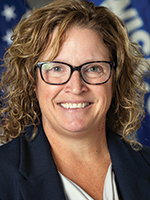
Rep. Joan Fitzgerald
Sponsored bills
Maddy summaryAB 944 creates a state grant program to fund municipalities' purchases of election supplies and equipment, such as electronic poll books and accessibility tools. It allocates $5 million biennially (split equally for 2025-26 and 2026-27), with funding amounts tiered by municipal population size: up to $2.5 million for cities over 250,000, $1 million for 100,000-250,000, $500,000 for 50,000-100,000, and $250,000 for smaller cities. Municipalities must apply 180 days before elections and agree to random inspections of grant-funded equipment, with a minimum $250 grant per recipient. The bill directly affects all cities and towns in the state based on their population, providing targeted funding for election infrastructure.
Maddy summaryAB 967 increases funding by $500,000 for Wisconsin's Family Foundations home visitation program to provide parental education about social media's effects on children and healthy social media practices. It directly affects parents eligible for Medical Assistance who are assessed as at-risk for child abuse or neglect under the existing program. The bill modifies the Department of Children and Families' budget to allocate these funds specifically for social media education components within home visitation services. This is a concrete policy change expanding an existing program's educational focus, not a new initiative.
Maddy summaryAB 971 creates a state program to reimburse community paramedics and community emergency medical services practitioners for tuition and materials costs incurred in completing approved training programs. It covers individuals who paid for their own training or employers who paid for their employees' training. To qualify, applicants must complete a state-approved training program and receive department approval. Reimbursement requires applying through the state board and meeting specific training completion criteria.
Maddy summaryAB 970 allocates $600,000 in state funding for two programs: (1) grants to six municipal emergency medical services programs (prioritizing two rural, two suburban, and two urban programs) to hire full-time community paramedics or practitioners, and (2) $200,000 annually for the Wisconsin Institute for Healthy Aging to run statewide falls prevention initiatives. The bill creates a pilot program requiring grantees to report on cost savings and service impact within one year. It directly affects local EMS providers and aging services organizations by funding community-based health support. The funding is appropriated for fiscal years 2025-26 and 2026-27, with a 12-month deadline for grant awards.
Maddy summaryAB 972 allows banks and credit unions to refuse or delay specific financial transactions and decline to accept a power of attorney for vulnerable adults when they reasonably suspect financial exploitation. Financial institutions must report suspected exploitation to adult-at-risk agencies and notify authorized account holders (excluding suspected perpetrators), while maintaining legal immunity for good-faith actions. This law directly affects vulnerable adults (elderly or disabled individuals at risk of exploitation), financial institutions, and the agencies that handle exploitation reports. It creates clear procedures for institutions to act preventively without facing liability, focusing on concrete safeguards rather than new penalties or funding.
Maddy summaryAB 973 allocates $1 million for fiscal year 2025-26 to fund economic support specialist positions in county resource centers. The Department of Health Services will award grants to 10 counties, prioritizing 2 rural, 2 suburban, and 2 urban counties for the first six grants, with up to four additional grants possible. Each grant funds one specialist position to assist individuals in resource centers, requiring grantees to submit annual effectiveness reports. The bill creates a new funding mechanism (20.435(7)(f)) to replace an existing section, with the appropriation effective immediately and the repeal of the old section taking effect July 1, 2027. This is a funding bill focused on resource center staffing, not a new policy.
Maddy summaryAB 974 establishes a permanent "public affairs network fund" to provide annual grants to WisconsinEye, the public affairs network broadcasting state government proceedings. The bill creates a new trust fund using state appropriations, donations, and interest earnings, which will fund WisconsinEye’s operating costs for live broadcasts, civic events, and free online archives of unedited government proceedings. WisconsinEye must meet specific requirements, including appointing legislative designees to its board, focusing coverage on official government business, and providing continuous free public access to broadcasts and archives. If WisconsinEye ceases operations, it must repay all grant funds to the state and transfer its archives to the state historical society.
Maddy summaryAB 976 clarifies how tax credits for low-income housing projects are claimed by business entities. It modifies rules so partnerships, limited liability companies, and tax-option corporations cannot claim the credit directly; instead, their members or shareholders (including insurers who are part of such entities) may claim it based on the entity's eligible costs. The bill requires entities to calculate and distribute credit amounts to members/shareholders, with specific allocation rules for ownership interests or written agreements. It directly affects housing developers, investors, and insurers involved in low-income housing projects financed through tax-exempt bonds in the state. The changes standardize credit allocation across multiple tax code sections without altering eligibility or credit amounts.
Maddy summaryAB 960 requires most social media platforms operating in the state to display a clear, prominent mental health warning each time a user in the state accesses the platform. The warning must inform users about potential negative mental health effects and provide access to crisis resources like the 988 suicide hotline. It applies to platforms defined as user-generated content services (excluding search engines, email, business communication tools, and streaming services), and prohibits hiding warnings in terms of service or allowing users to disable them without specific conditions. Violations may result in fines up to $5,000 per incident, enforced by state departments.